April 12th

On 12th April 627AD, King Edwin of Northumbria convened his Great Council at  Londesborough and agreed to adopt Christianity; King Edwin’s high priest Coifi destroyed the pagan temple at Goodmanham.

On 12th April 1748, William Kent (orig Cant) died aged 63 . This Bridlington-born architect and polymath, originator of the English style of landscape gardening, also introduced the Palladian style of architecture to England.  His buildings include Treasury Buildings and Horseguards, both in Whitehall, and Holkham Hall. (bapt 1.1.1686) photo shows his house in Bridlington old town

On 12th April 1855, John Enderby Jackson’s  ‘The Withernsea Quadrilles’ were played for the first time at a ball to celebrate the opening of  Withernsea’s first hotel, Queens Hotel, for visitors travelling on the new Hull to Withernsea rail line. Before the railway opened the previous year, the village population was tiny (108 in 1801), with 1 inn, and farming was the main occupation.

William Kent's house

April 9th

On 9th April 1484, John de la Pole, Earl of Lincoln, became Heir Presumptive to the English throne, when the Prince of Wales (son of Richard III, his maternal uncle) died. The Earl died 3 years later, aged 25 at the Battle of Stoke, in a rebellion against Henry Tudor.

On 9th April 1610, the household accounts show that the number of servants in residence in the various houses of Francis Clifford, Earl of Cumberland, (incl Londesborough House and Skipton Castle) rose from 49 to 83 after he inherited the Earldom. They included 4 musicians, and a huntsman.

On 9th April 1646, Matthew Topham, merchant of Hull, was fined £90 as a member of the Royalist army (delinquent) in order to recover his goods which had been sequestered by Parliament.

On 9th April 1814, Hull gunsmith Owen Probin, 38, was murdered by John Lever, a saddler, who had had a violent quarrel with Probin the previous day in Silver Street.

On 9th April 1858,  Sir Thomas Aston Clifford Constable and Rosina, Lady Constable, with a number of other ‘distinguished amateurs’ performed a programme of music at a charity concert  in The Music Hall, Jarratt Street, in aid of education for poor children in Hull.

On 9th April 1869, the Attorney General moved that a Royal Commission be set up to enquire into corrupt practices at the general election in Beverley the previous year. At least 800 people had been bribed, and corruption at Beverley was said to be ‘worse than at Norwich and Bridgewater put together’. The enquiry is said to have led directly to the 1872 Ballot Act.

On 9th April 1933, Canon Edward Arthur Berry, vicar of Drypool (grandfather of Mary Berry) was one of the speakers at a mass meeting in the Balmoral Room, Metropole Hall, West Street, Hull, called by the Jewish community to protest against Nazi actions against Jews in Germany.


April 8th

King Henry V

On 8th April 1421, King Henry V presided over state business while at Howden, probably at the Bishop’s Palace.

On 8th April 1586, Sir Christopher Hilyarde, William Pailer and Hugh Bethell supervised an inquiry into concealed lands and premises in Hull. Amongst numerous premises found concealed were the “Old Schoolhouse’, a tenement occupied by the schoolmaster and the new schoolhouse.

On 8th April 1586, Sir Francis Walsingham, principal secretary to Elizabeth I, wrote to the Hull Mayor recommending Dr Hudson of York for the post of assessor in the Hull Admiralty Court. He seems to have got the job.


April 1st

On 1st April 1299, Edward I gave Hull the charter that created the new town of Kingston upon Hull. On the same day, he gave a charter to its rival port Ravenser Odd.

On 1st April 1577, Hull alderman John Thornton acquired a licence from the town to buy grain (wheat, malt, barley, beans and peas) in the counties of York, Lincoln, Norfolk and Kingston upon Hull, and to sell and transport the same abroad for 20 years.

On 1st April 1899, Hull Corporation opened a 6-day exhibition to celebrate the 6thcentenary of the first charter from King Edward I. It included Hull seals and deeds, silver items, coins, medal and tokens made in Hull, paintings and documents.

On 1st April 1998, Christopher Ibikunle Alder died aged 37, in Queens Gardens Police Station, Hull, whilst in police custody . The coroner’s jury returned a verdict in 2000 that Alder was unlawfully killed. In 2011 the British Government formally apologised to Alder’s family for the way he was treated and for failing to carry out an effective independent enquiry. Trainee computer programmer and former Army paratrooper, Alder was born in Hull 26.6.1960

Christopher alder

March 29th

On 29th March 1241, William de Forz II, count of Aumale, Lord of Holderness, died of illness beside the Mediterranean, en route to Jerusalem, aged between 45 and 50. At times close to Kings John and Henry III, he changed sides and rebelled several times, was excommunicated twice, having to seek sanctuary in Fountains Abbey, but was pardoned.

On 29th March 1689, Sir John Hotham, 2ndbaronet, was buried, after dying aged 57 of a violent cold. He had just been greeted enthusiastically as the new governor of Hull, having come from Holland with William of Orange. He was the grandson of Sir John Hotham, the Hull governor who turned away Charles I.

On 29th March 1759, John Courtney recorded in his diary that the Beverley Assembly Rooms in North Bar Street/Lairgate hosted ‘a very splendid show of ladies and gentlemen and a very agreeable ball’; Beverley lacked industry, but was a desirable place for gentry to build large Georgian houses.

On 29th March 1776, Eliza Bordington and Thomas Akerman, 37, of Flambrough, were hanged at York Micklegate Bar for poisoning Mr Bordington (presumably Eliza’s husband), and Eliza’s body was also burnt.

On 29th March 1874, John William Duncan, aged 12, was a member of  Hull’s Spring Bank Orphanage’s new brass band. The band gave its first performance, marching from the Trinity House Almshouses, Beverley Road, to Victoria Pier and back. They only knew 4 tunes. They went on to play by request at cricket matches, school treats and concerts.

On 29th March 1972, Joseph Arthur Rank died aged 83. The son of Joseph Rank (see 28.3), he ran his flour milling company, and became interested in films began as a way of getting the Methodist message across. He set up The Rank Organisation in 1937, producing films, and owning 650 cinemas and 5 film studios. 1stBaron Rank. (B 22.12.1888 at Chestnut Villas, Holderness Rd, Hull).

joseph rank

March 19th

Rose Ellen Carr

On 19th March 1293, only 5 days after his valuation of Myton, King Edward I had new records of tenants drawn up, and ordered the improvement of roads to his new town of Kingston on Hull. The roads to Hessle, Beverley and York already existed.

On 19th March 1913, Rose Ellen Carr died at Hornsea aged 70. Although illiterate, and facially disfigured, probably as the result of a kick from a horse when she was a child, she was ran a success business as a carrier and taxi owner, and was reputed to be able to carry a 16-stone sack of grain under each arm. She was also a passionate Primitive Methodist preacher.

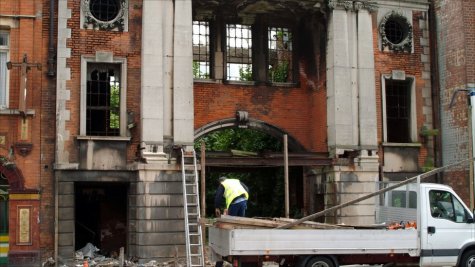
On 19th March 1941, 92 Hull residents died in an air raid; 70 people were seriously injured.  This was the 12thraid since the beginning of the year. The National Picture Theatre on Beverley Road was hit; they were screening Charlie Chaplin’s ‘The Great Dictator’ at the time. photo below shows ruin of the cinema

On the same day, Mr & Mrs Severs and their 2 children were killed by a land mine at Highfield Farm, Hutton Cranswick. Other damage nearby probably intended for Hull included 70 high explosive bombs and incendiaries at Watton Abbey Farm, mostly in the fields, the destruction of Mrs Arnell’s grocer’s shop, and a fire in Hutton church.  Arthur Swift of Wawne Common Farm recorded a land mine, incendiaries and high explosives, which blew out all the windows and tiles off every building in the farm. The ghost of a Watton Abbey monk was said to have been seen that night.

nationalpicturetheatre

March 18th

On 18th March 1293, the name ‘Kingston upon Hull’  was first used by a jury called to value land in order to improve roads in the town which King Edward I had just purchased.

On 18th March 1708, the Hull Mayor and Chief Magistrates received a letter from the Council in the North instructing them to get all ‘dangerous or disaffected persons’ to sign an oath of allegiance to Queen Anne and to swear that Charles (Bonnie Prince Charlie) had no claim to the throne.

On 18th March 1859, John Sanderson was recruited to ‘work the Force Pump when necessary for the water closets’  at the Ladies Hospital, College St, Sutton-on-Hull. It seems the elderly residents found the pump too difficult to operate.

On 18th March 1924, Sir James Reckitt died in Hull aged 90. A businessman, JP, politician and philanthropist, he joined his father’s business, and created Garden Village as a model village for the company’s workers. Amongst his charitable works were contributions to Hull Royal Infirmary, Newland Homes for Seamen’s Children, the building of the city’s first public library, donated to the city, and the donation of Withernsea Convalescent Home to the Infirmary. He established the Sir James Reckitt Charity.  (b 15.11.1833)

jamesreckitt

March 15th

On 15th March 1471, King Edward IV’s army regrouped at Kilnsea, but met resistance in Holderness, with 6,000 men led by Sir John Westerdale, vicar of Keyingham, and/or Martin de la See, Lord of Barmston; Westerdale was later imprisoned in the Marshalsea. Edward was allowed to pass to Hull, where Mayor John Tutbury shut the gates and refused to let him in. From there Edward proceeded to York via Beverley.

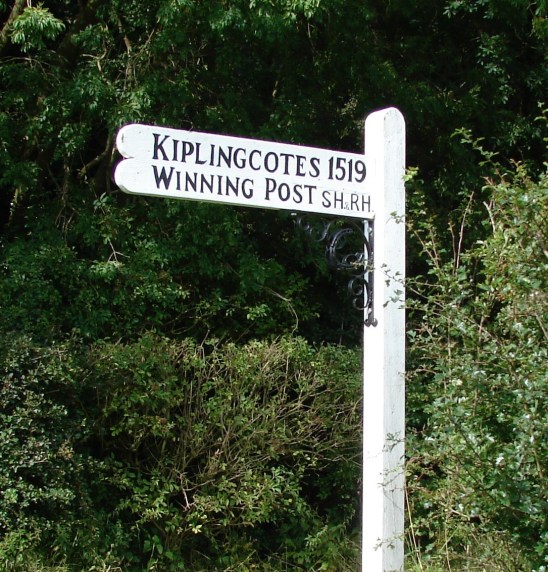
On 15th March 1618, the 1strecorded Kiplingcotes Derby was run; it is said to date back to 1519.  The winner receives £50, but the 2ndreceives the sum of the entry fees, which may be much more.  Even in wartime, severe weather or foot and mouth outbreaks, at least 1 horse has completed the course to ensure the continuity of the event.  In 2018, due to flooding, one rider walked the course. Race rules state that if the race is not run one year, it must never be run again. https://www.youtube.com/watch?v=SJu7HI3SXIc

On 15th March 1783, Thomas Perronet Thompson was born in Hull. He was an anti-slavery activist, MP, businessman, soldier, author and first governor of Sierra Leone (d 6.9.1869)

On 15th March 1979, Helen Grocock, 13 years, failed to win the Kiplingcotes Derby when her pony collapsed and died a few yards from the finishing post.

On 15th March 2001, Farmer Stephen Crawford was the only participant in the Kiplingcotes Derby, due to foot and mouth disease. Course clerk Sue Hillaby appealed to people to stay away.

Kiplingcotes
East Yorkshire monuments – the country’s oldest horse race at Kiplingcotes. The winner’s prize is worth less than 2nd prize.

March 14th

On 14th March 1293, as part of the process of creating his new port of Kingston upon Hull, King Edward I had Myton valued, at £24 8s a year, including 2 windmills, a grange, a sheep farm, arable land and 2 areas called Southwick and Milnwick.  He purchased lands in both Wyke and Myton from Meaux Abbey, but it took many years before they were content that they had been suitably repaid.

On 14th March 1471, during the Wars of the Roses, King Edward IV landed about 2,000 men at Ravenspurn when a storm drove them into the Humber for shelter. Some ships landed as far west as Paull.

On 14th March 2013, Norman Collier died aged 87. Comedian, famed for TV stand-up routines, including the ‘faulty mic’. (b 25.12.1925 in Grotto Square, Mason Street, Hull)

normancollier

March 11th

bearward

On 11th March 1214, Hawise, Countess of Aumale and heir of the Seigniory of Holderness, died single, having been widowed 3 times.  In 1212, she refused to marry for a 4thtime, for which she had to pay a fine to King John of 5,000 marks (about £1700) (some sources say she died before 8.3.1214)

On 11th March 1296, John Romanus (John le Romaine) Archbishop of York, died aged about 66 in the Archbishop’s Palace, Bishop Burton; he was buried in York Minster. He protected poor villagers in 1286 by ordering his parish priests in Holderness not to demand tithes from those earning 5shillings a year or less.

On 11th March 1522, Beverley bearward John Grene was tried for slander, by calling Percevall Robson, draper, a ‘Scottish bird’. Grene apologised for speaking in anger, and was rebuked and forgiven by Robson.

On 11th March 1616, Father Thomas Atkinson was hanged, drawn and quartered at York Castle at the age of 70. Born in the East Riding and trained in Douai as a Catholic priest, Atkinson spent 30 years as an itinerant priest in the Howden area, ministering to local Catholics, and hiding in their homes. He was captured in the Vavasour house in Willitoft. He was beatified 1987. A young man at the execution bought the priest’s stockings from the hangman, as a holy relic. Identified as a Catholic, he was imprisoned.

On 11th March 1858, Brother John of the Yorkshire Catholic Reformatory took some boys, for a treat, to slide on the ice-covered Market Weighton Canal; 5 boys fell through and, attempting to save them, he also fell through the ice. They all had to be rescued by passing bargemen.

On 11th March 1859 at 6a.m., ostler John Sissons was found hanged in one of the stables of the George & Dragon Inn, Aldbrough. He was described as an aged man of respectable family. The inquest verdict was of suicide due to temporary insanity.