June 8th

On 8th June 1300, a year after Hull’s establishment, King Edward I gave a charter to allow the mayor and aldermen to pave the major streets, with a central gutter for ease of drainage. The work began in 1301.

On 8th June 1661, King Charles II wrote a letter to the Hull Mayor, prohibiting John Shaw from preaching in Holy Trinity, as he was too radical a Puritan. He retained his post as Master of the Charterhouse, and his sermons there continued to draw large crowds, but he resigned the following year.

On 8th June 1806, in a kitchen accident, in Hull, Mrs Lambert reported being struck on the back by a large hanging lump of sugar she had dislodged; she expected that if it had hit her on the head, she would have died.

On 8th June 1815, the Commissioner of Customs acquired the former Neptune Inn, Whitefriargate, as a Custom House. The Inn had opened in 1797, but had never made the expected profit of a first-class coaching inn. The building now houses Boots Chemists.

On 8th June 1821, the troopship Thomas of London was driven on to the Binks sands, in the Humber; the 26 troops, crew, 2 women and a child were rescued, and 1 woman drowned, despite brave attempts by the captain, Lieutenant Pritchard, to save her. The operation by Robert Richardson, master of the Spurn lifeboat, and crew, took 11 hours.

On 8th June 1829, Ira Aldridge, celebrated American actor of African heritage, performed in Hull for the first time, at the Theatre Royal, Humber Street; over a long and distinguished career he visited Hull several times, and performed at the Nag’s Head, Driffield in 1841.

 

Ira-Aldridge-Covent-Garden-1833-public-domain1

June 1st

On 1st June 1787, William Wilberforce asked the King to make a Royal Proclamation for the Encouragement of Piety and Virtue. Concerned at the large number of death sentences being carried out, he reasoned that those punished for small crimes, such as swearing, would be less likely to commit serious crimes, such as murder. The Society for the Reformation of Manners was established in Hull as a result.

On 1st June 1798, William Wickham, Superintendent of Aliens, wrote advising on the tightening of the Aliens Act, with particular relation to Italian pedlars landing at Hull.

On 1st June 1820, Rev Arthur Strickland and 6 other gentlemen adopted the rules of the Bridlington Cricket Club; cricket was clearly a game for the gentry, as subscriptions were 10s6d. Visitors and occasional residents could be invited to play for the summer. the pitch was in the field between Bessingby and the mill.

On 1st June 1829, Hull’s Junction Dock opened, completing the line of docks connecting the Hull and the Humber, along the line of the old wall . Later renamed Princes Dock after HRH the Prince Consort.

On 1st June 1853, Malton & Driffield Junction Railway opened its 19 miles of track to public traffic.

On 1st June 1875, Alice Elizabeth Rawson was the first person to be baptised in the newly created parish of Newington, in Newington parish Mission Room, Edinburgh St, before the church was built in 1878.

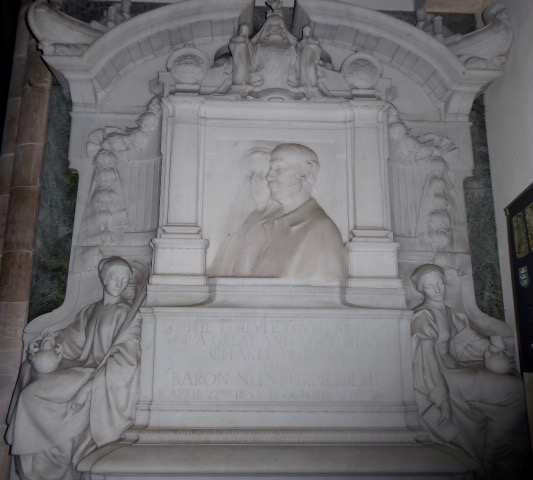
On 1st June 1891, the Royal Baccarat Scandal trial was the first time the heir to the throne was called as a witness in court. It began at a house party at Tranby Croft, Anlaby, (now Hull Collegiate School) home of Charles Wilson,  when Sir William Gordon-Cumming was accused of cheating at cards. Gordon-Cumming lost the slander case, and was dismissed from his army post the day after the trial ended. photo shows Charles Wilson’s memorial in Warter church.

Chas Wilson Nunburnholme

May 30th

On 30th May 1778, Frank Slaiter returned to work at Escrick Hall 4 ½ months after breaking his thigh at work. His employer, Beilby Thompson, paid his medical fees, and gave him an allowance of 2/3 his normal wage while he was off sick.

On 30th May 1782, Rev George Lambert and Mr Towers began a journey to London with a ferry crossing of the Humber, which took 3 hours; it took from 11a.m. to the evening to reach Lincoln by coach. They arrived in London about 50 hours after leaving Hull. This was probably typical for the time.

On 30th May 1820, William Bradley died aged 33 of tuberculosis in  Market Weighton. Known as the Yorkshire Giant, he grew to 7’9”. Travelled with shows and fairs, and later charged visitors to his home. Was presented to King George III. (b 10.2.1787)

On 30th May 1859, a Hull Coroner’s Court jury returned a verdict of wilful murder against Isabella Hewson.  On 27.5 she had hanged her son, aged 2, and then gave herself up to police. No evidence of insanity was found on medical examination.

On 30th May 1912, Brigadier Mark Sykes inspected the Yorkshire Catholic Reformatory, Market Weighton, and found lack of discipline, bullying, filth, poor food, lack of fire precautions and drill, and poor medical treatment. Recommended all staff but one be dismissed. The management of the school was changed later that year.


Yorks reformatory


May 24th

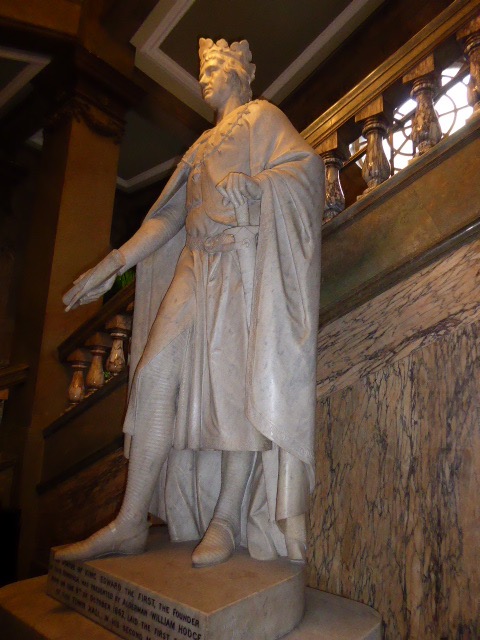
Edward I

Edward I statue, Hull Guildhall


On 24th May 1300, King Edward I landed in Hessle  from the Barton ferry, his retinue taking up 11 vessels and taking 2 days to make the crossings. Galfrid de Selby was paid 13shillings for the crossing. The King went to Hull and then on to Beverley.

On 24th May 1772, Parliament passed an Act to create the Market Weighton Canal, not just to transport goods, but also to prevent regular flooding of 20,000 acres of land.

On 24th May 1930, Amy Johnson landed in Darwin after flying 11,000 miles; the first woman to fly from the UK to Australia; she received the CBE and great public acclaim.

On 24th May 1943, the crew of Lancaster bomber W4303 crashed at Humbleton on a training flight, killing the 8 crew, aged from 21 to 30. The Australian pilot Bryde and flight engineer Nelson are buried in Brandesburton.

On 24th May 1962, Tom Knight and Saif Messin, engineers, and Bryan Webb, deck boy, 15, were trapped and died when the tug Tollman capsized in Hull’s Alexandra Dock while towing the Finnish ship Inio. The skipper and mate were saved. United Towing made changes to towing systems as a result.

May 23rd

On 23rd May 1260, William de Forz III, count of Aumale and Lord of Holderness, died, aged about 45. He gave away his claim to the earldom of Chester in return for 2 small manors, including Driffield. Acted as ambassador for Henry III to Scotland and France, and was a member of the Council of Fifteen, advising the King on government matters. Gave land to Meaux Abbey on ‘the island called Ravenser Odd in the Humber’. His heir, Thomas, was 6 and he and the count’s lands were put into the King’s care.

On 23rd May 1510, Howden tiler Robert Colstayne claimed sanctuary at the church of St John, Beverley, for ‘the security of his body’; the register gives no detail of who was pursuing him, or why.

On 23rd May 1596, Howden churchwardens gave 6d to 2 poor men (presumably travelling through on their way to their home parish).

On 23rd May 1642, Hull Governor Sir John Hotham called a meeting of ‘knights and gentlemen’ to give a ‘learned speech’ explaining why he refused to allow King Charles into the town. This was part of the ‘paper war’ between the King and Parliament.

On 23rd May 1822, Hull merchant Joseph R. Pease attended a public meeting for the Relief of the Suffering Irish, due to famine in the West. He reported it thinly attended.

On 23rd May 1853, a Government enquiry into electoral corruption was opened at the Mansion House, Hull.  This followed a petition from the Conservative Party objecting to the election of James Clay and Viscount Goderich as MPs for Hull in the previous year. Hull was unrepresented in Parliament for almost 2 years; the Commission sat for 57 days and produced a report weighing over 11 tons and costing £5,000. (and see 16.8)

On 23rd May 1904, on Whit Monday, the Holderness Polo club held a polo match which attracted 6,000 spectators. This was held at the Polo Ground, Westbourne Avenue, Hull (modern Westbourne Ave West to Perth St West)The last matches were played in 1907.

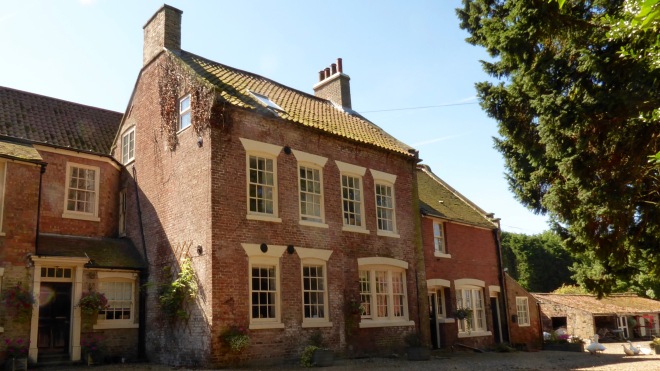
On 23rd May 1907, the Mayoress of Hull opened a new military rifle range at Rolston, for use by Militia, Volunteers and Yeomanry. The land was leased from Rolston Hall.  below – Rolston Hall.

On 23rd May 1911, a fire began in the kitchen chimney of Sledmere House, which 24 hours later had destroyed the whole house. Fire engines from Driffield and Malton attended. There were no injuries.


Rolston Hall.jpg


May 18th

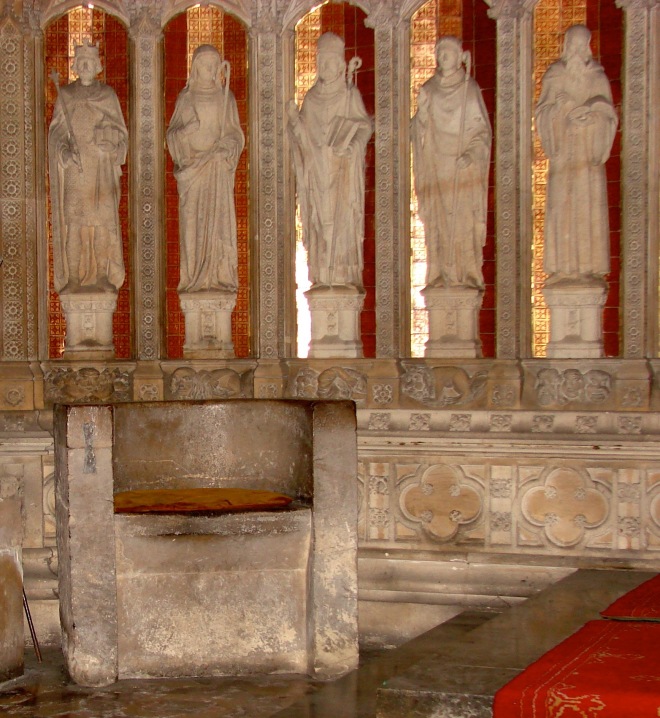
On 18th May 1516, Robert Bradlay of Halifax claimed the sanctuary of St John ‘s church Beverley for debt. Fugitives from justice often travelled long distances to get to a registered sanctuary, in order to be safe for a time from their pursuers. photo shows the Frith Stool in the Minster, the innermost sanctuary.

On 18th May 1957, Queen Elizabeth II visited Hull for the day and while here visited one of the new houses on Longhill Estate. She also visited Paragon Station, Paragon Square, St Andrews Dock, St Andrews Dock Surgery, Hull University, the Sailors’ Children’s Society, Hull Royal Infirmary, the Guildhall, King George dock, East Park, Wilton House, and Corporation Pier. She had 184 people presented to her, from the Archbishop of York to Mrs Annie Nock, fish house worker.


minster - frith stool.JPG

May 17th

On 17th May 1660, King Charles II’s accession to the throne was announced in Hull; from a gallows in the Marketplace the arms of the Commonwealth and effigies of Oliver Cromwell and Serjeant Bradshaw were hanged.

On 17th May 1881, after its first year of concerts, Hull Philharmonic Society recorded a loss of £15 12s8d.

On 17th May 1943, John Pulford, DFM, 23, was flight engineer on the ‘Dam Busters’ raid which destroyed the Mohne & Edersee dams, Germany. Died when his plane crashed in Sussex 12.2.1944. (b 24.12.1919 Sculcoates)

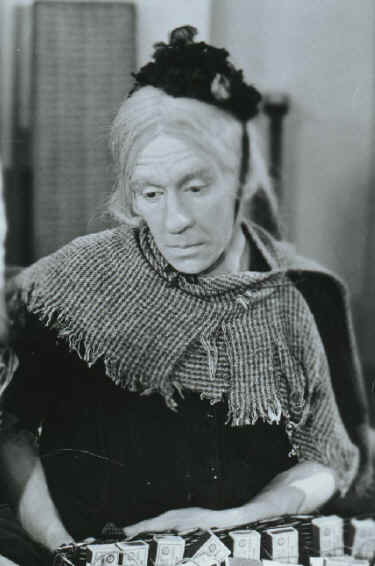
On 17th May 1954, Arthur Lucan died in his dressing room at the Tivoli Theatre, Paragon Street, Hull, during preparations for a new revue; Lucan was famous for playing Old Mother Riley in many films and shows.

Arthur_Lucan