February 23rd

On 23rd February 1643, Queen Henrietta Maria was woken at 4a.m. in Bridlington Quay by a bombardment of the house by Parliamentary ships; she sheltered in a ditch until the ebb tide moved the ships out of range.

On 23rd February 1724, William Mason was born at Holy Trinity vicarage, Hull. A poet, biographer, composer and garden designer, in 1785 he was  William Pitt the Younger’s  choice as Poet Laureate,  but he refused the post. He is commemorated in Poets’ Corner, Westminster Abbey, and in Hull with a cream plaque. (d 7.4.1797) see picture below

On 23rd February 1830, a report in the Hull Packet said that Revd John Earle’s boarding school at Driffield had been relocated to Watton Abbey, the stately home of the Legard family. It remained there for 10 years, and Earle took on the living at Watton church.

On 23rd February 1919, Company Sgt Major Kelly died of flu in Hull Royal Infirmary. He had been discharged from the East Yorkshires a week before, after serving in WW1 from September 1914. He is buried in Hedon Road cemetery.
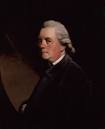
Wm Mason

February 5th

On 5th February 1538, widow Mabel Brygge, 32, servant of Holmpton, was examined by an enquiry headed by Sir Ralph Ellerker the younger. She was alleged to have carried out a ‘black fast’ with the aim of injuring King Henry VIII and the Duke of Norfolk, in relation to the King’s divorce and the Reformation. She was executed at York, along with John Dobson, vicar of Muston, and John Ainsworth, priest, who had also spoken out against the royal supremacy and Act of Succession.

On 5th February 1856, Humphry Sandwith, junior, MD, aged 34, had a public breakfast given in his honour as a war hero at Royal Station Hotel Hull.  He gained the Orders of St Stanislaus, Nishan Iftahar and Mejidie, and French Legion of Honour in the Crimean War. He was head surgeon at Hull General Infirmary 1847-48. Author of a number of memoirs, as well as 3-volume novel “Minsterborough’ about his upbringing in Beverley.

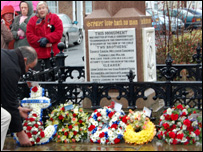
On 5th February 1909, George Gibbon, Melchoir Chadwick and Thomas Leng Major, fishermen, lost their lives attempting to rescue the crew of the coble Gleaner when it capsized. Their own boat also capsized, and all 6 lives were lost. A monument to this ‘Conspicuous Act of Bravery’ is in the village centre.


flambro

December 21st

wm constable

On 21st December 1633, the Duke of Cumberland’s staff bought supplies of oysters (600 at 6d per 100) for Christmas at Londesborough House on his behalf when he was in York on business.

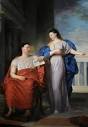
On 21st December 1721, William Constable was born at Burton Constable. He inherited the Constable estate, and is chiefly remembered for restoration work on the Hall, and as an amateur scientist and collector of art and artefacts; his Cabinet of Curiosities may be the most complete in any stately home. He became grossly overweight, suffering from gout, probable hypochondria and addiction to medication containing opiates. (d 18.5.1791) see photo with his sister Winifred

On 21st December 1824, Richard Arthur Worsop of Howden Hall recorded in his diary that he supported a charity which had been continued by the owners of the Hall since the 17th Century; he gave 6d each to 40 poor people of the parish, and a bushel each of wheat and coals to a further 10. He recorded several other charitable gifts in his diary, including a sheep to the workhouse.

On 21st December 1838, Hull banker Joseph Robinson Pease established, and was elected President of, Hull Labourers’ Friendly Society, having established a society in Hessle which had built a cottage there.  There were already dozens of friendly societies in Hull by this time, and this new group may have been more of a building society than a self help group. Pease was certainly no democrat (he described democracy as a ‘pestilent curse’).

On 21st December 1857, Henry Smith Bright, manager, Hull Cotton and Flax Mills, was found guilty at York Assizes of forging deeds of transfers of shares, and sentenced to 6 months’ penal servitude. His actions appear to have precipitated the closure of the Hull Flax and Cotton Mills and the bankruptcy of the partners in the Harrison Watson & Co bank on 24.9.1857.

On 21st December 1957, Edward Benn, 43, bosun, of Hull Rd, Hedon, died as result of accident aboard Hull trawler Cape Palliser off Iceland.

December 14th

Ebberston Yorks Aelfrids Memorial


On 14th December 704, the Anglo Saxon Chronicle records, King Aldfrith of Northumbria died in battle at Ebberston and was buried at Little Driffield. A man of great learning, educated for a career in the church, but he succeeded to the throne when his brother died. A memorial to him, called King Alfred’s Stone, is at Ebberston, North Yorks. Driffield may have been a royal seat of the Saxon kings. (sources vary as to his exact dates)

On 14th December 1610, an anonymous tinker was invited in to Londesborough House, home of the Earl of Cumberland, to mend broken pans and was paid 3s4d by the clerk of the kitchen.

On 14th December 1660, surgeon Joseph Thornnton was granted a licence to practice in Hull, after being invited to move from Great Horton, West Riding, to deal with a typhus outbreak. 18 people signed a testimonial to his effectiveness.

On 14th December 1775, Hull Corporation delegated its responsibility to provide a town dump to the official Town Scavenger; the condition of the Spring Ditch soon gave cause for concern, and in 1777 a bank was built to stop dung and rubbish entering the water.

December 12th

On 12th December 1303, Hull burgess John Schayl left 20shillings in his will towards the rebuilding of Holy Trinity Church.

On 12th December 1659, James Primrose MD, aged 63, of Whitefriargate, Hull, signed his will, and died sometime in the same month. Raised and educated in France, related to James I’s principal surgeon and Scottish nobility. Prominent writer on medical matters, and highly respected Hull physician. Andrew Marvell referred to him in a poem. A religious nonconformist who was fined for non-attendance at church at least twice.

On 12th December 1895, Robin Pockley, coxswain of th eFlamborough lifeboat, saved the 3 crew of the fishing boat Elizabeth, who had been washed into the sea several miles off Flamborough Head; as there was not enough time to call out the lifeboat, he put out to sea with 2 colleagues in an ordinary fishing boat. He was awarded the RNLI silver medal.

On 12th December 1946, Barrie Rutter was born in Hull. Actor, director and founder of the Northern Broadsides theatre company; awarded OBE for services to drama. photo shows him (middle) in 2017 production of ‘Richard III’.

-Barrie-Rutter-Mat-Fraser

December 8th

turkey lectern3.JPG


On 8th December 1536, armed men from Holderness who had seized Hull in the Pilgrimage of Grace restored the town to the Mayor and dispersed.

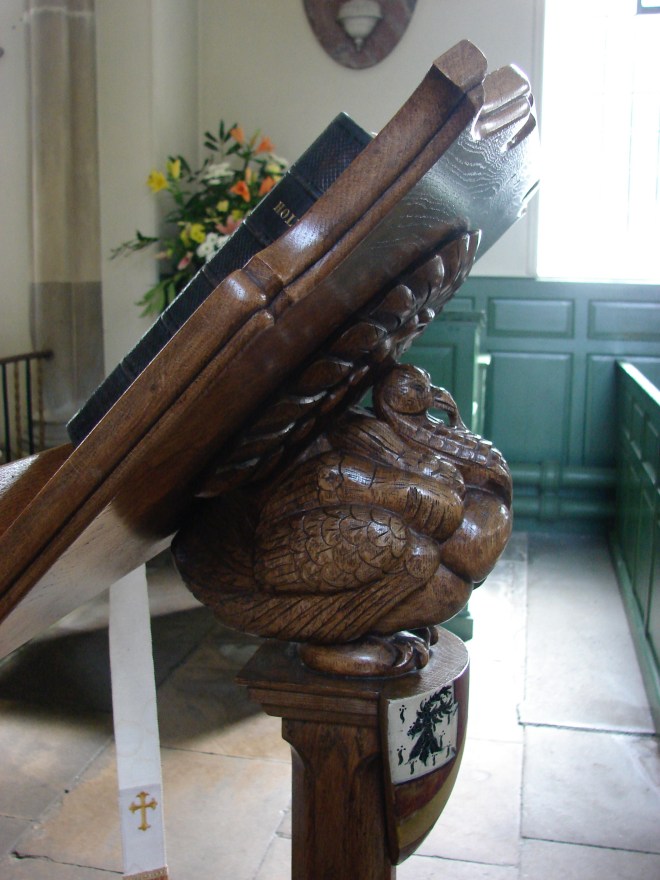
On 8th December 1598, William Strickland died in Boynton. When young, he had travelled to America on voyages of exploration with Sebastian Cabot, and is credited with introducing the turkey to England. Later became a prominent Puritan MP. photo shows the Turkey Lectern in Boynton church.

On 8th December 1629, George Acklam of Bewholme died aged 64, and left £5 to Hornsea church to distribute to the poor every year on Maundy Thursday ‘forever’.

On 8th December 1637, Hull Mayor John Ramsden was buried; he died of plague. Andrew Marvell gave the funeral oration. His son, also John Ramsden, became Hull MP. This outbreak of plague in Hull killed over 2,500 people, and many more left the town. 

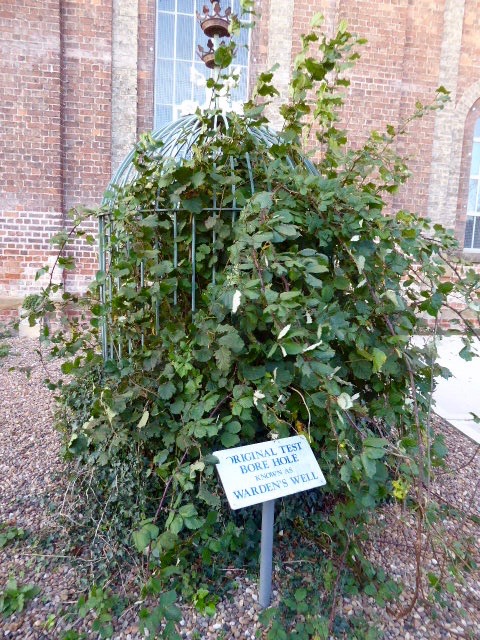
On 8th December 1879, William Walden, engineer and brewer, died aged 62. In a time when Hull was beset with cholera, he offered to supply Hull with clean water from Springhead at the rate of 5m gallons of water per day, at a fee of £500, or if he failed, be paid nothing. He succeeded. He is buried in Hull General Cemetery.

Springhead bore hole

December 2nd

On 2nd December 1614, a woman bone-setter from South Dalton set the leg of John the gardener at Londesborough House after he had broken it in a fall from a horse. The Earl of Cumberland paid the costs of his servants’ medical treatment.

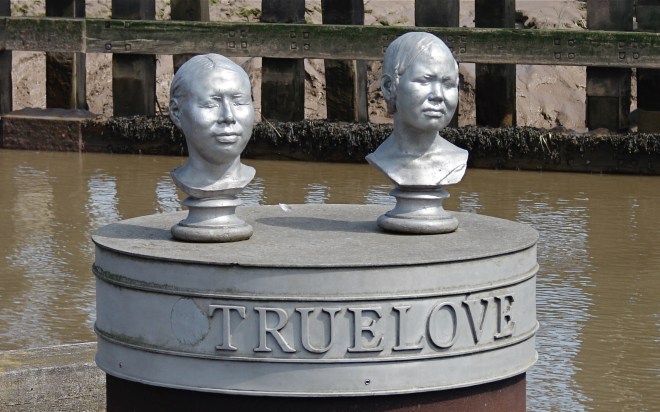
On 2nd December 1847, Memiadluk and Uckaluk, of Cumberland Sound, Greenland, gave the first of several exhibitions of their traditional clothing, kayak and hunting equipment on their British trip to raise money and awareness of the plight of their people. Greenlanders were being encouraged to use modern hunting equipment, but supplies were irregular with no permanent British settlement. Photo shows their statues at the side of the River Hull.

On 2nd December 1985, Philip Larkin, poet and librarian, died in hospital in Cottingham of oesophageal cancer at the age of 63. Librarian, University of Hull 1955-85. CBE, Companion of Honour., Queen’s Gold Medal for Poetry. (born 9.8.1922 Coventry)


truelove.JPG

November 21st

On 21st November 1798, Elizabeth Darling, of Scale Lane, Hull, on the death of her father, continued to run his business as apothecary, although as a woman she was unable to train formally.

On 21st November 1823, Joseph R. Pease reported in his diary a fire in their oil windmill; due to thick walls, adjoining warehouses were not affected. 3 fire engines attended. Pease blamed the carelessness of 2 workers.

On 21st November 1940, Sidney Hall, aged 17, mess boy, of Hull, was lost by enemy action with all 45 crew of SS Cree of London; the Merchant Navy  ship, returning to UK from Sierra Leone, was torpedoed by a German submarine.


November 16th

On 16th November 1503, Elizabeth of York, Duchess of Suffolk, died, aged 58. She was married to John de la Pole, 2ndDuke of Suffolk. The lands she held in Hull and Myton reverted to the Crown, and in 1514 Henry VIII gave them to William Sidney, buying them back in 1539 to build his fortifications in the town. She held 1,000 acres of land, including meadow, pasture, 100 dwelling houses, a mansion and gardens and the patronage of the Charterhouse.

On 16th November 1857, ‘A Dissenter’ issued a campaign leaflet encouraging religious dissenters to oppose plans by the Church of England to close down the school run by the Leonard Chamberlain Charity, the trustees of which were all dissenters. The writer estimated that 1/3 of Hessle people were not CofE members. The school remained open for a further 45 years.

On 16th November 1918, PC244 Harry Burgess filed a statement at Hull Central Police Station, reporting on 3 US sailors and 1 American soldier being followed by a large crowd. The Americans used obscene language, threatened to fight, and refused to go to their billets. Police escorted them to the Grosvenor Hotel, guarded the gate and dispersed the crowd, who accused the Americans of attacking British and Canadian soldiers.  The US commander later ordered his men, based at Killingholme US Naval Air Station, not to visit Hull without orders.

On 16th November 2017, Queen Elizabeth II visited Hull and met some of the City of Culture volunteers, had lunch with the Bee Lady among others, visited Siemens, and the new Allam Medical Centre at Hull University.


royal visit 2017

November 11th

Lister's Hospital, S Church Side


On 11th November 1642, the building work at the new William Lister’s Hospital in South Church Side, Hull, was inspected. They were surprised to find Mr Gough, Reader at Holy Trinity church, living there, in rooms allocated to the Assistant Preacher, which post was vacant at the time. Eventually, agreement was reached with the Mayor and Aldermen whereby Gough was allowed to remain, and given the post on a temporary basis.  He appears to have still been in post 20 years later. A dispute arose in 1749 over the same rooms, and post, when the trustees decided that the Mayor and aldermen had no power to ‘intermeddle’ this time. photo shows the Hospital

On 11th November 1899, the Evan Fraser Hospital opened at West Carr, Sutton-on-Hull as an isolation hospital for smallpox patients, named after a surgeon and Hull alderman (d.8.4.1906). The hospital replaced the Garrison Hospital on Sammy’s Point. Police were posted outside to prevent access, and the city banned religious services and the loan of library books.

On 11th November 1920, Mr Arthur B. Reckitt unveiled memorial tablets at Reckitt’s Institute, Dansom Lane, Hull, to staff who had died in World War 1. 159 Reckitts employees died.

On 11th November 1942, Abdul Rahman, aged 22, seaman, was lost to enemy action whilst in Merchant Navy on board SS City of Ripon of Hull, in Atlantic convoy.