February 5th

On 5th February 1538, widow Mabel Brygge, 32, servant of Holmpton, was examined by an enquiry headed by Sir Ralph Ellerker the younger. She was alleged to have carried out a ‘black fast’ with the aim of injuring King Henry VIII and the Duke of Norfolk, in relation to the King’s divorce and the Reformation. She was executed at York, along with John Dobson, vicar of Muston, and John Ainsworth, priest, who had also spoken out against the royal supremacy and Act of Succession.

On 5th February 1856, Humphry Sandwith, junior, MD, aged 34, had a public breakfast given in his honour as a war hero at Royal Station Hotel Hull.  He gained the Orders of St Stanislaus, Nishan Iftahar and Mejidie, and French Legion of Honour in the Crimean War. He was head surgeon at Hull General Infirmary 1847-48. Author of a number of memoirs, as well as 3-volume novel “Minsterborough’ about his upbringing in Beverley.

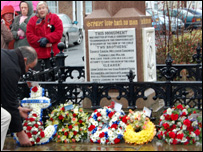
On 5th February 1909, George Gibbon, Melchoir Chadwick and Thomas Leng Major, fishermen, lost their lives attempting to rescue the crew of the coble Gleaner when it capsized. Their own boat also capsized, and all 6 lives were lost. A monument to this ‘Conspicuous Act of Bravery’ is in the village centre.


flambro

February 4th

On 4th February 1516, John Holme, labourer, of Ottringham, claimed sanctuary at the church of St John ‘for divers felonies’.

On 4th February 1634, William Kitching, 39, of Little Driffield, and 9 other men, were hanged at York for rioting at Hull about corn, for demolishing the dwellinghouse of Edward Cooper, and for stealing clothes. None of those convicted were from Hull.

On 4th February 1783, Hull Trinity House accepted the proposal of Mr Blaydes of Hull to build a yacht for £500; they used the yacht Humber for 23 years.

On 4th February 1809, Ebenezer Bettison and 2 others, of Hull, drowned during a storm when going in a boat to secure a lighter which appeared to be in danger.

On 4th February 1821, Thomas Wilkinson Wallis was born in Hull. The son of a cabinet maker, he became a wood carver. He was a pprenticed to Thos Ward in Waterworks St, Hull, and trained at the Mechanics Institute. His work can be found in the Victoria & Albert Museum, London. photo shows one of his carvings

On 4th February 1900, Sir Leo Schultz (Joseph Leopold Schultz) was born in Hull. He was  the Leader of Hull City Council from 1945-79. Was awarded the OBE in 1946 for war work, including as an air raid warden, and for his campaign to provide all households with a bomb shelter. He was knighted in 1966 for services to local government. Honorary Doctor of Law Hull University 1979. d 1991. photo above

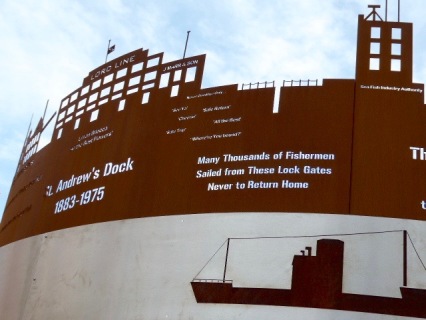
On 4th February 1968, Hull trawler Ross Cleveland capsized and sank with all but 1 of the 20 crew. An enquiry concluded the ship was unable to cope with ice build-up. The wreckage was located in 2002.

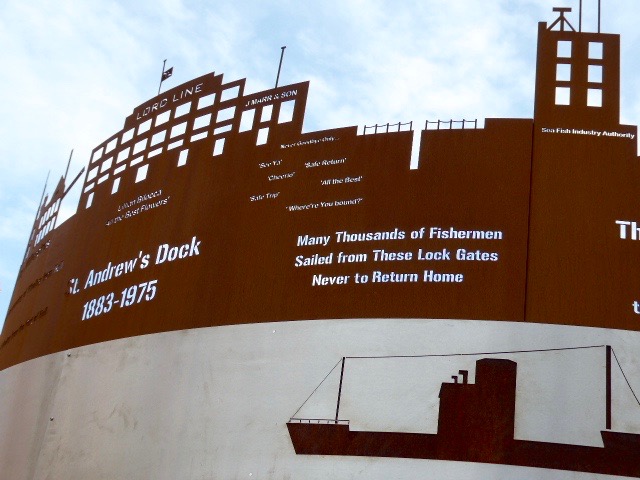
St Andrews Dock memorial

February 1st

On 1st February 1639, King Charles I issued an order to enclose Hull and improve its fortifications.

On 1st February 1714, a great wind caused damage in several places, and blew down Richard Stevenson’s house in Kilpin, then the fire in the hearth destroyed the remains.

On 1st February 1884, at the Hull Sanitary Congress, Hull City Hall, Rev Joseph Malet Lambert called for bold action to save hundreds of lives, and improve thousands more, by dealing with dreadful housing conditions, some of them a stone’s throw from the City Hall. The slums were cleared 20 years later.

On 1st February 1893, Hedon Gymnastic Society put on an ‘Assault-at-Arms’, with an appearance by a clown, and followed by a dance in the Board School room, Roos.

On 1st February 1922, Robert Anderson, 26 of 7 Emily Terrace, Gillett St was lost with 9 shipmates when Hull trawler Magneta was wrecked off Murmansk, under Russian arrest.

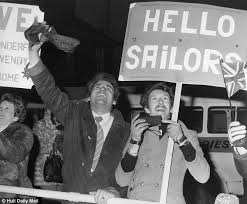
On 1st February 1983, 800 dignitaries, service representatives and families of the Norland crew gathered at the King George Dock Terminal Building, Hull. They were there to greet the return of North Sea Ferries Norland after over 9 months in the Falklands War supporting the troops. Unfortunately, 90 mph winds did not allow the ship to dock, and it rode out the storm in the Humber for several hours , by which time the banquet was over.  Hundreds of people were still there to greet them at the quayside in the evening. The Norland was refurbished and returned to the Rotterdam run on 20thApril.

Norland return

January 29th

On 29th January 1505, Richard Naperton, labourer, of Goodmanham, claimed sanctuary at the church of St John, Beverley, for debt.

On 29th January 1885, William Barlow, 15, cook, was lost overboard from Hull trawler Only Son in the North Sea.

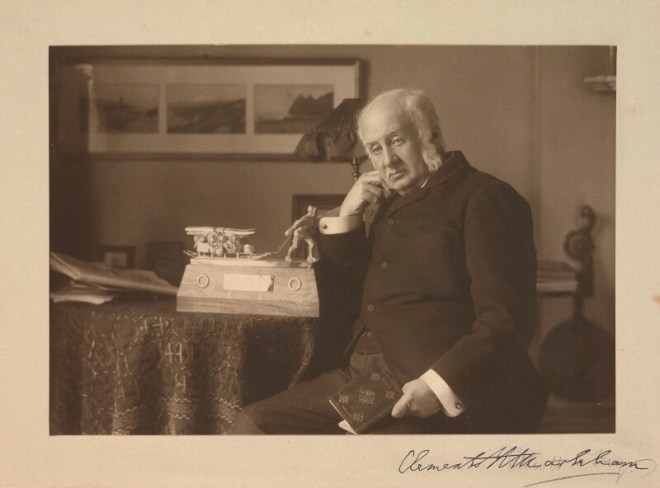
On 29th January 1916, Sir Clements Robert Markham KCB, FRS of Stillingfleet died aged 85. Born in Stillingfleet, he became a Navy officer, explorer and geographer, Secretary of the Royal Geographical Society, organiser of Scott’s 1901-4 National Antarctic Expedition, author, and organiser of the 1860 expedition to collect cinchona for quinine.

sir clemts markham

January 26th

St Andrews Dock memorial
Zebedee’s Yard

On 26th January 1509, William Ivenson, Hull tailor, claimed sanctuary at the church of St John, Beverley for debt.

On 26th January 1516, John Catton, husbandman, of Allerthorpe, claimed sanctuary at the church of St John, Beverley, for felony.

On 26th January 1884, former pupil of Hull Trinity House School John Blakeston drowned after falling into the sea while reefing sails on the Barque Cape City off Rosario, Cape Horn.

On 26th January 1926, Ronnie Hilton was born Adrian Hill  in Hull. A singer, had 9 top 20 hits in the 1950s, and was also a radio presenter and pantomime artiste.  d 21.2.2001

On 26th January 1968, Hull trawler Kingston Peridot made her last contact by radio. See 10.1

On 26th January 1972, students at Hull University held a sit-in, called The January 26 Movement, in the Students Union building. It was part of an anti-apartheid campaign to persuade Hull University to divest itself of shares in Reckitt & Colman, which had extensive interests in South Africa and Rhodesia. The sit-in ended on 7th February.

ronnie-hilton-a-windmill-in-old-amsterdam-1965

January 24th

On 24th January 1882, Peter Hughes, 16, ship’s cook, died on board the fishing smack Gleaner on the Dogger Bank. He died at the hand of Edward Wheatfill, after two weeks of beating, starvation, and torture, including being tied naked on deck. Wheatfill was found guilty of wilful murder and executed at York on 28.11.1882.

On 24th January 1906, the name of Leona Sherman was found on the Hornsea electoral list for the General Election; there is no record whether she tried to cast her vote.

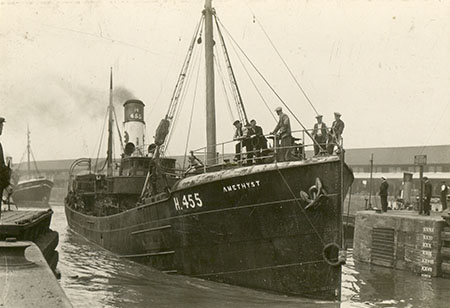
On 24th January 1937, Richard Baker, 28, skipper, of Bernadette Ave, Anlaby and all his crew were lost when the trawler Amethyst foundered off Kinnaird Head.

AMETHYST-H455-leaving-SAFD-450px

January 20th

On 20th January 1577, John de Tradescant of Cottingham broke into the York house of John Paschal with 2 associates; they were convicted, hanged and their bodies given to the surgeons of the city to be dissected and anatomized.

On 20th January 1595, Robert Cripling and William Lucas, servants to Sir Francis Clifford, bet another Londesborough servant, George Ingmire, that they could beat him in a race on foot from Londesborough to Market Weighton; they won.

On 20th January 1652, John Rogers, Mayor, and Hull aldermen Edward Wingate, Durand Hotham, and Lance Roper, asked the Court of Chancery for help in compelling Mr Stiles and other former Masters and Brethren of Hull Charterhouse, to appear before them and produce documents to account for corruption in the management of the Charterhouse Hospital. (Things appear to have changed after this: a report in 1668 showed an increase in the number of poor cared for from 12 to 40.)

On 20th January 1782, Dr Robert Levett, or Levet, of Westella,  was buried in Bridewell church yard, London. He had died, aged 79, apparently of a heart attack. He had lived in Dr Samuel Johnson’s household for 20 years. Earned a living as a servant, waiter and physician to the poor. Johnson wrote a poem ‘On the Death of Dr Robert Levet’. Tablet in Kirkella church. B 1703 Westella.

On 20th January 1968, Ross Cleveland of Hull set out from Hull for the last time for the North-West coast of Iceland.

St Andrews Dock memorial
Zebedee’s Yard

January 17th

On 17th January 1527, George Ableson, a wheelwright from Hutton Cranswick, claimed sanctuary at the church of St John, Beverley, for debt.

On 17th January 1583, William Lyon, fisherman of Yarmouth, obtained permission to move with his family to Hull, to become a freeman, to set up business as a fisherman and train others in the trade, giving a surety of £40, but also receiving £10 in expenses towards his costs.

On 17th January 1786, Capt Edward Thompson died of fever in post, aged about 48.   Born in Hull, the son of a merchant. Naval commodore; he wrote an account of the Battle of Quiberon Bay in 1759; he was responsible for organising the government of West Indian colonies of Berbice, Demerara and Essequibo. He was acquitted at court martial of leaving his station in 1781. He published a number of satirical poems, sea songs, plays and a report of naval life. b c1738

Capt EdwdThompson


January 13th

On 13th January 1096, King William Rufus found Count Odo, Lord of Holderness, guilty of a plot to kill the King and place his son Stephen (William I’s nephew) on the throne; Odo got off lightly with loss of his lands, and Stephen went on crusade. Holderness was granted to Arnulf, son of Earl Roger of Salisbury.

On 13th January 1621, Stephen Doughton left his job as servant of the Francis Clifford, Earl of Cumberland, and received 2 years’ arrears of wages, a total of £5 6s8d. The family was short of cash, and servants were often not paid until they left the Earl’s employ.

On 13th January 1954, the crew of Flamborough lifeboat Friendly Forester saved the 3 crew of the fishing coble Silver Line.

On 13th January 1968, a liferaft belonging to the St Romanus of Hull was found.

St Andrews Dock memorial
Zebedee’s Yard


January 10th

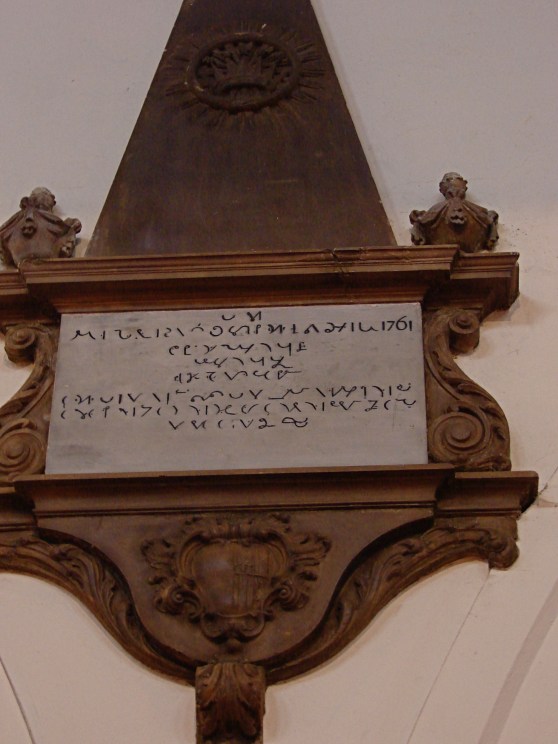
st mary's sculcoates.JPG

On 10th January 1308, Ivo de Etton of Temple Hirst, near Selby, and William de la Fenne from Faxfleet had been preceptors (heads) of local houses of the outlawed Knights Templar order, when they were arrested and imprisoned by Henry II on instructions of Pope Clement V. Also arrested were Richard de Ryston, chaplain, Thomas Tyeth, claviger (or warden), and Roger de Hugunde or Hogyndon, a brother in residence at Faxfleet, and Adam de Crake, claviger, at Temple Hirst.

On 10th January 1511, Richard Elynor of North Cave claimed sanctuary at the church of St John, Beverley, for a felony, but the register does not give any detail of his crime.

On 10th January 1537, Sir Francis Bigod, of Settrington, and John Hallam, of Cawkeld near Watton, met to discuss rekindling the Pilgrimage of Grace, which had ended in December with promises to restore the monasteries and hold a Parliament at York. They planned to seize Hull and Scarborough before they could be fortified.

On 10th January 1646, Stephen Thompson of Humbleton was fined £400 as the owner of Scarborough Castle and a Royalist (a ‘delinquent’) in order to recover his goods which had been sequestered by Parliament.

On 10th January 1761, Mrs Jane Delamoth died in Hull. Her memorial in St Mary’s Sculcoates may be the only memorial written in shorthand in the world. It says: ‘In the vault beneath this stone lies the body of Mrs Jane Delamoth, who departed this life 10thJanuary 1761. She was a poor sinner, but not wicked without holiness, departing from good works, and departed in the faith of the Catholic Church, in full assurance of eternal happiness, by the agony and bloody sweat, by the cross and passion, by the precious death and burial, by the glorious resurrection and ascension of Our Lord and Saviour Jesus Christ’. see photo

On 10th January 1783, Rear Admiral John Storr died in Hilston. He is buried in Westminster Abbey. (b 18.8.1709) He commanded the Revenge at the Battle of Quiberon Bay 20.11.1759. His father Joseph built Storr’s Tower at Hilston in 1750. It served as a hospital for troops camped on the coast in 1794–5 and later as a cottage, but was disused in 1990. His memorial is in Hilston church.

On 10th January 1849, Cottingham land agent Thomas Spenceley reported that he had measured the distance from the Spa Inn, Aldbrough to the sea in 1832 and again in 1848 and the loss of land due to coastal erosion was 28 yards in that period. On 6.8.1832 the distance was 160 yards; on 11.8.1848 it was 132 yards, an average loss of 5ft 3” per year.

On 10th January 1952, Madame Clapham (Mrs Emily Clapham) died aged 96, the former Court Dressmaker of Kingston Square, Hull. Her fashions for high society made Hull ‘the rage’ according to Sir Osbert Sitwell.

On 10th January 1968, Hull trawler St Romanus left port and made radio contact with the owners that evening. A Mayday call was heard, but not passed on. The official enquiry concluded ship probably lost on 11thJanuary, reason unknown.

On 10th January 1968, Hull trawler Kingston Peridot of Hull left port and was not contacted until after 26 January. The enquiry concluded she probably capsized on 26th  or 27th January, due to extreme weather.