April 7th

john-hotham-1-sized

On 7th April 1615, George Goodgion, senior servant to Francis Clifford, Earl of Cumberland, ordered tenants to cart coals to the big house, which was out of fuel, and to note the names of those who refused. Tenants were required in their leases to do this work, but had to fit it in with their own farming work.

On 7th April 1643, Sir John Hotham wrote several letters to people on the Parliament side; the post for London was captured, and his letters published by the Royalists at Oxford, revealing his double-dealing.

On 7th April 1787, John Morrit, 34, was hanged at York for murdering John Argyle, aka Roundell, of Howden.

On 7th April 1810, Mr William Iveson, Steward to Francis Constable of Burton Constable, proposesd to Hull Trinity House to erect a lifeboat house on Spurn Point, provide 12 crew from Kilnsea, and open a tavern to create an income for the boat’s master.

On 7th April 1828, Joseph Robinson Pease, JP, made his first committal as JP in Cottingham, of a man who disobeyed an Order of Bastardy, i.e. he was jailed for refusing to pay maintenance for an illegitimate child.

On 7th April 1893, a rioting Hull mob destroyed 37 bags of carrots being taken on rullies to the docks, and used them as missiles to attack the police.

On 7th April 1943, pupils at Paull Primary School escaped unhurt when a barrage balloon escaped its mooring in the Humber, and exploded, setting fire to the school building.
 

April 6th

On 6th April 1486, John Heryson, husbandman of Middleton on the Wolds, claimed sanctuary at the church of St John, Beverley, for killing Thomas Metcalfe of Melmerby with a staff earlier that day.

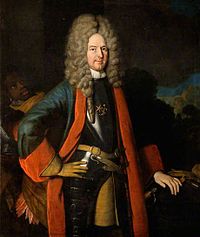
On 6th April 1713, Brigadier General Luke Lillingstone died aged 60 in North Ferriby. He had served in Ireland and Martinique. He is chiefly known for advertising Ferriby Grange for sale due to military debts.  His monument is in Ferriby church. see picture

On 6th April 1816, George Hudson, aged 15 or 16, was fined 12s6d for bastardy. It appears he then left his affluent home in Howsham under a cloud and moved to York. He eventually became known as the ‘Railway King’.

On 6th April 1911, Hull Corporation Transport introduced free passes for blind people.

Luke_Lillingston

April 5th

On 5th April 1788, Catherine Savage, of Holme on Spalding Moor, was hanged at York for entering Stephen Ridsdale’s Welton house and stealing clothes. Ridsdale was a tailor and stay maker. Savage’s husband, Abraham, was sentenced to transportation.

On 5th April 1806, George Ormond, 30, of Hull, was hanged at York Castle for forging bank documents from Raper, Clough & Swann Bank, York.

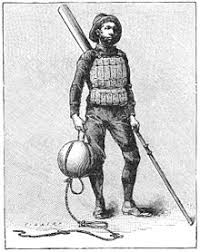
On 5th April 1837, Alexander Gordon Carte, ordnance storekeeper at Hull Citadel, had one of his inventions, Carte’s Sea Service Rocket Apparatus, recommended for adoption by the Liverpool Dock Committee. He also invented the self-adjusting cork lifebelt, and an alarm system. His safety equipment was on view at the Great Exhibition in 1851. photo shows a cork lifelt from the 1860s

On 5th April 1916, Jesse Matthews died of shock in Barnsley Street, Hull, the only casualty of a Zeppelin raid which damaged a house in Portobello Street. The Zeppelin was hit by gunfire.

cork lifebelt, 1860s

April 4th


Pat church

On 4th April 1654, Emmot Laykes, wife of John Laykes, was fined in Patrington manor court for striking Gregory Bilton with a rolling-pin.

On 4th April 1868, Frederick Parker of Hemingbrough was executed at York Castle and his body buried within the prison for murdering Daniel Driscoll, 27, at South Duffield on 29.2.1868.

On 4th April 1942, Laura Jaselli, Italian alien, of Barrow Lane, Hessle, was given a Travel Permit registered with the East Riding Police (cert 379095) as an Alien on moving from Ashton under Lyme; she was allowed 17 ½ hours to complete the move.

April 3rd

On 3rd April 1674, Amos Cropper, 25, of Hull, was hanged at York for the murder of Joseph Beck of Dewsbury on the king’s highway near Huddersfield.  His body given to surgeons to be dissected.

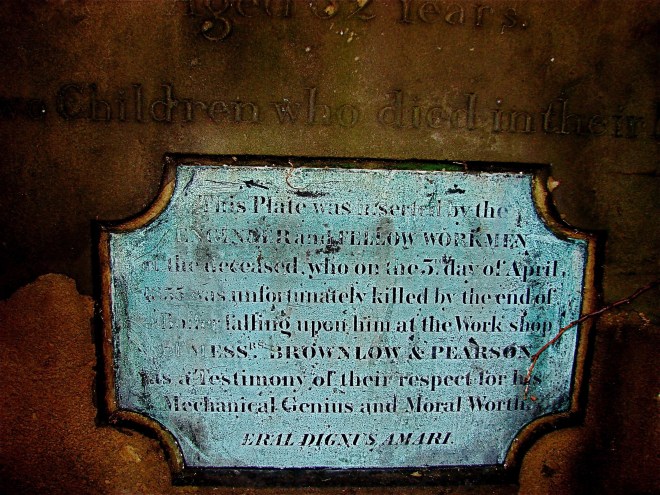
On 3rd April 1835, W. Wilkinson died at Hull. The end of a boiler fell on him at the workshop of his employers Messrs Brownlow and Pearson. A plate was inserted on his headstone in Castle Street Cemetery by the engineers and fellow workmen as a testimony of their respect for his mechanical genius and moral worth.

On 3rd April 1941, Mr Stanley Cockerill, voluntary warden, was recommended for gallantry award for action in dealing with a fire bomb at Hull.

W. Wilkinson mechanical genius.JPG

April 2nd

Chas I trial

On 2nd April 1380, Alexander Neville, Archbishop of York, granted to the burgesses of Beverley the Westwood and all rights attached to the land.

On 2nd April 1607, John Alured was baptised in All Saints Church, Preston. He was elected MP for Hedon in 1640, and was a judge at the trial of Charles I. Died 1654. picture above shows the trial

On 2nd April 1652, Luke Hinderson, aged 45, of Stamford Bridge, was hanged outside Walmgate Bar, York, with 3 others, for robbing Peter Ellison, butcher of York, and leaving him for dead.

On 2nd April 1660, John Ramsden & Andrew Marvell were elected MPs for Hull; the votes cast were: John Ramsden 227, Andrew Marvell 141, Mr Barnard 113, Wm Lister 80, Matthew Allured 55 and Baron Thorp 35, in all 651.

On 2nd April 1774, George Belt of Howden was hanged at York Castle for breaking into and robbing the house of Mr Althorpe, near Howden.

On 2nd April 1785, William Riley, 23, was hanged for robbing John Borr of Hull near Newland.

On 2nd April 1916, a BE 2c aircraft of Beverley Royal Flying Corps Squadron 47, crashed at the Racecourse due to engine failure while defending the area from a Zeppelin attack.


March 31st

Andrew Marvell

On 31st March 1621, Andrew Marvell was born in Winestead to local vicar Andrew Marvell, who later became Master of Hull Charterhouse. Marvell junior was a renowned poet, and MP for Hull several times. During the Civil War, he travelled in Europe, prompting some to suggest he was employed as an English spy. He acted as London agent for Hull Trinity House. Died in Hull 1678, and is buried in St Giles in the Fields, London

On 31st March 1801, Captain Mitchinson, of the Hull whaler Blenheim, was found not guilty of the murder of 2 members of the Press Gang, (John Burnick and John Sykes) his defence being that he was handcuffed and locked in his cabin at the time. Burnick and Sykes were buried in Drypool Cemetery.

On 31st March 1941, having just completed a successful campaign for blood donors, Dr David Diamond, Deputy Medical Officer for Hull, was killed instantly when a land mine made a direct hit on the Shell Mex Building, Ferensway, the ARP Headquarters. A heavy raid on the docks destroyed offices, a garage, works, houses, dog kennels and warehouses at Albert, Alexandra, Town and Victoria Docks. A total of 200 deaths was recorded in March.

hull-blitz-shell-mex

March 30th

john-wilson-carmichael-the-shipyard-at-hessle-cliff-1820_a-l-10072237-8880731

On 30th March 1693, John Frame’s shipyard at Hessle Cliffs launched the man-of-war, the Humber, for the Navy, of 1205 tons, carrying 490 men and 80 guns. John Wilson Carmichael’s painting of the shipyard at Hessle Cliffs is in Ferens Art Gallery

On 30th March 1757, Mary Ellah of Broomfleet was hanged at York Castle, and her body burnt, for murdering her husband.

On 30th March 1782, scaffolding collapsed while builders were installing a roof beam in the new Congregational Chapel in Fish Street, Hull; 5 men fell to the ground, 3 of them seriously injured.

On 30th March 1851, the census figures recorded that more than half of the Hull population did not attend church on the given date, and that around 15% of the population described themselves as Church of England. (N.B. figures may have serious omissions, e.g. prisons, workhouses).

On 30th March 1860, the Turner’s Trust (Beverley) charity was registered as part of the will of printer Matthew Turner, to distribute sums of £10 10s each to well conducted, honest, deserving, sober and discreet domestic servants. At its first distribution in 1862, there were 240 applicants, of whom 68 were successful. The charity still operates. Turner is buried in Coronation Gardens.


March 29th

On 29th March 1241, William de Forz II, count of Aumale, Lord of Holderness, died of illness beside the Mediterranean, en route to Jerusalem, aged between 45 and 50. At times close to Kings John and Henry III, he changed sides and rebelled several times, was excommunicated twice, having to seek sanctuary in Fountains Abbey, but was pardoned.

On 29th March 1689, Sir John Hotham, 2ndbaronet, was buried, after dying aged 57 of a violent cold. He had just been greeted enthusiastically as the new governor of Hull, having come from Holland with William of Orange. He was the grandson of Sir John Hotham, the Hull governor who turned away Charles I.

On 29th March 1759, John Courtney recorded in his diary that the Beverley Assembly Rooms in North Bar Street/Lairgate hosted ‘a very splendid show of ladies and gentlemen and a very agreeable ball’; Beverley lacked industry, but was a desirable place for gentry to build large Georgian houses.

On 29th March 1776, Eliza Bordington and Thomas Akerman, 37, of Flambrough, were hanged at York Micklegate Bar for poisoning Mr Bordington (presumably Eliza’s husband), and Eliza’s body was also burnt.

On 29th March 1874, John William Duncan, aged 12, was a member of  Hull’s Spring Bank Orphanage’s new brass band. The band gave its first performance, marching from the Trinity House Almshouses, Beverley Road, to Victoria Pier and back. They only knew 4 tunes. They went on to play by request at cricket matches, school treats and concerts.

On 29th March 1972, Joseph Arthur Rank died aged 83. The son of Joseph Rank (see 28.3), he ran his flour milling company, and became interested in films began as a way of getting the Methodist message across. He set up The Rank Organisation in 1937, producing films, and owning 650 cinemas and 5 film studios. 1stBaron Rank. (B 22.12.1888 at Chestnut Villas, Holderness Rd, Hull).

joseph rank

March 27th

On 27th March 1349, an earthquake was recorded at Meaux and in Beverley, as in much of Eastern England. The monks were at prayer, and had reached the 2ndverse of Psalm 60 – ‘Thou hast made the earth to tremble; Thou hast broken it’.

On 27th March 1570, Thomas Bishop of Pocklington was tried at York Castle, and hanged, drawn and quartered for his part in the Northern Catholic rebellion against Queen Elizabeth. Anthony Langdale of Sancton escaped to Rome, and others may have fled to exile in Paris.

On 27th March 1575, Frederick Gottfried, aged 37, of Hull, was convicted of coining guineas and hanged in York.

On 27th March 1634, Mr Vavasour of Hesslewood (we don’t know if this was Thomas, 1stbaronet, Walter, 2ndbart, or another) was riding past Micklegate Bar in York when he saw moving earth, and helped convicted felon John Bartendale out of his grave. Bartendale was a travelling musician, who had been tried, hanged and buried. He was returned to prison, and at the next Assizes was given a full pardon.

On 27th March 1679, Mary Trot the daughter of Angel Trot died in infancy in Ellerker, and was buried, even though her father was a pauper, in a woollen shroud, following an Act passed to protect the woollen trade.

On 27th March 1615, Marmaduke Stutt of South Frodingham was buried in Winestead Lane after drowning whilst walking along the road.

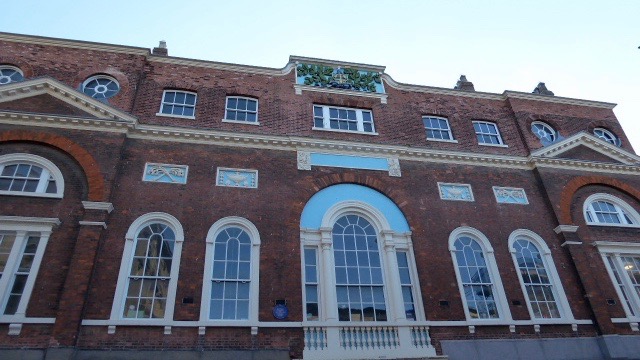
On 27th March 1799, George Pycock died in Hull aged 50. He was the principal architect and builder in Hull at the time. He built Mytongate jail, the Infirmary, Prospect St, and St Giles Church, Marfleet. His only surviving building is the Neptune Inn, Whitefriargate.  (b1749)

Neptune Inn