December 16th

On 16th December 1512, William Crag of Cave claimed sanctuary at the church of St Cuthbert, Durham, for ‘asportation’; along with others, he had stolen 25 horses and mares, near Cave; in addition, in a certain park near Airton by York, he stole 3 other horses.

On 16th December 1586, the Earl of Huntingdon, on behalf of the Council in the North, wrote to the Hull Corporation to ask them to prevent merchants profiteering from the corn shortage by purchasing stocks for poor relief at a reasonable rate.

On 16th December 1645, Hull draper Robert Cartwright was fined £47 as a former Captain in the Royalist army (a ‘delinquent’) in order to recover his goods which had been sequestered by Parliament.

On 16th December 1689, a number of Danish soldiers were in William of Orange’s army, and 2 of them quarrelled and settled their dispute by a sword duel at Beverley. The survivor was beheaded in Saturday Market. (see 23.12)

On 16th December 1929, the R100 airship, the largest airship ever designed, made by a team led by Sir Barnes Neville Wallis, and including novelist Neville Shute Norway, took its maiden voyage from Spaldington Air Station.

On 16th December 2010, Easington tithe barn was offered for sale at an auction with a guide price of £125,000 and failed to sell. The 14thC building is the last remaining tithe barn in the county, and a Grade II listed building.

Easington tithe barn

December 7th

john-hotham-1-sized


On 7th December 1644, Sir John Hotham’s execution date, set for 16.12, was put back after Lady Hotham appealed for more time for him to settle his affairs.

On 7th December 1791, 22 months after being apprenticed at sea, John Sheriff, pupil of Hull Trinity House School, was allowed a land job in the House, ‘on account of his being twice shipwrecked had been discouraged from a further perseverance’.

On 7th December 1958, the crew of Flamborough lifeboat Friendly Forester saved 2 Bridlington fishing boats and landed their crews of 8 men.


December 3rd

grammar school


On 3rd December 1611, William Gee died in Bishop Burton, aged 63.  MP for Hull and a generous benefactor, he left more than £1,000 in bequests to the poor. Gave most of the cost of the new Grammar School. (baptised 16.9.1565)

On 3rd December 1614, Sir John Sheffield, his brothers Edmund and Philip all drowned, with their servants, when the Whitgift ferry across the River Ouse was upset by an unruly horse.

On 3rd December 1805, Abraham Turner, former pupil of Hull Trinity House School, wrote to the House with a report of the Battle of Trafalgar, in which he had been wounded, on board HMS Africa.

December 1st

john-hotham-1-sized


On 1st December 1644, Sir John Hotham and Captain John Hotham, his son, were tried for treason at the Guildhall, London; both were convicted and condemned to beheading.

On 1st December 1800, Agnes Sharp, aged 24, was interviewed by the Hedon Mayor and one of the Bailiffs to confirm that she was pregnant, that the child (or children) was likely to be born a bastard, in order to claim payment from the parish. The father was a soldier from Sussex whose unit had left Hedon. Eventually, she received 2s6d a week.

On 1st December 1832, Thomas King and William Duesberry stole 3 chickens from John Carter’s farm, Howden. They were arrested and sentenced at Beverley on 14 Oct 1833, Duesberry getting a prison sentence, but King, who had previous form and did not admit the offence, was transported for 7 years. He was given his freedom in 1846 and seems to have died in Hobart in 1859.

On 1st December 1950, The Port of Hull Society’s Sailor’s Orphan Homes changed its name to The Sailors’ Children’s Society and celebrated with a lunch at the Guildhall.  The Society began as a Christian mission to seamen, and began to house ‘orphans’ (children whose father had died) in the 1860s, opening the Newland Homes in the 1890s.


November 30th

On 30th November 1219, William de Forz II, count of Aumale, Lord of Holderness, was declared a rebel and excommunicated for offences against the Crown and the sheriffs of 6 counties were instructed not to give him any help; he had held onto castles after being ordered to restore them to their owners.

On 30th November 1280, the residents of Hedon petitioned government to fix their tax (fee farm) as they were ‘few and poor’ and competition from Ravenserod and Hull were increasing from day to day. The port was firmly in decline. Hedon ship motif can be found in St Augustine’s church.

Hedon ship, St Augustine's

On 30th November 1587, Alexander Crowe, Catholic priest, aged approx 34, was executed in York. Born in Howden, worked as a shoemaker and travelled to Douai; ordained at Rheims 1583. Captured at South Duffield while baptising the baby of Cecily Garnett.

On 30th November 1644, Sir John Hotham began his trial for treason at the Guildhall, London.

On 30th November 1832, Henry John Shepherd, attorney and JP, of Beverley, went bankrupt, having speculated in building projects; his creditors were reported to include mainly individuals who had given him money for investment with no security; the bankruptcy register describes him as ‘dealer and chapman’. Shepherd was again practising as a solicitor in 1833.


November 27th

On 27th November 1642, Royalist soldiers claiming to be Danish sailors, were in Hull as spies. Their aim was to open the gates when they saw a signal from a troop of Cavaliers coming from York. They opened the gates, but the lantern belonged to a miller returning home. Their cover had been blown; the Cavaliers had been routed and did not arrive. 2 of the Royalists were killed and the rest taken prisoner. N.B. I have not been able to verify this story.

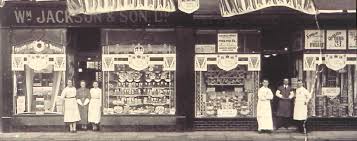
On 27th November 1948, William Jackson & Son Ltd opened the first self-service grocery store in the area (beating Cusson’s by only 10 days). The experiment failed, requiring an extra employee to be taken on, and the store reverted to normal service within a year. photo shows an early Jackson’s store.

On 27th November 1969, the tug Hullman capsized in the River Humber off Grimsby whilst towing the Conoco Arrow, and 3 of her 10 crew died. The tug was recovered and returned to service. On 23.10.1971, she was lost in the North Sea while towing a crane barge.

Wm Jackson & Co

November 21st

On 21st November 1798, Elizabeth Darling, of Scale Lane, Hull, on the death of her father, continued to run his business as apothecary, although as a woman she was unable to train formally.

On 21st November 1823, Joseph R. Pease reported in his diary a fire in their oil windmill; due to thick walls, adjoining warehouses were not affected. 3 fire engines attended. Pease blamed the carelessness of 2 workers.

On 21st November 1940, Sidney Hall, aged 17, mess boy, of Hull, was lost by enemy action with all 45 crew of SS Cree of London; the Merchant Navy  ship, returning to UK from Sierra Leone, was torpedoed by a German submarine.


November 16th

On 16th November 1503, Elizabeth of York, Duchess of Suffolk, died, aged 58. She was married to John de la Pole, 2ndDuke of Suffolk. The lands she held in Hull and Myton reverted to the Crown, and in 1514 Henry VIII gave them to William Sidney, buying them back in 1539 to build his fortifications in the town. She held 1,000 acres of land, including meadow, pasture, 100 dwelling houses, a mansion and gardens and the patronage of the Charterhouse.

On 16th November 1857, ‘A Dissenter’ issued a campaign leaflet encouraging religious dissenters to oppose plans by the Church of England to close down the school run by the Leonard Chamberlain Charity, the trustees of which were all dissenters. The writer estimated that 1/3 of Hessle people were not CofE members. The school remained open for a further 45 years.

On 16th November 1918, PC244 Harry Burgess filed a statement at Hull Central Police Station, reporting on 3 US sailors and 1 American soldier being followed by a large crowd. The Americans used obscene language, threatened to fight, and refused to go to their billets. Police escorted them to the Grosvenor Hotel, guarded the gate and dispersed the crowd, who accused the Americans of attacking British and Canadian soldiers.  The US commander later ordered his men, based at Killingholme US Naval Air Station, not to visit Hull without orders.

On 16th November 2017, Queen Elizabeth II visited Hull and met some of the City of Culture volunteers, had lunch with the Bee Lady among others, visited Siemens, and the new Allam Medical Centre at Hull University.


royal visit 2017

November 15th

minster - frith stool.JPG


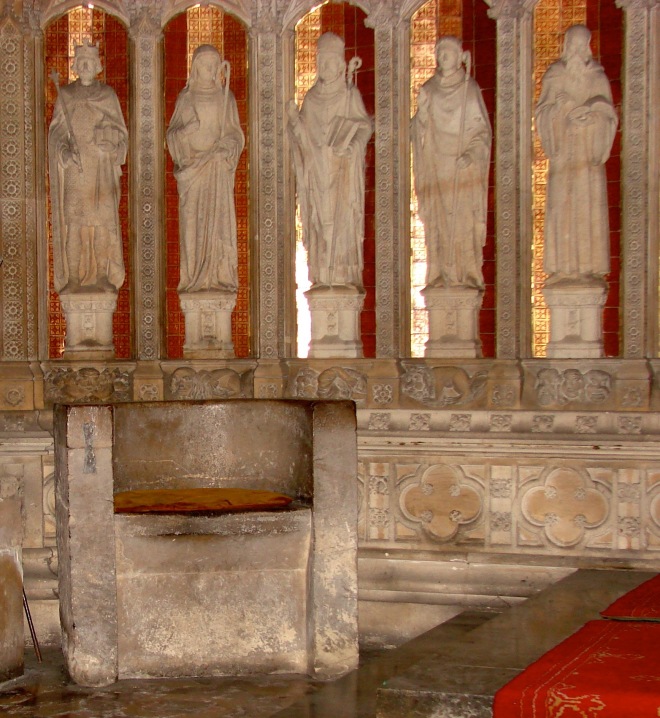
On 15th November 1482, William Weton, yeoman of North Ferriby, claimed sanctuary in the church of St John, Beverley, for killing John Atkynson of North Ferriby on 19th September. photo shows the sanctuary chair, or Frith Stool

On 15th November 1810, Robert Richardson, master of the Spurn lifeboat, and crew, performed the first rescue by the new lifeboat, to assist the John and Charlotte off Trinity Sand, River Humber, where she had been driven in a gale.

On 15th November 1915, Walter Beech, 47 of 25 Scarboro St, Hull, chief engineer/ Christopher Hall, 2ndengineer of Allison Tce, Hull, were lost with all other 8 crew of the steam trawler Edward B. Cargill when it struck a mine off Spurn Head.


November 14th

On 14th November 1067, William the Conqueror knighted Sir Lionel Saltmarshe of Saltmarsh and gave him the manor of Saltmarsh (needs verification)

On 14th November 1504, Richard Squier, tailor, of Catton, claimed sanctuary at the church of St John, Beverley, for the theft of cloth, and for breaking out of the King’s gaol in York.

On 14th November 1906, Thomas Anderton, 44, of 53 Francis St, Hull, deckhand on steam trawler Canada, drowned along with the ship’s cook, in the River Thames at Gravesend when the ship’s boat capsized.

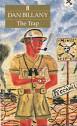
On 14th November 1913, Dan Billany was born in Essex Street, Hull. An active socialist, he was a teacher, and author. His novel ‘The Trap’ was highly respected. As an officer in the EY Regiment, he was captured in 1942 and a Prisoner of War in Italy until released in 1943. Last seen 20.11.1943, fate unknown.

Dan Billany The Trap