September 1st

On 1st September 1505, John and Thomas Mudd of Tunstall claimed sanctuary in the church of St Cuthbert  for homicide, stating that on 1.8.1505, in self-defence, they had struck Henry Raw also of Tunstall on the head with a pikestaff, giving him a blow from which he died on 30.8.1505. On 2.9.1505 Oliver Mudd and John Mudd jnr (son of John) also sought sanctuary as accessories to the homicide, having been present when the first 2 struck Henry.

On 1st September 1512, Ralph Thorneton, a smith, of Rise, claimed sanctuary at the church of St John, Beverley, for debt.

On 1st September 1784, Hull General Infirmary charity officially opened a hospital with 70 beds in Prospect Street, a site chosen for its fresh country air. The 3 physicians and 3 surgeons provided their services free. In its centenary year, Queen Victoria agreed to a change of name to Hull Royal Infirmary.

On 1st September 1800, John Batman lost his place at Hull Charterhouse  ‘on account of his immoral and disorderly conduct and of the great expences (sic) which the Town have sustained by the maintenance of his bastard children’.


Charterhouse 1780

August 26th

On 26th August 1310, King Edward II visited Beverley.

On 26th August 1346, Sir John de Sutton fought on the English side at the Battle of Crecy.

On 26th August 1800, Hull surgeon Edward Oxley advertised in the Hull Packet his invention Modena Fossil, as a speedy and effectual cure for ‘hooping-cough, palsy, rheumatism, asthmatic fits, … diseases of the breasts…’ The Medical Observer was very scathing of this product which it described as oil of amber.

On 26th August 1809, Hedon borough constable Edward Hoe received £1 8s wages for transporting Agnes Sharp and her son William to Friskney in Lincolnshire (her husband’s parish), as Hedon parish was not liable to pay her benefit. Her 9 year-old-daughter Rachel was entitled to settle in Hedon, and was left behind.

On 26th August 1824, on the traditional day of Swine Feast, the Feast mainly consisted of dancing and ‘riot’, most residents providing food for their friends on the Sunday before, leading to disorder which the magistrates could not control, reported author Thomas Thompson.

On 26th August 1833, Captain Richard Wallis Humphreys of the whaler Isabella in Baffin Bay picked up explorer Captain John Ross and 19 of the crew of his ship Victory. It had become stuck in ice and been thought lost for 4 years.  Humphreys was awarded a silver cup by the town of Hull at a dinner given at the Vittoria Hotel in January 1834. (The Isabella herself was trapped in ice and sank in 1835.)


John_Ross_rescued_by_Isabella,_1833


August 17th

On 17th August 1377, King Richard II issued a charter allowing the town of Hull to ensure the town walls and moats were kept in good repair, and to compel every householder to contribute to the cost of repair.

On 17th August 1427, Thomas Brygman, vicar of Foston, asked the Pope to relax the penances paid by those who did not visit church on holy days or give alms, because the church buildings were ruinous, and lacking a bell tower to call parishioners to prayer, and because the parishioners were too poor to repair the church. Their poverty was caused by ‘divers burdens’ imposed by King Henry to fight wars, and also because of the high mortality level in the area.

On 17th August 1863, Dr T.T. Pierson of Bridlington Quay apologised for signing a certificate at The Retreat asylum, Kilham, to declare a woman insane (whom he had known since they were at school) at the request of her husband; she turned out to be suffering only from the effects of alcohol.

On 17th August 1905, Hull merchant Frederick Harker was fined £2 plus costs for speeding at Harpham – travelling at 28 miles per hour in a 20mph zone. It was reported that the method used, of 3 police officers timing him over a measured distance, had not been used before.

On 17th August 1920, Sir Luke White, MP, died at Driffield, aged 75. Liberal MP for Buckrose since 1900, he died a pauper and under investigation for bankruptcy, having covered his political expenses by using money entrusted to him by the clients of his business as a solicitor.

On 17th August 1954, workers at King George Dock, Hull, began a strike against unsafe working conditions called the ‘Filling Strike’; within hours, 4,000 dockers were on strike and 60 ships lay idle. The strike ended after 11 days.


1954 dock strike

August 15th

On 15th August 1690, Robert Lumley, ship’s master, was fined 10s by Hull Trinity House for sailing out of the port without supplying the House with a list of men and their wages.

On 15th August 1764, Abraham Clayton, 35, of Howden, was hanged at York Castle for murdering his wife Elizabeth; his body was given to surgeons ‘to be anatomized’.

On 15th August 1808, Robert Pattinson,  grazier and agriculturist, died aged 82, and left 4 acres of land in Skeffling, the rent to be used to educate poor children in Easington.

On 15th August 1924, Harry Blanshard Wood, VC, died aged 42 in Devon, after a traffic accident. Born in Newton-on-Derwent, he was a corporal in the 2ndBattalion, Scots Guards when on 13.10.1918 in St Python, France, he took command when his platoon sergeant was killed, and showed gallant conduct and initiative, for which he was awarded the Victoria Cross.

On the same day, BBC radio station 6KH began broadcasting local items from bishop Lane, Hull, including sport, talks, children’s shows, and music featuring local musicians, e.g. Powolny’s Restaurant Bijou Orchestra. In 1928, the station closed, and there was no local station until Radio Humberside opened in 1971.

On 15th August 1940, 13 military personnel and 1 civilian died, and 16 injured in this daytime air raid on Driffield airfield and Southburn, including Aircraftwoman M. Hudson, the first WRAF fatality.

August 6th

On 6th August 1778, the question of who owned Spurn Point was resolved in favour of the William Constable of Burton Constable; the legal dispute began in 1609.

On 6th August 1785, John Beck of Lelley was hanged at York Castle for setting fire to a house and corn mill belonging to William Jackson of Danthorpe, with Robert Crosby and John Edwards, also of Lelley; Edwards and Crosby escaped.

On 6th August 1859, John Riley, 36, of Hull, was hanged at York Castle for the murder of his wife, Alice.

On 6th August 1888, former Trinity House School pupil George Smith, age 15, drowned after a collision between the Barque Cambrian and a French Barque during a great storm in Valparaiso harbour.

On the same day, a Bank Holiday Monday, a popular trip out from Hull Corporation Pier was to Paull by boat to watch the Army’s Submarine Miners in training and holding boat races and athletic competitions. Several boats left the Pier during the day.

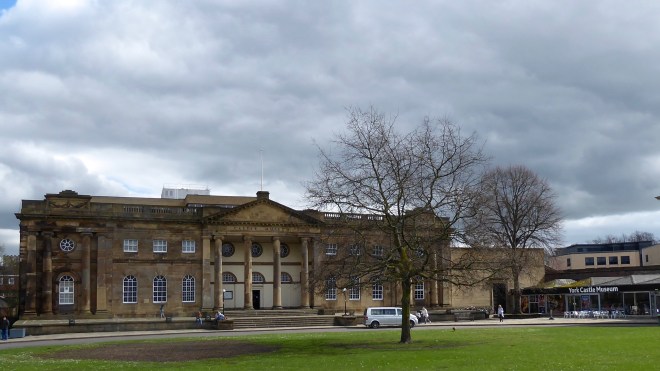
York Castle


August 4th

On 4th August 1511, John Hessey, husbandman of Belby, nr Howden, claimed sanctuary at the church of St John, Beverley, for the murder of William Smyth of Didyngham (anyone know where this is?)

On 4th August 1652, Keyingham manor court fined 18 villagers for allowing their geese and pigs into the fields outside the stipulated times.

On 4th August 1795, Hull residents rioted against inflationary food prices and shortages. Much corn was being taken by the army, (Napoleonic Wars) in a year of poor weather. A few windows broken.

On 4th August 1834, John Venn, was born in Drypool, son of the vicar. Left Hull at age 8. Fellow of the Royal Society, famous mathematician, who introduced the Venn diagram. Commemorated in Hull University by the Venn Building. (d 4.4.1923) and by Drypool Bridge.

On 4th August 1851, G. Hought of Hutton Cranswick was killed by lightning, as he sheltered under a tree during a thunderstorm. He left a wife and 2 children.

On 4th August 1884, all 11 Walgate brothers of Aldbrough formed one cricket team in a match held at Rise Hall; the Walgates won the match by 3 wickets.

On 4th August 1969, HM Queen Elizabeth opened Queen Elizabeth Dock, the last major dock to be opened in Hull, accompanied by HRH Duke of Edinburgh and Princess Anne.


Drypool Bridge

July 27th

On 27th July 1643, Hull widow Ann Stevenson, whose husband died at Beverley in Parliament’s service as a cannoneer, petitioned the town of Hull to pay her the 35 shillings wages due to him; the committee agreed, in view of her poverty, to let her have 20s.

On 27th July 1782, Rev George Lambert of Fish Street, Hull reported in his diary on a violent thunderstorm in the evening, and lightning killed a cow very near their house, and scorched the hedges.

On 27th July 1796, jockey George Heron was thrown by his horse at Hull racecourse, Newington, and killed.

On 27th July 1855, James McLoughlin, aged 13, asked Hull Magistrates Court for the protection of the court on account of his mother having beaten him severely with a stick and a fire poker because he would not go out stealing for her.

On 27th July 1996, HMS Rose visited Hull’s Albert Dock; this was an exact replica of a frigate built in Hull by the Blaydes yard in 1757 and sunk in Savannah, Georgia in 1779. The only difference from the original ship was that the sails were made from recycled plastic bottles.

HMS Rose replica

July 24th

On 24th July 1614, Ralph Hansby founded almshouses for 3 poor persons at Bishop Burton.

On 24th July 1622, Lawrence Taylor, rector of Londesborough,  died intestate, and the York Consistory (Ecclesiastical) Court gave custody of his 6 children, and a 7thchild born in October, to his brother William, to be supported until age 21. No information on the fate of his widow.

On 24th July 1894, John William Russell was shot dead on Albert Dock, Hull, by Arthur Kendall. Russell was trying to defend Crossland from Kendall. Kendall was convicted at York Assizes, his sentence commuted to penal servitude.

On 24th July 1912, a heavy cloudburst over Westwood brought flooding to Beverley town centre. Water was a foot deep on Walkergate.

On 24th July 1942, bus inspector Ernest Goddard, aged 50, and 14 others, including 5 children, were killed in an air raid on Withernsea; as well as 2 bombs, in Queen Street and the bowling green, the German Dornier bomber had used small arms fire on local people.

On 24th July 2011, 5 thieves stole the 300kg statue from Nelson Street, Hull; called Voyage, the statue was created by Steinunn Thorarinsdottir, as a symbol of the relationship between Hull and Iceland.  A replacement statue was unveiled 11.5.2012.

iceland statue plinth.JPGphoto shows the empty plinth.

July 16th

On 16th July 1796, 10 days after the introduction of the Dog Tax of 5s per dog per year, the Hull Advertiser reported a considerable number of rotting dog carcases, after owners killed their dogs and threw them in the street.

On 16th July 1802, Dorothy Wordsworth, sister of poet William, visited Beverley with friends, commenting on the beauty of the town and the minster.

On 16th July 1807, a Bastardy examination of Ann Linwood, single woman of Hedon
revealed that the father of her son, born on 28 Jun 1807 in Hull was gunsmith Owen Probin. Owen Probin was murdered 7 years later (the events are probably not related).

On 16th July 1885, Hull & Barnsley Railway and the Alexandra Dock officially opened.

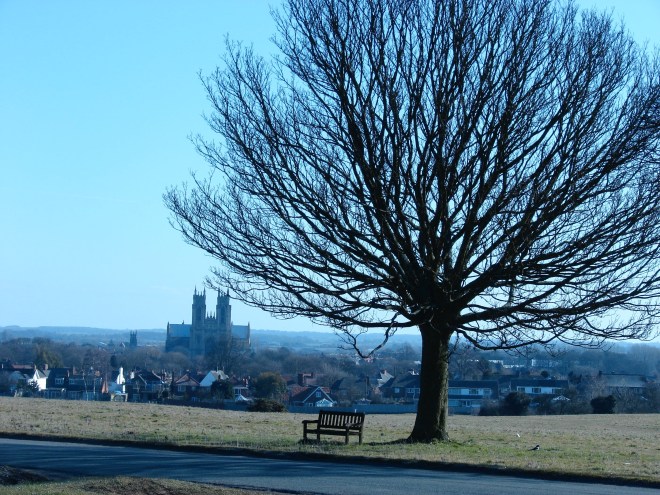
On 16th July 1904, the Beverley Guardian reported a new phenomenon, ‘the hatless brigade’, when pedestriansof both sexes had been seen in Hornsea without any head covering whatsoever.minster beverley.JPG

July 12th

On 12th July 1537, Robert Aske of Aughton was hanged in chains outside Cliffords Tower, York, after being convicted of treason in Westminster, as the leader of the Pilgrimage of Grace.

On 12th July 1641, Sir Thomas Glemham resigned his post as Governor of Hull, having only been appointed the previous year.

On 12th July 1714, Elizabeth Hodgson, a single woman of Hedon, was sentenced at Hedon Quarter Sessions to be stripped to the waist and whipped with birch or willows from the Town Hall to Harrison Lane and from there to the jail and to remain in jail at hard labour until ‘sufficient security’ was found for her good behaviour. Her crime was to give birth to her 4thillegitimate child. There is no record of any punishment for the father. An Act of 1792 forbade whipping females for any reason whatsoever.

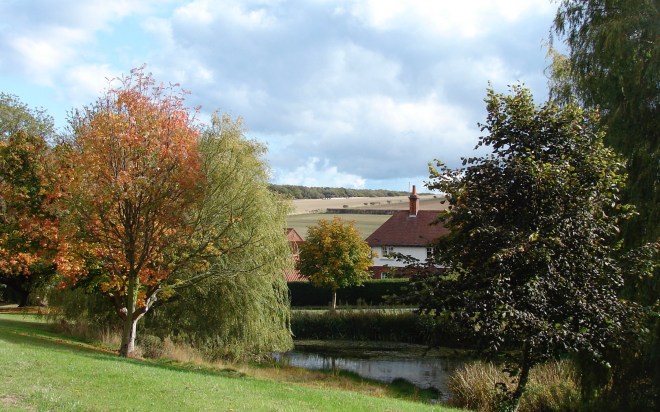
On 12th July 1826, (in one of the driest summers on record) Hessle banker Joseph Robinson Pease recorded in his diary there was no grass for the cattle, who had to be given linseed cake. Ponds and water tanks dry.  Around this time, too, the pond at Fridaythorpe dried up, and villagers went on a Sunday to nearby Fimber to take water from one of their 2 ponds, resulting in a pitched battle, referred to as ‘the Second Battle of Waterloo’. photo shows the remaining village pond at Fimber.

fimber pond.JPG