February 21st

On 21st February 1651, George Holroyd, vicar of Foston, was tried at York Castle and imprisoned for uttering a seditious sermon; he had preached against bloodshed on a day of thanksgiving for military and naval successes.

On 21st February 1803, Burnett’s Daily Shipping List reported that more than 100 small vessels got out of Hull harbour that morning and the night before.

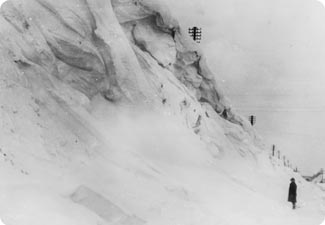
On 21st February 1947, 9 Jackson’s bread delivery lorries were trapped in a snowdrift overnight  on Arras Hill, Market Weighton. They were dug out by colleagues, who had to walk miles to reach them. The East Riding Council reported spending £3,000 a day to the Army to keep the roads open and get supplies to villages cut off by snow. photo shows Little Weighton railway cutting during that period

little weighton cutting 1947

February 17th

On 17th February 1646, Christopher Hildyard of Winestead was fined £109 as a former Lieut – Col in the Royalist army (a ‘delinquent’) in order to recover his goods which had been sequestered by Parliament.

On 17th February 1803, Burnett’s Daily Shipping List recorded that no ships arrived or departed in Hull on that day (apart from the ferry to Barton).

On 17th February 1821, Robert Sharp junior, an unemployed bricklayer’s labourer from Hull, gave evidence in the hearing of a petition in the House of Commons. Colonel John Baillie, MP for Hedon, was accused of bribery and corruption in the 1820 election. Sharp claimed to have spent the 2 weeks prior to election day at the Charles Saunders Inn (now the Shakespeare), eating and drinking at the expense of the candidate and finally, on election day, receiving 2 guineas from James Iveson, Baillie’s agent, for making himself ‘generally useful’.  William Mason also gave evidence of being offered 12 guineas by James Iveson, political agent for Col John Baillie, if he would vote for him. Baillie’s election was confirmed.

On 17th February 1961, Angela Eagle, MP and Maria Eagle MP were born in Bridlington. The Labour MPs are the first set of twins to sit in the House of Commons.

Eagle MPs copy


February 16th

On 16th February 1803, Burnett’s Shipping List reported the arrival of 4 ships (3 from (King’s) Lynn and 1 from London). The Pearl sailed, destination not given.

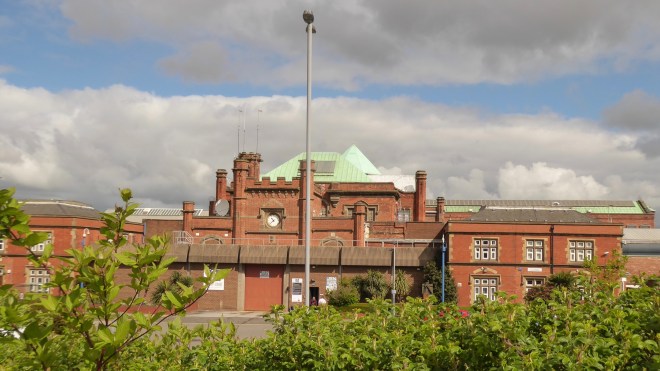
On 16th February 1821, Vincent Knowles Walker, 48, battered, stabbed and kicked to death Lydia Wills White, on her doorstep at 37 Nile Street, Hull. She was sheltering her friend Mrs Walker, who had separated from her drunkard, violent husband. Walker was hanged in Hull Hedon Road Gaol.Prison

February 15th

On February 15th 1518, Richard Jakson of Hogett on the Wolds (presumably modern Huggate) claimed the sanctuary of St John’s church, Beverley, for debt.

On February 15th 1530, John Gillco, labourer of Painsthorpe, fled to his parish church in Kirby Underdale from York, where he had assaulted and killed John Notyngham at 4p.m. the previous day. A coroner’s inquest the same day reported that the killing took place within the liberty of the monastery of the Blessed Mary.

On February 15th 1793, a contemporary report said a horseman galloped into Hull with urgent news that men had landed near Patrington from a privateer. Nervous of the risk of French invasion, part of the Corps of Invalids stationed at the Citadel and several volunteer seamen were immediately dispatched to meet the enemy. A 2ndmessenger met them on the road near Hedon, and informed them that instead of French enemies, those who had landed were the crews of several colliers, who had left their ships to avoid the press gang. HM Sloop of War, The Queen, was lying at anchor in the Humber.

On February 15th 1898, James Ashton, 39, skipper, of Witty St, Hull, was lost with his crew when trawler European foundered in the North Sea.

press-gang

February 14th

On 14th February 1763, Mr Newmarch, lighthouse keeper at Spurn Point, reported to his employer that the low light had ‘washed down wholly all together’.

On 14th February 1792, Thomas Wilson, son of a lighterman, was baptised at Dagger Lane Independent Chapel, Hull, He became a clerk, then salesman, set up a business  importing iron, and eventually became owner of Thomas Wilson, Sons & Co, the beginning of the Wilson Line, a multi-national business; his son Charles became Lord Nunburnholme.

On 14th February 1803, Burnett’s Shipping List reported the departure of the first whaler leaving for the fishing grounds that season: the Adventure, captain’s name Gibson, headed for the Davis Strait, got into the roads, but it was a week before it got under way. 5 other whalers left in February, followed by 33 in March. 2 other Hull whalers, the Thomas and the Lynx, appear not to have sailed that season.

On 14th February 1927, 12 Rail passengers died in a head-on rail collision near Hull Paragon Station; 40 others were injured. The outgoing Hull to Scarborough train was put on the same track as the train arriving from Withernsea.

TrainCrash1927

February 10th

On 10th February 1644, Sir William Constable of Flamborough led Parliamentary troops from Hull in routing the Royalists at Kilham.

On 10th February 1801, Sir Samuel Standidge, aged 75, died at Thorngumbald. He was born at Bridlington, and at age 19 was taken prisoner by privateers and taken to Rhode Island. Later in life he traded goods to Rhode Island and bought lands in Holderness, building New York Farm, Preston, to mark his financial success in New York.  He is credited with restarting the Hull whaling industry, acting as master of his own whaler.  Sheriff of Hull, Mayor, and warden of Hull Trinity House 5 times. His memorial is  in St Mary’s Lowgate, Hull.

On 10th February 1866, 6 days after running aground on the Isle of Juist, Germany, 15 people were rescued from the rigging of the ‘Excelsior’ of Hull, where they survived without food and water. Mrs Newton was considered a hero for her support of her fellow survivors.

On 10th February 1871, at least 70 mariners lost their lives in Bridlington Bay in the Great Gale, including 6 lifeboatmen. 23 vessels were lost. There is a mass grave in the Bridlington Priory churchyard, and an annual Fishermen’s Service was held for 100 years.

On 10th February 1893, Revd Francis Orpen Morris died aged 82 at Nunburnholme. Vicar at Nafferton 1844-1854, rector of Nunburnholme to 1893. Irish-born naturalist and author of children’s books, and books on natural history and architecture. Anti-feminist, anti-hunting and opposed to Darwinism. (b25.3.1810)

On 10th February 1898, Commander Cave, of Humber guard ship Galatea, rescued the crew of SS Marbella in the River Humber, near Humber Dock, Hull. The Marbella had problems with its steering gear, and almost collided with 2 ships before hitting the Galatea. The only passenger had to swim to safety, and the Marbella’s cargo of 41 horses were all lost. The Galatea was itself later stranded on the Hebbles sandbank, but refloated later.
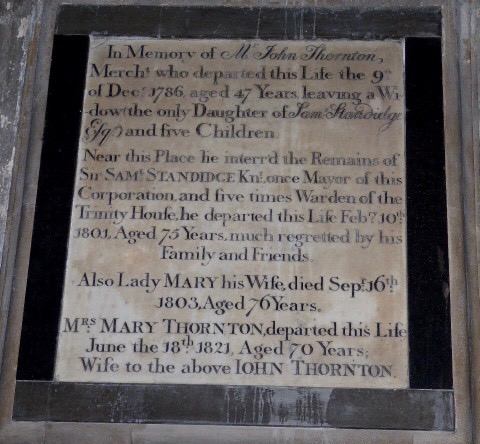
Saml Standidge memorial

February 9th

On 9th February 1803, Burnett’s Shipping List reported the arrival in Hull of the Minerva, captain’s name McBride, from New York. 4 ships left, 2 for Shields, 1 for Rochester and 1 for Berwick.

On 9th February 1826, Joseph Robinson Pease, banker of Pease & Liddell, reported in his diary on rumours of local banks about to close, and alleged that the rumour mongers intended to drive down the value of the businesses in order to buy them up cheaply. The panic of 1825 eventually resulted in the closure of 6 London banks and 60 banks elsewhere in the country.

On 9th February 1828, Richard Arthur Worsnop of Howden Hall, Howden, recorded in his diary the celebrations for the first street lighting in the town. Church bells rang, and a band paraded round the streets. The lamps and stands were acquired second-hand from Doncaster, which had just installed gas lighting.

On 9th February 1896, 34 degrees of frost were recorded in Cottingham. (=-19deg C)

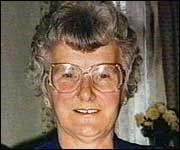
On 9th February 1995, Margaret Wilson, 66, housewife, was walking near her home at Burton Fleming when a car stopped, a man got out, and assaulted her. Her throat was cut and she died shortly after.  Derek Christian, 32, of Bridlington, was charged with her murder, found guilty and is currently serving a life sentence. Doubts have been cast on the validity of the verdict.

Margaret Wilson

February 8th

On 8th February 1834, as well as directing ships into harbour at Hull, the Humber Pilots’ work for the day included relaying the Chequer buoy and surveying.

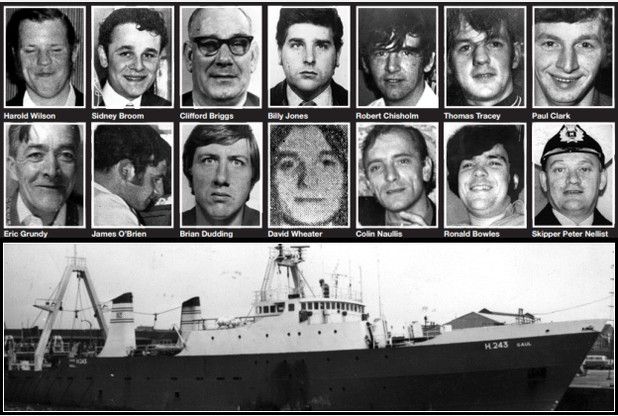
On 8th February 1974, Hull trawler Gaul gave her last position report to the trawler’s owners before she was reported missing. Suggestions were dismissed at inquiry that she was involved in espionage or was in a collision. Link is to a short film about the Gaul. https://www.youtube.com/watch?v=BQlSaCf5tWA

Gaul

February 2nd

On 2nd February 1141, during the Anarchy, William of Aumale, Lord of Holderness and Earl of York led part of the cavalry protecting King Stephen, but were overrun by the Welsh and fled. The King was captured, and Matilda took the throne for a time. William remained loyal to Stephen.

On 2nd February 1786, Revd T.O. Rogers Hull opened the new Trinity House School with 36 pupils.

On 2nd February 1799, Capt Henry Gunter RN was in charge of HMS Nautilus when she was wrecked in a storm Off Flamborough Head; all the crew survived. She was leading a convoy of 22 merchantmen returning from the Baltic; one of the other ships was also wrecked.

On 2nd February 1801, Hull Trinity House paid relief of £1 1s to 4 seamen who had escaped from captivity in Russia.

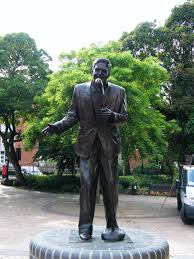
On 2nd February 1925, David Whitfield was born in Hull. A popular singer, he was the first UK male vocalist to earn a gold disc, and the first British artiste to reach No 1 simultaneously in the US and the UK. Commemorated by a statue outside the New Theatre. d 16.1.1980

David Whitfield


January 27th

Pilgr Grace

On 27th January 1332, Sir John de Sutton was summoned to Parliament by writ and thereafter become Lord Sutton of Holderness.

On 27th January 1537, John Hallam and others captured during the attempt by the Pilgrimage of Grace to seize Hull were examined by local justices; Hallam and 2 others were condemned to death and the rest awaited the arrival of the Duke of Norfolk for a decision on their fate.

On 27th January 1599, the Earl of Pembroke’s Players arrived at Londesborough House for a week performing plays for the Shrovetide period, for payment of £15shillings.

On 27th January 1645,  14 Hull burgesses gave evidence that Thomas Swann was  not a Royalist, and should not have his property sequestered, but in fact was owed money by Parliament because his new house was demolished to build a defences for the town. His appeal failed.

On 27th January 1882, the Prince of Wales, the future King Edward VII, joined the Holderness Hunt at Brantinghamthorpe, which recorded 1,400 horsemen, 4,000 on foot and 1,000 in carriages.

On 27th January 1901, Joseph Smith of Hull, on board SS Friary, was the 7thand last Hull passenger to have died of pneumonic plague contracted in the Mediterranean. He is commemorated in the columbarium at Hedon Road Cemetery.

On 27th January 1924, Brian Norman Roger Rix, Lord Rix of Whitehall in the City of Westminster and Hornsea in Yorkshire,  was born in Cottingham. He was a comic actor, specialising in Whitehall farce; awarded CBE for his charity work; campaigner for people with learning disability. He was also awarded 8 honorary degrees, 5 fellowships and many other awards, and was the first Chancellor of the University of East London, and vice Lord Lieutenant of Greater London. d20.8.2016