June 28th

On 28th June 1578, the Mayors and Aldermen of York and Hull  reached an amicable solution to disputes about trade with an agreement regulating all commercial rights and privileges.

On 28th June 1643, Capt Moyer, commander of the Hercules, defending Hull, informed the Hull Mayor of the Hothams’ plot to take the town, and by 3a.m. had briefed 1500 men on a plan to secure the town and arrest the Sir John Hotham and his son Captain John H.

On 28th June 1904, Hull City AFC was founded; early matches were played at the Boulevard.

On 28th June 1996, RAF Driffield at Eastburn closed as an RAF station, having opened in 1936, and being used by several bomber squadrons in WW2.

Hull_City_Crest_2014.svg

June 24th

On 24th June 1381, King Edward III issued a writ ordering rebel supporters of the Peasants’ Revolt to be arrested and punished.

On 24th June 1392, lightning struck Keyingham church and caught fire, and residents took ladders to douse the fire on the roof; a ladder holding 13 men broke, but no-one was injured, which was put down to a miracle of St Philip Ingleberd.

On 24th June 1643, Capt John Hotham,  having escaped from arrest, fled to Lincoln, planning to seize it for the King, and wrote to Parliament to say he could answer all charges against him. From Lincoln, he returned to his father in Hull.

On 24th June 1867, Charles Edward Smith, ship’s surgeon, aged 30, was presented with an illuminated testimonial, and a case of surgical instruments, in recognition of his gallant conduct on the whaler Diana of Hull, which had been trapped for months in ice and whose crew had suffered privations leading to scurvy.

On 24th June 1943, Mr T.R. Gale, of Estcourt Street, Hull, performed an act of gallantry during an air raid, for which he was later awarded the British Empire Medal. On the same night, Civil Defence volunteer Albert Henry Prissick of 15 Mersey Street, lost his wife and baby son, but carried on with the rescue of his neighbours. Hull Municipal Museum, Albion Street, was destroyed by fire.

On 24th June 1981, the Humber Bridge was opened to traffic; for 17 years it was the world’s longest single-span suspension bridge. On the same day, the Humber ferry service ended.

On 24th June 2011, marine artist Colin Verity died aged 87 in Market Weighton. Educated at Malet Lambert School, Hull and School of Architecture, Hull University. Flew Spitfires during WW2. Became principal architect, Hull City Council. Member RIBA, Royal Socy of Marine Artists, President Hornsea Art Society.  (b Darwen Lancs 7.3.1924)


Humber Bridge


June 21st

On 21st June 1366, Sir William de la Pole died. The first Mayor of Hull, knighted by Edward III, was lord of Myton. He acquired some land just outside Hull where there was a college of 6 secular priests. They were replaced by Franciscans, then Sir William pulled down the buildings and built a hospital. Then he introduced Poor Clare nuns and poor people, but did not live to complete his plans. His son Michael introduced Carthusian monks, and the Charterhouse came into being.

On 21st June 1535, Winestead priest Christopher Michell told his congregation to recognise the Pope as head of the church, in spite of instructions to honour Henry VIII as Supreme Head of the English Church. Michell was jailed in Beverley.

On 21st June 1643, John Pym reported to Parliament on the actions of Capt John Hotham, in charge of troops near Newark, who had allowed his men to harass and steal from local people, turned a gun on Cromwell, and generally acted insolently and in an undisciplined way, and was also suspected of communicating secretly with the Queen. Later, Hotham escaped from prison.

On 21st June 1908, Hull women hired a special train to London for a “Women’s Sunday” rally organised by the WSPU, attended by 300,000 to 500,000; the Hull contingent is said to be the largest from any provincial society.

On 21st June 1915, children from Mappleton School went to Rolston Camp to see the troops depart for France; they marched to Hornsea train station.

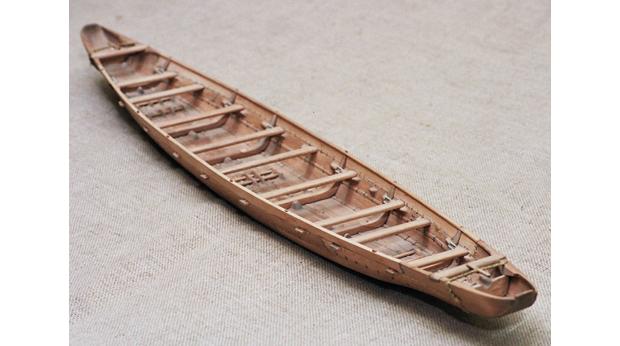
On 21st June 1918, Edward Vere Wright was born in Elloughton. Amateur archaeologist and palaeontologist, he found the first of the 4,000 year old Ferriby boats, with his brother Claude in 1937. In 1940, Ted found a 2ndboat, and with his son Roderick in 1963, a 3rdboat. (d 18.5.2010) photo shows a model of one of the boats in Hull & ER Museum.

On 21st June 1993, Hilary Catherine Brown of Tibthorpe died aged 13. (born Bolzano 12.9.1979) Hilary wrote this verse, which is written on her gravestone in Kirkburn church: The storm finished, the night diminished, the day progressed, bringing a sparkling dawn.


Ferriby boat model ERmuseum

June 20th

Hull Corpn silver


On 20th June 1533, the Hull Mayor and town council sold to Sir Edmund Perkins the ornaments of the churches in the town, for £15. They also gave to Sir Frauncis Jobson, Treasurer of His Majesty’s jewellers, ’24oz of silver plate whereof 7oz were double gilt and the rest part gilt and plain white, handed over for His Majesty’s use’. photo shows some of today’s corporate treasures.

On 20th June 1579, Edward, son of Nicholas Symson of Thorpe, because of the outbreak of plague at Howden, had to be baptised at Eastrington rather than in the parish church.

On 20th June 1583, Hull agreed to 10s compensation to Richard Frere for the loss of hay and his cote during the time when plague was in the town.

On 20th June 1642, Maurice Corney, vicar of St Mary’s Hull and Capt William Thornton, comptroller of customs were discussed by Sir William Strickland, Mr Alured, Mr Peregrine Pelham and Mr John Hotham, as a danger to Parliament’s cause. Sir John Hotham ejected Corney from the town, and he left for York, despite being considered a hero for his work during the recent plague. Thornton was also turned out, and joined the King’s service.

On 20th June 1645, John Blenkarne, master of the Hull ship Anne Dorothy, was moored in Marstrand, Sweden. He accused crewmen Peacock and Dynnis of inciting mutiny when they came aboard drunk, threatened him, and after a night in custody refused to come aboard until threatened with imprisonment. When they returned to home port, the court of Trinity House fined them and jailed them for 24 hours.

On 20th June 1761, Beverley widow Elizabeth Courtney, of Walkergate, paid the bellman to go round the town announcing a reward of 3 guineas to anyone with information about bricks thrown through her windows the previous night.

On 20th June 1810, Hull Trinity House reported raising £300 in 9 weeks towards establishing a lifeboat at Spurn.

On 20th June 1895, an auction was held in 2 fields in Bransholme Lane, Sutton, of ‘The Sweep of the Scythe’ of 25 acres of ‘rich meadow’, and also the ‘Eatage of the Fog’ up to the end of the year. This appears to have been dialect for the sale of hay cut for fodder for cattle.
 

June 6th

On 6th June 1597, Robert Hewitt and his 6 musicians played for the first time at Londesborough House for Sir Francis and Lady Grissell Clifford, and regularly performed there for a number of years. They played shawms (like an oboe), curtals (like a bassoon), sackbuts (an early trombone) and the virginal (an early spinet). At different times, pipers, harpers, drama companies and a jester were hired.

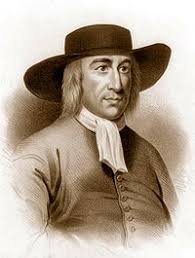
On 6th June 1651, George Fox, Quaker preacher, proclaimed his Quaker beliefs in reply to the sermon at Beverley Minster; the next day he went another church 2 miles away, then to Cranswick, staying with John Hotham (grandson of the late governor of Hull).

On 6th June 1757, the vicar of Hutton Cranswick recorded a fall of snow.

On 6th June 1812, Hull Botanic Gardens were opened; the Band of the Royal Denby Militia played at the opening ceremony (they were based at the fort, as the Napoleonic Wars were still in progress).

On 6th June 1915, Hull residents sheltered under stairs and tables when they received an hour’s warning of the first Zeppelin attack on Hull. There were 11 deaths. Hewetson’s saw mill was destroyed. (other sources says 26 dead, 60 injured)


George Fox

May 23rd

On 23rd May 1260, William de Forz III, count of Aumale and Lord of Holderness, died, aged about 45. He gave away his claim to the earldom of Chester in return for 2 small manors, including Driffield. Acted as ambassador for Henry III to Scotland and France, and was a member of the Council of Fifteen, advising the King on government matters. Gave land to Meaux Abbey on ‘the island called Ravenser Odd in the Humber’. His heir, Thomas, was 6 and he and the count’s lands were put into the King’s care.

On 23rd May 1510, Howden tiler Robert Colstayne claimed sanctuary at the church of St John, Beverley, for ‘the security of his body’; the register gives no detail of who was pursuing him, or why.

On 23rd May 1596, Howden churchwardens gave 6d to 2 poor men (presumably travelling through on their way to their home parish).

On 23rd May 1642, Hull Governor Sir John Hotham called a meeting of ‘knights and gentlemen’ to give a ‘learned speech’ explaining why he refused to allow King Charles into the town. This was part of the ‘paper war’ between the King and Parliament.

On 23rd May 1822, Hull merchant Joseph R. Pease attended a public meeting for the Relief of the Suffering Irish, due to famine in the West. He reported it thinly attended.

On 23rd May 1853, a Government enquiry into electoral corruption was opened at the Mansion House, Hull.  This followed a petition from the Conservative Party objecting to the election of James Clay and Viscount Goderich as MPs for Hull in the previous year. Hull was unrepresented in Parliament for almost 2 years; the Commission sat for 57 days and produced a report weighing over 11 tons and costing £5,000. (and see 16.8)

On 23rd May 1904, on Whit Monday, the Holderness Polo club held a polo match which attracted 6,000 spectators. This was held at the Polo Ground, Westbourne Avenue, Hull (modern Westbourne Ave West to Perth St West)The last matches were played in 1907.

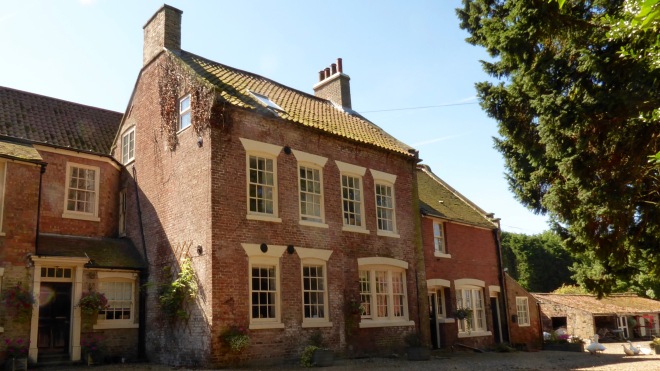
On 23rd May 1907, the Mayoress of Hull opened a new military rifle range at Rolston, for use by Militia, Volunteers and Yeomanry. The land was leased from Rolston Hall.  below – Rolston Hall.

On 23rd May 1911, a fire began in the kitchen chimney of Sledmere House, which 24 hours later had destroyed the whole house. Fire engines from Driffield and Malton attended. There were no injuries.


Rolston Hall.jpg