February 27th

On 27th February 1468, the will of Joan de Twyer directs that she be buried in the chapel of the Hospital of St Sepulchre ‘juxta Hedon’, a leper hospital endowed by the Twyer family.

On 27th February 1895, Lancelot George Prickett, FCH, engineer, died aged 38 in the service of the Indian Government; as an engineer working on Indian railways. Born 15.12.1856 in Bridlington.

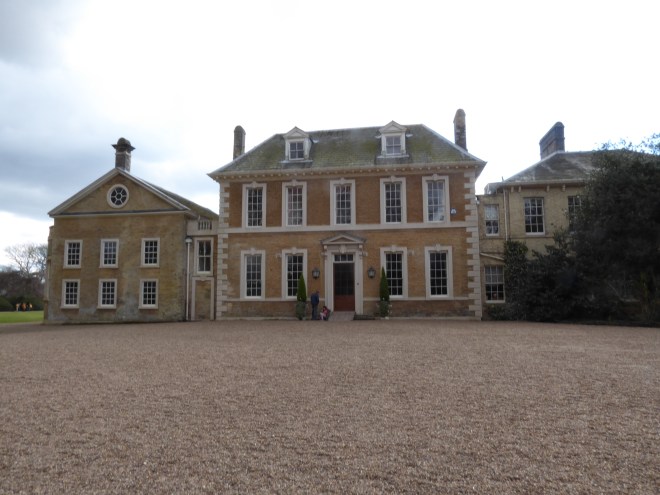
On 27th February 1941, 2 bombs landed in Hotham village, throwing the owner, Colonel Clitherow, into the fireplace. No other injuries are recorded. North Cave church lost its East window in the blast. photo shows Hotham Hall today

On 27th February 1976, Fred Peart, Minister of Ag, Fisheries & Food, reopened Hull’s Albert Dock after refurbishment for the fishing industry. The Cod War which ended in 1976 effectively put an end to Hull’s fishing industry.
hotham hall

January 20th

On 20th January 1577, John de Tradescant of Cottingham broke into the York house of John Paschal with 2 associates; they were convicted, hanged and their bodies given to the surgeons of the city to be dissected and anatomized.

On 20th January 1595, Robert Cripling and William Lucas, servants to Sir Francis Clifford, bet another Londesborough servant, George Ingmire, that they could beat him in a race on foot from Londesborough to Market Weighton; they won.

On 20th January 1652, John Rogers, Mayor, and Hull aldermen Edward Wingate, Durand Hotham, and Lance Roper, asked the Court of Chancery for help in compelling Mr Stiles and other former Masters and Brethren of Hull Charterhouse, to appear before them and produce documents to account for corruption in the management of the Charterhouse Hospital. (Things appear to have changed after this: a report in 1668 showed an increase in the number of poor cared for from 12 to 40.)

On 20th January 1782, Dr Robert Levett, or Levet, of Westella,  was buried in Bridewell church yard, London. He had died, aged 79, apparently of a heart attack. He had lived in Dr Samuel Johnson’s household for 20 years. Earned a living as a servant, waiter and physician to the poor. Johnson wrote a poem ‘On the Death of Dr Robert Levet’. Tablet in Kirkella church. B 1703 Westella.

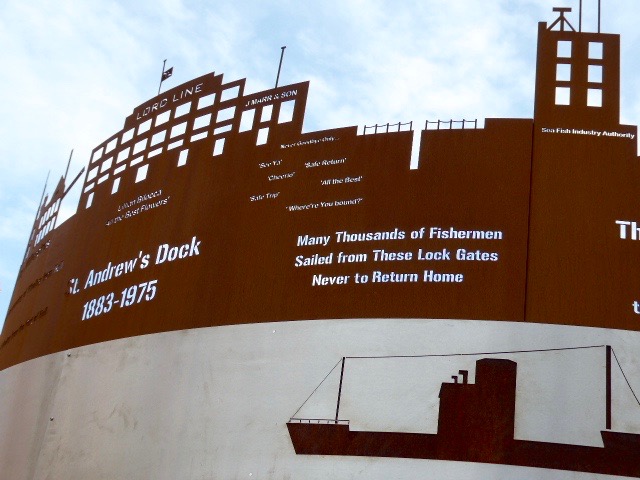
On 20th January 1968, Ross Cleveland of Hull set out from Hull for the last time for the North-West coast of Iceland.

St Andrews Dock memorial
Zebedee’s Yard

January 16th

On 16th January 1518, John Frost of Twing on the Wold (presumably modern Thwing) claimed sanctuary at the church of St John, Beverley, for debt.

On 16th January 1537, John Hallam and about 20 men entered Hull on market day, planning to seize the town and re-start the Pilgrimage of Grace. Hallam was betrayed by a man called Fowberry of Newbald, and arrested.

On 16th January 1642, William Cavendish, Earl of Newcastle, was appointed by King Charles I as the Governor of Hull, but the Parliament’s choice of Hotham prevailed with the support of the Mayor and aldermen.

Pilgr Grace

January 14th

On 14th January 1180, Hawisa, Lord of Holderness, of the county of Aumale in Normandy, with lands in several English counties, the barony of Copeland and the honour of Skipton, and one of the richest women in the country, was married by Henry II to William de Mandeville, Earl of Essex.

On 14th January 1642, Sir John Hotham arrived in Hull to take up the post of Governor, and was refused entry at Beverley Gate by the Mayor, Thomas Raikes. A messenger was sent to Parliament, who ordered the Mayor to accept Hotham and his forces, and to resign his post, or face a charge of high treason.  Hotham was admitted.

john-hotham-1-sized


January 11th

On 11th January 1582, Hull widow Jane Smyth was ordered to be put in the stocks at the next market, with a paper on her head, and given notice to quit the house she rented from the town, for cursing and slandering the mayor, justices, aldermen and the preacher, accusing them of  ‘punishing the town with water’ and punishing her son.

On the same day, Henrie Wakewood of Hull was ordered either to pay 10d a week to Elizabeth Bratton for the support of their child Isabell, and be whipped on market day, or to marry her and have his punishment deferred. Decision on Elizabeth’s punishment was deferred until she had been churched.

On 11th January 1642, Sir John Hotham was appointed by Parliament as the Governor of Hull.

john-hotham-1-sized


January 1st

On 1st January 1151, Meaux Abbey was founded on land given by William le Gros, count of Aumale, Lord of Holderness.

On 1st January 1645, Captain John Hotham was executed for treason on Tower Hill, London.

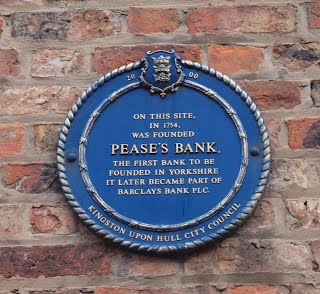
On 1st January 1754, Joseph Pease opened Hull’s (and Yorkshire’s) first commercial bank at 18 High Street, Hull.

pease

On 1st January 1841, Daniel Boyes started a new tradition at The Angel, Beverley, to bake an enormous game pie for customers; it weighed more than 7 stone. In 1844 the pie weighed 10 stone, and was 18” wide, 12” high, and 2’ 2” long.

On 1st January 1904, Dr Francis William Fullerton, GP of Prospect Street, obtained the first driving licence issued in Hull.

On 1st January 1908, the newly created Humber Conservancy Board took over responsibility for Humber lifeboats from Hull Trinity House, which had managed Spurn lifeboat for 97 years; the RNLI took over in 1911.


January 2nd

On 2nd January 1645, Sir John Hotham was executed for treason. He was buried, with his son John, in the Church of All Hallows, Barking. His lands passed to his grandson, aged about 10.

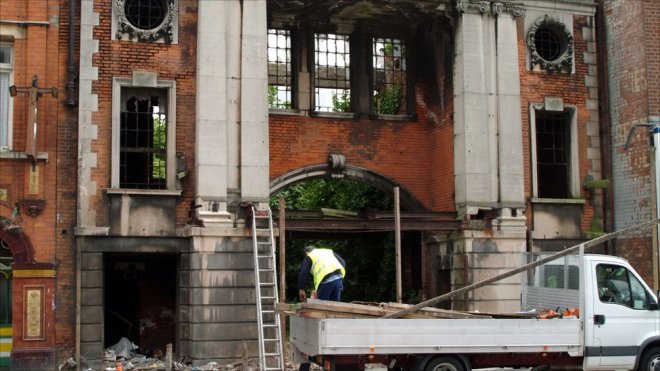
On 2nd January 2007, Historic England listed the former National Picture Theatre on Beverley Road, Hull, Grade II for its special architectural or historic interest. It is believed to be the only civilian WW2 bombed–out building, other than churches, remaining on its site.

nationalpicturetheatre


December 9th

On 9th December 1644, Capt John Hotham had a second trial, this time for betraying the trust placed in him as a parliamentary commander. Found guilty and sentenced to beheading on 1stJanuary.

On 9th December 1754, pensioners in Trinity House almshouses were required to attend every Divine Service in the chapel, or lose one week’s pay for every default.

On 9th December 1917, the Spurn lifeboat rescued the crew of the steam ship Florence of Stockton when they ran aground in heavy seas. Coxswain Robert Cross jumped into the sea with a line, and with crewman G. Martin, stood on the sands until all of the crew were safely in the lifeboat. Cross received the RNLI Silver Medal, and Martin received a Monetary Award.

On 9th December 1959, half of the tower of St Martin’s Church, Wharram Percy, collapsed in a storm, 10 years after the last service held in this abandoned village, now probably the subject of more archaeological investigations than any other place in England.

Wharram Percy

December 7th

john-hotham-1-sized


On 7th December 1644, Sir John Hotham’s execution date, set for 16.12, was put back after Lady Hotham appealed for more time for him to settle his affairs.

On 7th December 1791, 22 months after being apprenticed at sea, John Sheriff, pupil of Hull Trinity House School, was allowed a land job in the House, ‘on account of his being twice shipwrecked had been discouraged from a further perseverance’.

On 7th December 1958, the crew of Flamborough lifeboat Friendly Forester saved 2 Bridlington fishing boats and landed their crews of 8 men.


December 1st

john-hotham-1-sized


On 1st December 1644, Sir John Hotham and Captain John Hotham, his son, were tried for treason at the Guildhall, London; both were convicted and condemned to beheading.

On 1st December 1800, Agnes Sharp, aged 24, was interviewed by the Hedon Mayor and one of the Bailiffs to confirm that she was pregnant, that the child (or children) was likely to be born a bastard, in order to claim payment from the parish. The father was a soldier from Sussex whose unit had left Hedon. Eventually, she received 2s6d a week.

On 1st December 1832, Thomas King and William Duesberry stole 3 chickens from John Carter’s farm, Howden. They were arrested and sentenced at Beverley on 14 Oct 1833, Duesberry getting a prison sentence, but King, who had previous form and did not admit the offence, was transported for 7 years. He was given his freedom in 1846 and seems to have died in Hobart in 1859.

On 1st December 1950, The Port of Hull Society’s Sailor’s Orphan Homes changed its name to The Sailors’ Children’s Society and celebrated with a lunch at the Guildhall.  The Society began as a Christian mission to seamen, and began to house ‘orphans’ (children whose father had died) in the 1860s, opening the Newland Homes in the 1890s.