Coming up this week

March 27th

On 27th March 1349, an earthquake was recorded at Meaux and in Beverley, as in much of Eastern England. The monks were at prayer, and had reached the 2ndverse of Psalm 60 – ‘Thou hast made the earth to tremble; Thou hast broken it’.

On 27th March 1570, Thomas Bishop of Pocklington was tried at York Castle, and hanged, drawn and quartered for his part in the Northern Catholic rebellion against Queen Elizabeth. Anthony Langdale of Sancton escaped to Rome, and others may have fled to exile in Paris.

On 27th March 1575, Frederick Gottfried, aged 37, of Hull, was convicted of coining guineas and hanged in York.

On 27th March 1634, Mr Vavasour of Hesslewood (we don’t know if this was Thomas, 1stbaronet, Walter, 2ndbart, or another) was riding past Micklegate Bar in York when he saw moving earth, and helped convicted felon John Bartendale out of his grave. Bartendale was a travelling musician, who had been tried, hanged and buried. He was returned to prison, and at the next Assizes was given a full pardon.

On 27th March 1679, Mary Trot the daughter of Angel Trot died in infancy in Ellerker, and was buried, even though her father was a pauper, in a woollen shroud, following an Act passed to protect the woollen trade.

On 27th March 1615, Marmaduke Stutt of South Frodingham was buried in Winestead Lane after drowning whilst walking along the road.

On 27th March 1799, George Pycock died in Hull aged 50. He was the principal architect and builder in Hull at the time. He built Mytongate jail, the Infirmary, Prospect St, and St Giles Church, Marfleet. His only surviving building is the Neptune Inn, Whitefriargate.  (b1749)
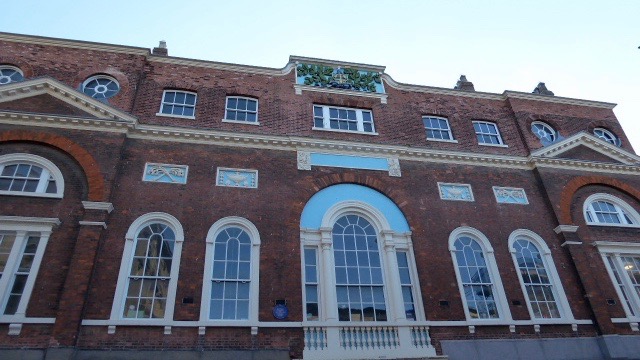
Neptune Inn

March 26th

On 26th March 1646, Hull merchant James Watkinson was fined £400 as a member of the Royalist army (delinquent) in order to recover his goods which had been sequestered by Parliament.

On 26th March 1706, the congregation of Cottingham church gave 4s in a collection for the repair of Beverley Minster.

On 26th March 1740, John Burnham and Ralph Burnsall of Preston bought 2 fields from Benjamin Waive of Hull, half the income from which was used to give to the poor, and half to pay for a schoolmaster to educate poor children in the village.

On 26th March 1827, an evening’s entertainment at Theatre Hedon (presumably in the Town Hall) included a performance of Hamlet, a recitation, and a farce.

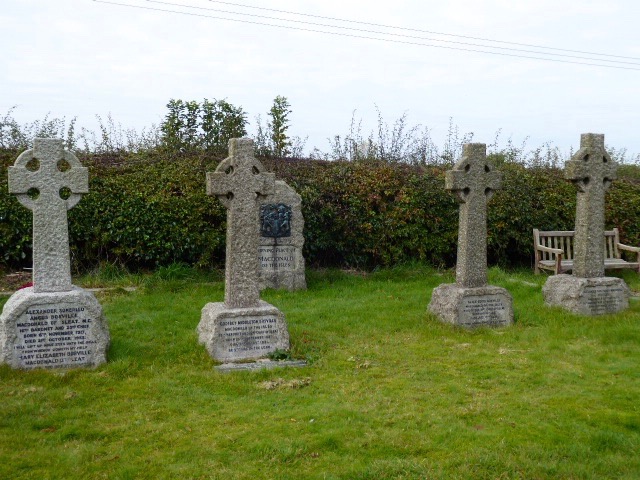
On 26th March 1933, Sir Alexander Wentworth Macdonald Bosville Macdonald of the Isles, 13thbaronet, died at Rudston aged 67  and is buried in the churchyard. (b26.9.1865)

MacDonalds of the Isles

March 25th

Warton's Hospital.JPG


On 25th March 1725, Sir John Warton died at 77 in Beverley. He was reputed to be the richest man in England, even though his father’s estates had been depleted by fines to Parliament for Royalism. He was elected MP for Hull, and twice MP for Beverley, but took little active interest in Parliament.  In his will, he left £4,000 for the repair of Beverley Minster, £1,000 to Warton’s Hospital, £500 to the charity school, £100 to the poor and £100 to each parish in Beverley. photo shows Warton’s Hospital

On 25th March 1780, Peter Horsfield, a negro servant to Mr Knowsley, curate of Boynton, married Elizabeth Lawson, daughter of the vicar of Weaverthorpe. It was fashionable at the time for rich families to employ black servants.

On 25th March 1868, Rev John Healey Bromby died at 97 at Hull Charterhouse; he was up to then the oldest working minister of the Church of England.

On 25th March 1904, a ‘Smoking Café and Lounge’ was opened in the basement of the Prudential Building, Victoria Square, a landmark Hull building. In 1941, the whole building was demolished by a German bomb.

On 25th March 1927, the Ministry of Agriculture closed the Crown Colony at Sunk Island, a failed experimental farm settlement for ex-servicemen set up during WW1. This is referred to in Winifred Holtby’s ‘South Riding’ as Cold Harbour colony.

Sunk

March 24th

On 24th March 1582, James Halsey was imprisoned and fined £3 6s8d for buying fish from a Flemish boat and breaching the Hull port regulations.

On 24th March 1602, the Londesborough household records showed that the number of Lady Grissell Clifford’s personal servants had risen to 5 gentlewomen attendants and 7 chamber servants (previously 7 in total), since her husband became Sheriff of Yorkshire. picture shows portrait of Sir Francis Clifford, later the Earl of Cumberland

On 24th March 1905, Charles Edward Hollings, Driffield Medical Officer of Health, published his report for the previous year, noting the very low birth-rate (23.6 per thousand) and high death-rate in the area (16.2 per thou). The principal diseases were respiratory disease and heart disease, with the incidence and mortality rate from cancer notably higher amongst agricultural labourers.

sirfrancisclifford


March 23rd

On 23rd March 1357, Robert de Thornton, vicar of Hessle and Holy Trinity, Hull, acquired a lane adjoining the vicarage and running from Holy Trinity churchyard to Lyle Street from the town council.

On 23rd March 1671, merchant William Bower died aged 74 at Bridlington Quay. He used his own money to build a school to educate the poor children of Bridlington Quay in the art of carding, knitting and spinning wool, and left £20 in his will for its maintenance.


March 22nd

On 22nd March 1503, Elizabeth, Duchess of Suffolk, died and the Hull Mayor acquired  the Charterhouse and the lands it owned in Cottingham, Hessle, Westella, Myton, Willerby, and Tranby.

On 22nd March 1581, Hull surgeon John Kydd was made a burgess of the town in consideration of his service on local ships setting out to apprehend pirates.

On 22nd March 1834, labourer Robert Billany of Thorngumbald  was found guilty at York Castle Assizes of setting fire to a stack of straw belonging to Peter Ingleby, and was sentenced to execution, although he was reprieved as there was doubt as to the soundness of his mind.

johnnykidd&pirates.jpeg

March 21st

The spring equinox was the original date for April Fool’s day. Medieval rituals made fun of church figures, until they were outlawed in the 16thcentury. The date changed to April 1st, and the foolery lost its religious focus. Or have I just fooled you?

On 21st March 1863, Sir Tatton Sykes died at Sledmere aged 91. 4thbaronet, landowner, stock breeder and racehorse owner. He rode his own horse Hudibras at Malton in 1805, and won. 3,000 people attended his funeral. He continued to wear 18th Century dress all his life. (b Wheldrake 1772)

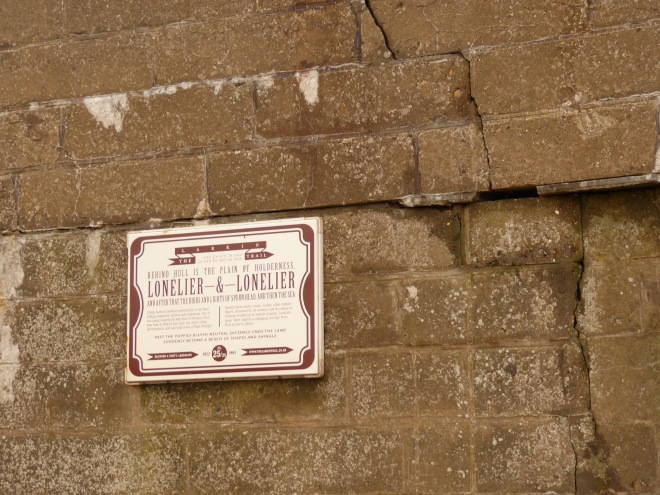
On 21st March 1955, Philip Larkin took up the post of Librarian at Hull University. photo shows part of the Larkin Trail.

Larkin trail Spurn

March 20th

On 20th March 1735, London merchant Timothy Woolfe died aged 35, and was buried in Bridlington Priory church; he left the interest on £500 to the poor of Bridlington and area, not exceeding 5 miles distance.

On 20th March 1822, an earthquake at night shook beds, moved furniture and rang bells in Seaton Ross, Foggathorpe and Holme on Spalding Moor. It was also felt in Bielby, Everingham, Allerthorpe and Melbourne.

On 20th March 1905, Hull PC Thomas Nettleton died attempting to stop a runaway horse and van, which ran over him.

On 20th March 1947, Fred Stephenson, 36, rode the Kiplingcotes Derby course through 4-foot snowdrifts to ensure the continuation of the race since 1519. The clerk of the course, Harry Ruston, read the rules. It took 90 minutes to ride the course (it normally takes about 10 minutes).

On 20th March 1986, Deirdre Blakeston failed to win the Kiplingcotes Derby when she stopped to give assistance to Lorraine Bell, who was unconscious after her horse collapsed on the course. Horse and rider both recovered and Deirdre eventually finished the race.

Kiplingcotes

March 19th

Rose Ellen Carr

On 19th March 1293, only 5 days after his valuation of Myton, King Edward I had new records of tenants drawn up, and ordered the improvement of roads to his new town of Kingston on Hull. The roads to Hessle, Beverley and York already existed.

On 19th March 1913, Rose Ellen Carr died at Hornsea aged 70. Although illiterate, and facially disfigured, probably as the result of a kick from a horse when she was a child, she was ran a success business as a carrier and taxi owner, and was reputed to be able to carry a 16-stone sack of grain under each arm. She was also a passionate Primitive Methodist preacher.

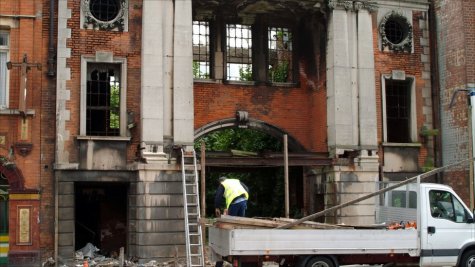
On 19th March 1941, 92 Hull residents died in an air raid; 70 people were seriously injured.  This was the 12thraid since the beginning of the year. The National Picture Theatre on Beverley Road was hit; they were screening Charlie Chaplin’s ‘The Great Dictator’ at the time. photo below shows ruin of the cinema

On the same day, Mr & Mrs Severs and their 2 children were killed by a land mine at Highfield Farm, Hutton Cranswick. Other damage nearby probably intended for Hull included 70 high explosive bombs and incendiaries at Watton Abbey Farm, mostly in the fields, the destruction of Mrs Arnell’s grocer’s shop, and a fire in Hutton church.  Arthur Swift of Wawne Common Farm recorded a land mine, incendiaries and high explosives, which blew out all the windows and tiles off every building in the farm. The ghost of a Watton Abbey monk was said to have been seen that night.

nationalpicturetheatre

March 18th

On 18th March 1293, the name ‘Kingston upon Hull’  was first used by a jury called to value land in order to improve roads in the town which King Edward I had just purchased.

On 18th March 1708, the Hull Mayor and Chief Magistrates received a letter from the Council in the North instructing them to get all ‘dangerous or disaffected persons’ to sign an oath of allegiance to Queen Anne and to swear that Charles (Bonnie Prince Charlie) had no claim to the throne.

On 18th March 1859, John Sanderson was recruited to ‘work the Force Pump when necessary for the water closets’  at the Ladies Hospital, College St, Sutton-on-Hull. It seems the elderly residents found the pump too difficult to operate.

On 18th March 1924, Sir James Reckitt died in Hull aged 90. A businessman, JP, politician and philanthropist, he joined his father’s business, and created Garden Village as a model village for the company’s workers. Amongst his charitable works were contributions to Hull Royal Infirmary, Newland Homes for Seamen’s Children, the building of the city’s first public library, donated to the city, and the donation of Withernsea Convalescent Home to the Infirmary. He established the Sir James Reckitt Charity.  (b 15.11.1833)

jamesreckitt