April 26th


john-hotham-1-sized

On 26th April 1642, the Hull Mayor received a letter from King Charles (now in York) demanding admittance to the town, and confirming Sir John Hotham as a traitor, and not to be obeyed.

On 26th April 1796, Capt Metcalfe, of Hull Trinity House, assisted in quelling the second day of riots in Hull. The price of bread was high, and starvation a reality, poor people spending 60-80% of their income on food. A crowd sacked a mill outside town, seized flour and meal, and took goods being landed from Lincolnshire. They attacked market traders and insisted on paying a lower price for goods.  The Riot Act was read; 2 people were jailed.

On 26th April 1828, Matthew Harrison, 40, of Beverley, was hanged at York Castle for horse stealing, with 2 associates.

On 26th April 1867, the Hull whaler Diana returned to port after 353 days away, mostly spent trapped in ice in Frobisher Bay in the Arctic. 10 (or 13) men died of scurvy and dysentery.  Captain  John Gravill is buried in Hull General Cemetery.
 

April 25th

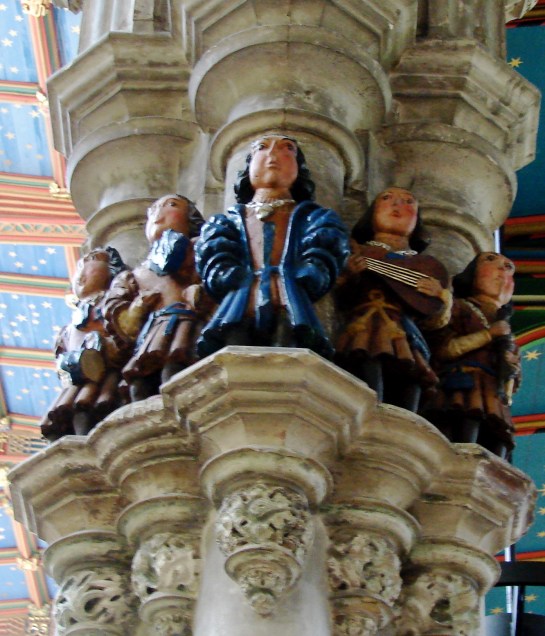
minstrels st mary's.JPG

On 25th April 1524, The Guild of Minstrels met in St Mary’s Beverley, as they did on this date each year, and revealed the new pillar which the guild paid for, to repair the damage done to the church in 1520 when the tower fell. 5 minstrels are pictured on the pillar.

On 25th April 1524, Walter Shore, a cooper from Barmby Moor, claimed sanctuary at the church of St John, Beverley, for debt.

On 25th April 1534, Sir Ralph Ellerker stodd for election as a Beverley governor, even though he was not eligible; he kidnapped and intimidated members of his opposition, was re-elected. The Archbishop of York ruled in the Star Chamber that the election was null and void.

On 25th April 1795, William Jackson, 25 of Keyingham, was hanged at York Castle for stealing 10 sheep.

On 25th April 1832, James Acland, of 23 Queen Street, Hull, printer and owner of Hull Portfolio, was elected churchwarden at Holy Trinity Church, Hull.  He campaigned against corruption in local government and headed the Hull Political Union.

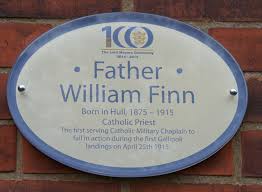
On 25th April 1915, Father William Joseph Finn, 40, was the first padre of WW1 to be killed. At Gallipoli, Turkey, he ignored an order not to go ashore with the troops, and spent a long time offering help or consolation to the wounded and dying, before being killed himself. He was buried on V Beach. The Church of the Sacred Heart, Southcoates Lane, Hull, was built in 1926 and paid for in his honour by his brother, Frank Finn, Lord Mayor  of Hull. (b 27.12.1875)

Father Wm Finn 2

April 24th


john-hotham-1-sized

On 24th April 1597, the Council in the North asked Hull and York corporations to work together and take part ownership with Roger Ashe of a new ship being built at Grimsby. Both corporations objected, and the York Merchant Adventurers joined in, asking both sides to take over Ashe’s share in the ship, as he evidently wished to pull out of the project. How it was resolved the author does not know.

On 24th April 1642, King Charles I sent heralds with a message to Sir John Hotham, giving him a last chance to admit the King to the town. It was rejected.

On 24th April 1644, Parliamentary and Scottish troops took the town of Stamford Bridge from the Royalists.

On 24th April 1882, Hull Street Tramways Company broke a strike by drivers and conductors, by engaging staff to replace those on strike. The strike was for improved working conditions, and resulted in the formation of the Hull Tramway Men’s Union.


April 23rd

CharlesBevGate

On 23rd April 1642, Sir John Hotham refused to allow King Charles I and his forces to enter the town through Beverley Gate. Charles declared Sir John a traitor, and all who obeyed him guilty of high treason, and withdrew to Beverley.

On 23rd April 1860, widow Elizabeth Ann Parker, 25, died at 1 Darley’s Court, New George St, Hull, of injuries inflicted by Thomas Kirkwood, 30, soldier, a deserter from the 29thRegiment. He was charged with murder and tried at York Assizes on 21stJuly 1860, but does not appear to have been executed there.

On 23rd April 1941, Private, Acting Corporal Ernest Collinson, 2ndBattalion, West Yorkshire Regiment, of Burstwick, led an action leading to the surrender of 50 Italian troops in the Battle of Keren, Eritrea. He was awarded the Military Medal for leadership, courage and devotion to duty. This was the most decisive battle of WW2 in East Africa. Many East Yorkshire men were in the West Yorkshire Regiment. Ernie was my great uncle.

April 22nd

On 22nd April 1566, Walter Cave was assaulted in his own home in Hull by Ralph Ellerker, his brother James and servants, and Cave brought an action in the Star Chamber. The argument involved Walter Cave accusing Robert Dalton, his brother-in-law and servant of the Ellerkers, of illegally harbouring Catholic priests, and Cave’s refusal to allow Dalton into the house to speak to Dalton’s mother. Ralph Ellerker claimed he acted in defence of his brother, who was unarmed. The outcome of the case is not recorded.

On 22nd April 1642, James Duke of York, the King’s son, aged 9, and the King’s nephew, Prince Rupert of the Rhine, 23, arrived in Hull unannounced, with the country people arriving for market day. They were well looked after, and invited to dinner with Sir John Hotham the following day. portrait on left shows James aged 12

On 22nd April 1893, arson suspected when fires broke out in timber stocks on Hull docks, during a dock strike which saw rioting, police charges and military involvement. The fire covered an area of 8 acres; the Citadel Hotel was destroyed, and total damage was estimated at up to £1million. Kier Hardy asked Parliament why the military had been sent to assist the shipowners. The strike continued into May.

April 21st

On 21st April 1499, Hull barber Richard Colyn sought sanctuary in the church of St John, Beverley, and confessed to committing homicide, and to being to an accessory, as he was present at the death of a man called Scotton, killed at Hull on 18thApril.

On 21st April 1803, Burnett’s Daily Shipping List reported 2 ships arriving from London, and 5 ships leaving port, heading for London, Hastings, Koningsberg, Amsterdam and Yarmouth.

On 21st April 1884, William Goodin, aged 34, with other mill workers, tried to put out a fire at Barker’s mill, Wawne Road, Sutton, with buckets, but was badly burned, and the mill was destroyed.

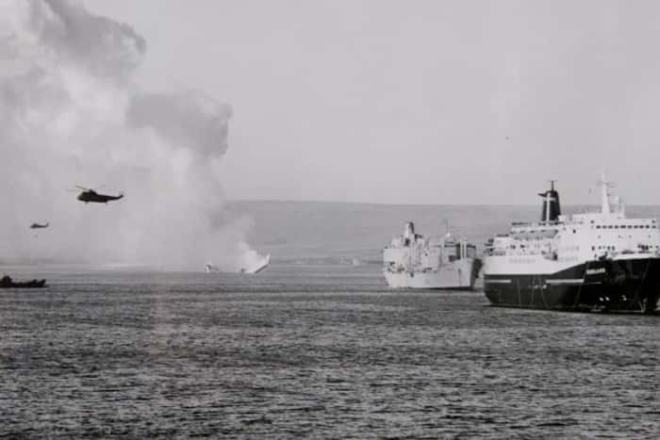
On 21st April 1982, the North Sea ferry Norland, captained by Don Ellerby, left Hull for Portsmouth, on the way to the Falklands as part of the Task Force, with 60 volunteers from the regular crew; she carried 800 men of 2 Para to San Carlos. Hull trawlers Farnella, Cordella, Junella, Northella and Pict were also requisitioned by the Navy and used as mine-sweepers. Capt Ellerby was later awarded the CBE. photo shows the Norland in the Falklands.

Norland in Falklands


April 20th

On 20th April 1602, Robert Watkinson of Hemingbrough, aged 23, was hanged, drawn and quartered at Tyburn, London, as a Catholic priest; he was arrested almost immediately on returning to England after ordination at Arras, France.

On 20th April 1803, a sloop was ‘burnt to the water’s edge’ in Hedon harbour.

On 20th April 1808, Thomas Wilbe, 31, of Hull, was hanged at York Castle for raping a girl under 10 years old.

On 20th April 1892, former pupil of Hull Trinity House School, and Chief Officer of the Elliot of Caernarvon, William Henry Ansell, 29, died of yellow fever at Santos.

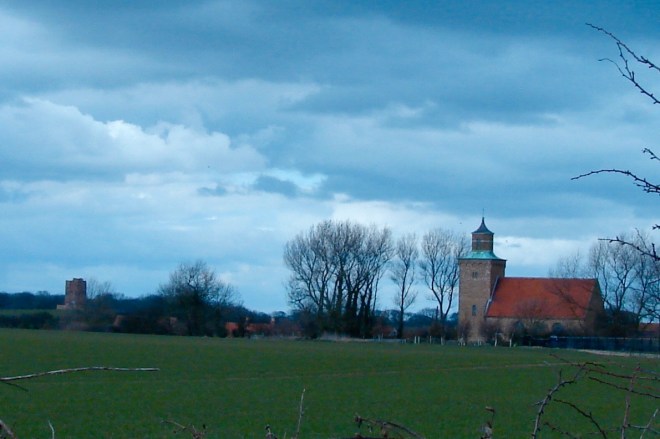
On 20th April 1976, Rev Wm Whitehead, on the 190thanniversary of the first recorded measurement of distance from Mappleton church to the sea, recorded the distance to the cliff edge.  At 898 ft 10”, it was almost exactly 1,000 feet less than in 1786, an average of 5ft 3” p.a.  Film clip: https://www.bbc.co.uk/education/clips/z8jfb9q

mappleton.JPG

April 19th


charterhouse.JPGOn 19th April 1672, Rev John Shaw(e) died aged 64 . Puritan Lecturer at St Mary’s, Hull, then at Holy Trinity. In 1651 Master of the Charterhouse, where so many flocked to hear him preach that troops kept them out.  One Sunday more than 300 people camped out at night as the soldiers had closed all the town’s gates. (b 28.6.1608 Sykehouse)

On 19th April 1689, 4 Beverley aldermen recorded that they were considering prosecuting the vicar of St Mary and St Nicholas, Rev John Brereton. Before then, the town council had recorded their thanks to him for his generous gifts to the town. They then discovered that he had purloined several church collections, as well as money collected for the relief of persecuted French Protestants. 4 days later, Brereton resigned his posts and later left Beverley.

On 19th April 1821, an Act of Parliament approved lighting the town of Hull and adjacent places with gas (replacing lighting with whale oil). Gas manufactured from whale oil was used until 1830, when it was replaced with coal gas.

On 19th April 1891, former pupil of Hull Trinity House School Frank Dick, 23, died of yellow fever in Rio de Janeiro.

On 19th April 1902, Beilby, 3rdBaron Wenlock, of Escrick, spoke at a public meeting in Beverley to recruit for an East Riding Yeomanry Regiment; the meeting was poorly attended, as it was Market day.


April 18th

On 18th April 1801, Hull Trinity House gave financial support to 7 mariners who had returned home after being taken prisoner in the war against the French.

On 18th April 1864, Hull Mayor John Lumsden called a public meeting in Hull Town Hall, Lowgate. The topic was a petition to invite the Italian  nationalist General Garibaldi to Hull. He was in England, but unable to come to Hull, and returned to fight in Italy.

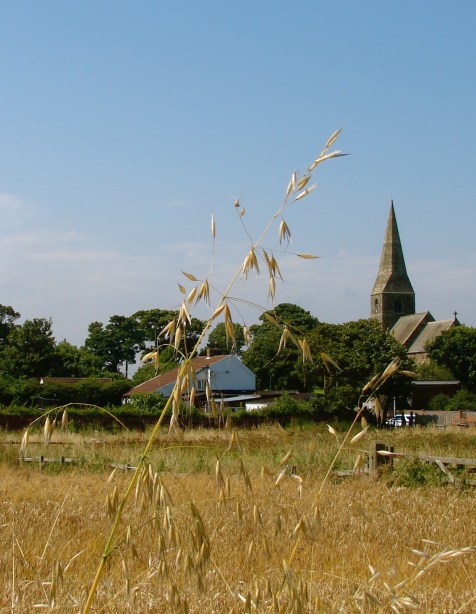
On 18th April 1911, Francis Frederick Johnson, was born in Bridlington, where he lived all his life. An architect, his early work was mostly local, and he did much restoration work on country houses. His work was increasingly recognised nationally and internationally, and he worked up to his death aged 84. He was awarded the CBE, for work including St Margaret’s Hilston; St Michael & All Angels, Orchard Park; Winestead Rectory restoration; Cottingham Rectory. Many of the buildings he designed were given listed status in 2017. He is buried at Reighton with his life partner, Edward Ingram, local historian.  (d 29.9.1995) photo shows Hilston church

On 18th April 1932, the Thorpe Enquiry into land deals on Hull Council reported its findings that Sir Digby Willoughby (who had committed suicide the month before), Alderman Francis Finn, and builder Robert Tarran, were involved in corrupt land deals.

hilston church & tower.JPG

April 17th

On 17th April 1595, a week after the birth of Frances Clifford at Londesborough House, her parents gave a feast for 70 people, including friends and family and local people; the menu included caviar, 11 types of fish, lamprey pies, turbot pies, eel, mutton, chicken and rabbit, salad, cheesecake and fruit tart and custard.

On 17th April 1627, army deserter Richard Towler was taken under escort to Hull with orders to either rejoin the forces heading for Germany from which he had deserted, or be returned to York as a prisoner. 1,350 soldiers had sailed from Hull in 1626 to support the King of Denmark in the Thirty Years War.

On 17th April 1797, Hull Trinity House paid £1 5 shillings to William Taylor and Robert Masgill, of the ship Jupiter, which had been captured by the French.

On 17th April 1803, George Wallis, aged 73, died in Hull. Hull’s most prominent locksmith, he created a collection of arms and armour, and opened what may have been Hull’s first museum. His painting can be seen in Wilberforce House. His son George invented a swivel-mounted harpoon gun for the whaling trade.  (b 20.4.1731 in Lockington).

On 17th April 1878, George Herbert Stancer, was born in Pocklington. He was a sports journalist and administrator of cycling associations. He beat the record for a tandem tricycle ride from London to Brighton in 1910 (with L.S. Leake) in 5hrs 59mins 51secs. He was awarded the OBE, Died October 1962.

Geo Herbert Stancer