March 14th

On 14th March 1293, as part of the process of creating his new port of Kingston upon Hull, King Edward I had Myton valued, at £24 8s a year, including 2 windmills, a grange, a sheep farm, arable land and 2 areas called Southwick and Milnwick.  He purchased lands in both Wyke and Myton from Meaux Abbey, but it took many years before they were content that they had been suitably repaid.

On 14th March 1471, during the Wars of the Roses, King Edward IV landed about 2,000 men at Ravenspurn when a storm drove them into the Humber for shelter. Some ships landed as far west as Paull.

On 14th March 2013, Norman Collier died aged 87. Comedian, famed for TV stand-up routines, including the ‘faulty mic’. (b 25.12.1925 in Grotto Square, Mason Street, Hull)

normancollier

March 13th

On 13th March 1640, on instructions from the Duke of Northumberland, Sir Edward Osborne, for the Council in the North, arranged for 2,000 horse and men to be quartered in and around Hull, together with arms for them.

On 13th March 1801, Hull Trinity House sent a further 6 North Sea Pilots to Yarmouth to support the naval attack on Copenhagen.

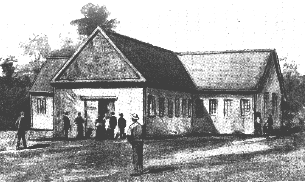
On 13th March 1827, Revd Richard Johnson died, aged about 71. Known as Australia’s First Preacher, he and his wife Mary joined the first Fleet, and he became chaplain to the prison colony of New South Wales in 1786. They created a school and both taught up to 200 children. He returned to Hull in 1800 and was curate to Rev Thomas Dykes at St John’s church for a time. (B Welton c1756) picture shows Australia’s first church, built by Richard Johnson in 1793

On 13th March 1942, Alexander Gallacher, 37, donkeyman, of Hull, died by enemy action, whilst a merchant seaman on board SS Destro, of Hull, off Tobruk.

first-church-Aus1793

March 6th

On 6th March 1851, two days of severe storms, coupled with high tides, caused several breaches in Spurn Point, and made the Low Light insecure. The lifeboat was damaged, and several of the crew’s cottages were flooded. The extraction of gravel was halted, but did not finally end for many years.

On 6th March 1862, Joseph Wildridge, aged 14, apprentice, was attacked by another apprentice, probably named William Webb, on board Hull fishing smack Fairy. He was  so severely injured that he had to be returned home by another vessel, and died on 9thApril. He was unable to report on the events leading up to his attack, and a court case failed to prove a case against his assailant, as the crew would not testify.

On 6th March 1883, a great storm affecting the whole of the East coast resulted in huge losses in the Hull fishing fleet. Accounts vary: up to 230 Hull fishermen and 32 fishing smacks are recorded as lost.

On 6th March 1916, Zeppelin L14, after attacking Hull, dropped bombs on Burstwick and Owstwick, with no further casualties, before passing out to sea.

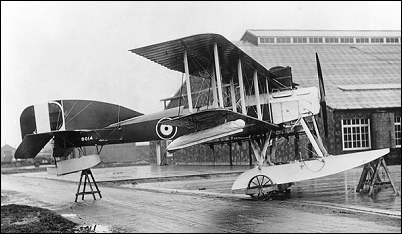
On 6th March 1919, the RAF Squadron 248 at Hornsea Mere seaplane station disbanded. From August 1918, it flew coastal patrols with Short 184 and Fairey Hamble Baby floatplanes off the Yorkshire coast. photo shows a short 184


short-184

March 5th

On 5th March 1514, John Taillour of Beverley claimed sanctuary at the church of St John, Beverley, for ‘the security of his body’, but the register does not state who was threatening him, or why.

On 5th March 1642, Queen Henrietta Maria stopped one night at the Manor House, Burton Fleming. She was still on her way to York to join her husband, Charles I, with arms from Holland. She is then said to have stayed 2 weeks at Boynton with the Stricklands. Luckily, Sir William, Parliamentary MP for Hedon, was away in London.

On 5th March 1646, Hull merchant Leonard Scott was fined £74 10s as a member of the Royalist army (a ‘delinquent’) in order to recover his goods which had been sequestered by Parliament.

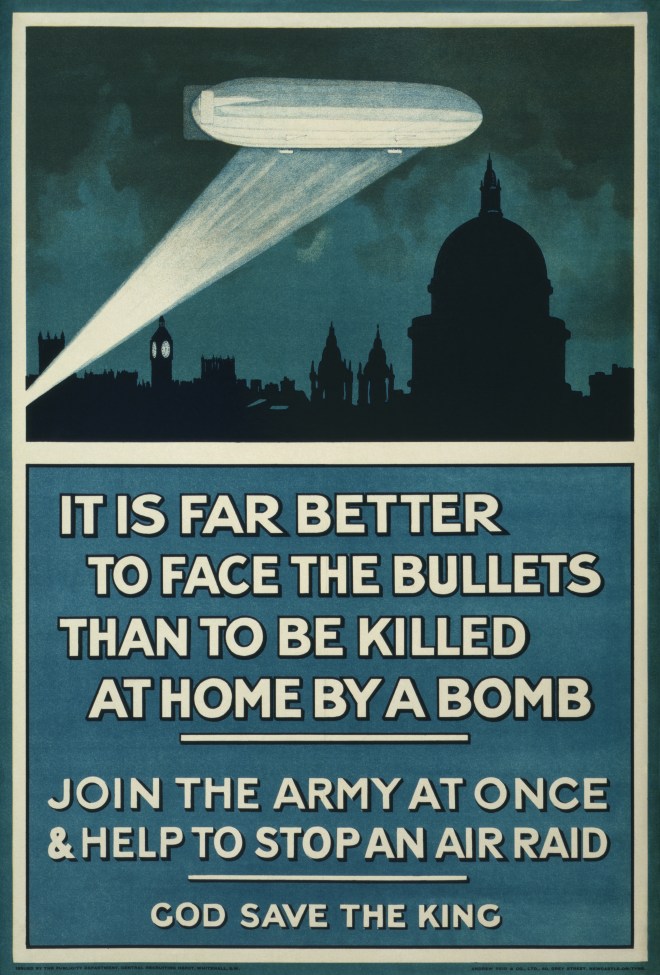
On 5th March 1916, Martha, Ethel and Mira Ingamells of Linnaeus St, Hull, were among the 18 people who died in the 2ndZeppelin raid on Hull; 60 people were injured. Queen Street was hit, as were Linnaeus St., Porter St., Church St and Selby St, and Earle’s shipyard. A mob afterwards smashed up a vehicle belonging to the Royal Flying Corps, presumably in anger at their failure to defend the town, resulting in hasty installation of 7 guns, and the general strengthening of defences around the Humber. Bombs were also dropped on Gembling and Woodmansey.

WWI Zeppelin

March 1st

On 1st March 1384, Michael de la Pole, Earl of Suffolk, left in his will instructions to found the Charterhouse Hospital which his father had begun, and endowed it with land, nominating Sir Richard de Killing as the first Master, and left money to support 13 poor men and 13 poor women, feeble and old.

On 1st March 1838, the steam packet ferry services from Hull to Selby, Goole and Gainsbrough were restored, after severe frosts disrupted them from the 2ndweek in January.

On 1st March 1916,  a new Royal Flying Corps Squadron, the No 47 Home Defence Squadron, was formed at Beverley, on the racecourse site.

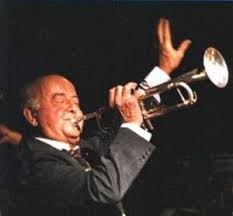
On 1st March 1921, Kenny Baker was born  in Withernsea. Musician and composer, considered the best British trumpeter, 3 times winner of best jazz trumpet player award, he played for Frank Sinatra, Sammy Davis, the Beatles, and on TV and film soundtracks, including James Bond scores, The Muppet show, and ‘The Beiderbecke Trilogy’. (died 7.12.1999) see photo

On 1st March 1990, Sister Agnes Walsh was recognised by Yad Vashem as one of 27 British people known as Righteous Among the Nations for her part in protecting Jews during the Holocaust. Trapped in France when the country was occupied by the Nazis, she gave refuge to a local Jewish family in spite of being in grave danger herself as a foreigner. She was born Clare Walsh in Hull in 1896 (died 1993).

Kenny Baker


February 26th

On 26th February 1381, Archbishop of York Alexander Neville announced his intention to visit Beverley, provoking a mass walk-out of Beverley clergy, most going to Lincoln or London. Neville replaced them with vicars choral from York but failed in his power struggle.

On 26th February 1552, Sir Michael Stanhope was executed on Tower Hill, London, for instigating rebellion, and conspiring to murder John Dudley, Duke of Northumberland. Stanhope was a Nottinghamshire knight, twice Governor of Hull, where the townspeople complained to the Privy Council of his high-handedness. He also acquired a great deal of land after the Dissolution, including in Sutton-on-Hull.

On 26th February 1671, Robert Constable, Viscount Dunbar of Burton Constable, was indicted at Middlesex Sessions Court with the murder of Peter Varnall and confessed. Hi accomplices were Peter Savage and John Fennick. It seems that Varnall was the innocent victim of young aristos on a drunken spree.

On 26th February 1869, Christopher Sykes, MP for the East Riding of Yorkshire, moved the Bill which later in the year became the Sea Birds Preservation Act, supported by Rev HF Barnes-Lawrence of Bridlington. Up to 232,000 seabirds and eggs were killed, often shot for sport, each breeding season. This earned Sykes the nickname ‘The Gulls’ Friend’. See cartoon below.  Link is to film of ‘climmers’. https://www.youtube.com/watch?v=B5ynIfnmVK0

On 26th February 1903, Martin Samuelson, marine engineer, died at Hessle, aged 78. Owner of Martin Samuelson & Co, of Neptune Street, Hull, and later Sammy’s Point, who built hydraulic presses, steel boilers and early steel vessels, and the North Bridge. Hull councillor from 1853, Sheriff 1857, Mayor 1858, first colonel of Royal East Yorkshire Volunteer Artillery and JP. (born 2.1.1825 in Liverpool).

On 26th February 1914, the Coverdale family of Hollym played a football match against another family with 11 sons, the Charlesworths of Scunthorpe. The Coverdales won 3: 0.

On 26th February 1935, Thomas Edward Lawrence, known as T.E.Shaw, (‘Lawrence of Arabia’) left Bridlington when discharged from the RAF; he had been supervising armour-plating power launches for target practice. Whilst in Bridlington, he had lived at the Ozone Hotel, Bridlington (now Royal Yorkshire Yacht Club). There is a sundial dedicated to him in South Cliff Gardens.

On 26th February 1942, Pilot F/Sgt Reginald Francis Robb and 5 crew of Wellington bomber Z8536 took off from RAF Pocklington and crash landed at Yapham due to an engine fire. They jettisoned their bombs, but were caught in the blast and all the crew were lost. 4 are buried in Barmby Moor.
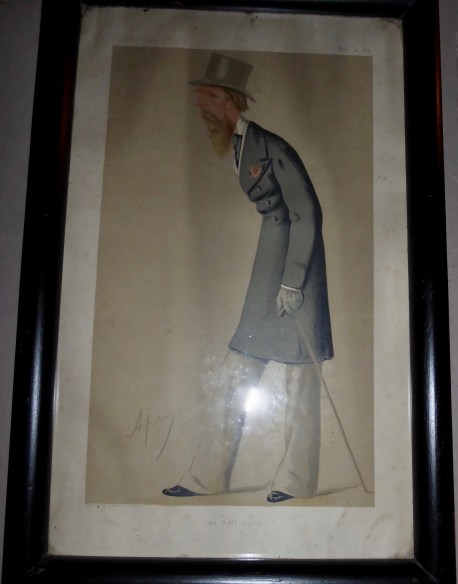
Christopher Sykes MP

February 21st

On 21st February 1651, George Holroyd, vicar of Foston, was tried at York Castle and imprisoned for uttering a seditious sermon; he had preached against bloodshed on a day of thanksgiving for military and naval successes.

On 21st February 1803, Burnett’s Daily Shipping List reported that more than 100 small vessels got out of Hull harbour that morning and the night before.

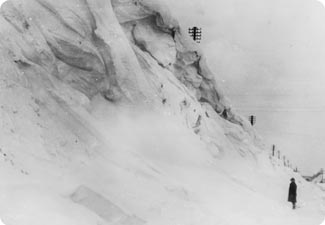
On 21st February 1947, 9 Jackson’s bread delivery lorries were trapped in a snowdrift overnight  on Arras Hill, Market Weighton. They were dug out by colleagues, who had to walk miles to reach them. The East Riding Council reported spending £3,000 a day to the Army to keep the roads open and get supplies to villages cut off by snow. photo shows Little Weighton railway cutting during that period

little weighton cutting 1947

February 19th

Pilgr Grace

On 19th February 1408, Henry Percy, 1stEarl of Northumberland, was killed in battle against King Henry IV, after supporting Edmund Mortimer’s claim to the throne. The Percies held lands across Yorkshire, the Lakes and Northumberland, but their main seat appeared to be Leconfield until the 16thC.

On 19th February 1499, William Fechet of Harpham claimed sanctuary at St Cuthbert’s church, Durham, for assaulting William Fox on 22ndOctober, striking him in several places with a sword; he assumed that Fox had died from his wounds, and fled.

On 19th February 1537, Sir Ralph Ellerker, the elder, chased Sir Francis Bigod and his men out of Beverley, and took 62 prisoners, who were taken to Hull. Bigod escaped. This appeared to be the end of the Pilgrimage of Grace in East Yorkshire.

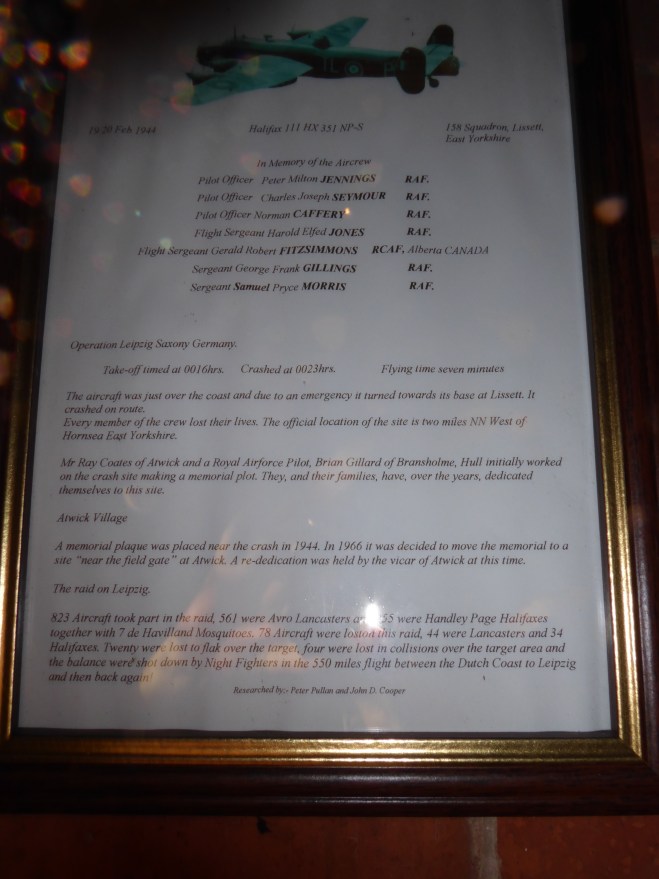
On 19th February 1944, a Halifax bomber crashed 2m NNW of Hornsea shortly after take-off, killing all 7 crew. Photo -notice in Atwick church. Sadly, I was unable to find the memorial.

Atwick Halifax crash

February 15th

On February 15th 1518, Richard Jakson of Hogett on the Wolds (presumably modern Huggate) claimed the sanctuary of St John’s church, Beverley, for debt.

On February 15th 1530, John Gillco, labourer of Painsthorpe, fled to his parish church in Kirby Underdale from York, where he had assaulted and killed John Notyngham at 4p.m. the previous day. A coroner’s inquest the same day reported that the killing took place within the liberty of the monastery of the Blessed Mary.

On February 15th 1793, a contemporary report said a horseman galloped into Hull with urgent news that men had landed near Patrington from a privateer. Nervous of the risk of French invasion, part of the Corps of Invalids stationed at the Citadel and several volunteer seamen were immediately dispatched to meet the enemy. A 2ndmessenger met them on the road near Hedon, and informed them that instead of French enemies, those who had landed were the crews of several colliers, who had left their ships to avoid the press gang. HM Sloop of War, The Queen, was lying at anchor in the Humber.

On February 15th 1898, James Ashton, 39, skipper, of Witty St, Hull, was lost with his crew when trawler European foundered in the North Sea.

press-gang