July 15th

On 15th July 1855, Hull-born John Sheppard, a Boatswain’s mate, attempted single-handedly to blow up a Russian warship at Sebastopol, Crimea, and was awarded the Victoria Cross ‘for valour’.

On 1th July 1868, John Ellerthorpe, the ‘Hero of the Humber’ died aged 62. He had rescued 39 people from drowning and was awarded the Royal Humane Society Silver Medal. Buried in Hull General Cemetery. (b 1806)

On the night of 14/15 July 1943, Bill Shepherd, engineer at Wm Jackson & Son Ltd, Derringham St, Hull, died when the factory was bombed; his colleague Sid Charlton escaped injury, as they dived for cover in opposite directions.


July 13th

On 13th July 1496, Bartholomew Pereson of Driffield claimed sanctuary at the church of St John, Beverley, for the murder of John Elyot.

On 13th July 1854, 3 men and a boy drowned when they fell off the Dowthorpe as it was being launched. About 300 people had boarded the ship before the launch, and deliberately rocked the boat. Many fell into the water and 4 drowned. A tug “Ann Scarborough’ was capsized by the number of people trying to board her from the water.

On 13th July 1936, Oswald Mosley, leader of British Union of Fascists,  found himself unable to book a hall in Hull. Mosley planned to give a speech in Corporation Fields, to recruit blackshirts to his organisation, but they were met with a large and hostile group of local people, and a riot ensued. Mosley was not able to give his speech.

On 13th July 1951, a fire broke out in No 1 Shed, Humber Dock, Hull, destroying £100,000’s worth of cargo awaiting shipping. The probable cause was said to be a discarded cigarette, and made worse by a gas leak.

Dowthorpe July 1854?


July 3rd

On 3rd July 1267, Alice Falketon was given permission by the church authorities to build herself a house in St Nicholas Churchyard, so that she could live as an anchoress. Enquiries had been made as to whether she was a fit person, with enough funds to maintain herself, and if this would be convenient to the parish.

On 3rd July 1524, Peter Gornarr, tanner, of Bridlington, claimed sanctuary at the church of St John, Beverley, for the murder of Robert Skelton of Bridlington, a tailor.

On 3rd July 1642, King Charles I set up his court in Beverley at the house of Lady Gee, North Bar Within, and quartered his forces (about 3,000 infantry and 1,000 cavalry) in and around Anlaby, Cottingham and Newland.

On 3rd July 1797, Hull Trinity House paid £2 10s to William Brand, James Hayes, Samuel Harrison and J. Peterson, whose ship the Argo had been captured.

On 3rd July 1850, Mr T. Firbank, Chairman of Hull Dock Company,  opened Victoria Dock, the first of Hull’s docks east of the River Hull.

On 3rd July 1892, a great flood at Langtoft reached a height of 7 ½ feet.

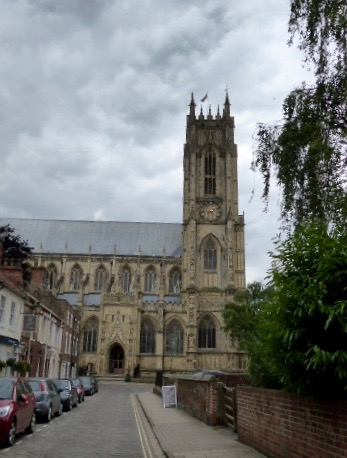
Beverley Minster

July 2nd

On 2nd July 1642, the Royalist ship Providence, commissioned by Queen Henrietta Maria, evaded Parliamentary ships by entering Keyingham Creek, which was too narrow for the larger ships, and landed a consignment of arms from Holland for the Royalist army. With help from local people, they unloaded ammunition which was taken to the king at York.

On the same day, the Royalist army secured Hull Bridge, Tickton, on the Beverley side, to prevent attacks from Hull and stop provisions reaching Hull, and evicted constable William Cuthbert and his family at midnight.

On 2nd July 1644, Sir Thomas Metham of Metham near Howden,  died at the Battle of Marston Moor fighting on the Royalist side, captain of the Yorkshire gentlemen volunteers.

On 2nd July 1830, Hull whaler Progress was wrecked in a storm when iced in near the Davis Strait; 19 whalers were wrecked or lost that season, 4 of them from Hull.

On 2nd July 1837, Hull whaler Swan was sighted off Spurn Point as a memorial service was being held in Hull for the crew. They had been away for over a year and had been trapped in ice. 25 of the 48 crew had died.

On 2nd July 1954, Harold Macmillan, Minister of Housing and Local Government, approved the amended Hull Development Plan, regenerating the city after the bomb damage of the war. Hull Georgian Society lamented the loss of buildings such as many on High Street, the whole of Nile Street and houses in Lowgate. Not all of the proposals came about – there was to have been a ‘town park’ open area from Holy Trinity to Princes Dock.


June 26th

On 26th June 1793, Captain William Hammond died aged 65 in Kirk Ella. Hull sea captain, shipowner and merchant, supporter of abolition, Chairman of Hull Dock Company, Warden of Trinity House, and diplomat. (He and David Hartley MP met Benjamin Franklin and John Adams in Paris on a possible spying mission) Buried in Welton. (b 1727 York). Photo shows a door in the Maritime Museum, former Dock Offices.

On 26th June 1854, at an event to celebrate the opening of the Hull-Withernsea railway line, 500 guests travelled from Hull on the first ever train (which was 20 minutes late, due to late arrival of guests) and part of the lunch marquee collapsed; there were no injuries. Joseph Robinson Pease in his diary recorded heavy showers and high winds threatened to tear the marquee to pieces, but that it subsided and all passed off well.

On 26th June 1920, the National Federation of Women Workers called its Hull laundry worker members out on strike, as they were paid less than in other towns. Hull Trades Council supported the strike and organised a parade on 17 July. Strike breakers were reported being smuggled in to work in laundry baskets.

Hull Dock Co

June 19th

On 19th June 1256, the Meaux Abbey chronicler reported losing men and oxen at Orwithfleet, south of Patrington. A major flood of the Humber reached as far north as Cottingham, with many lives lost, livestock and fisheries devastated, and land washed into the river.

On 19th June 1607, Thomas Wincop, Master of Hull Charterhouse, bought, with Hull Mayor George Almond and other trustees, land in Haltemprice Wood abutting on the common fields of Willerby, to support the running costs; the Charterhouse already owned substantial property in and around Hull. photo shows Wincop’s memorial in Hull Minster.

On 19th June 1837, Hull Steam Packet Company launched the paddle steamer Victoria at Medley’s shipyard, Hull; she was considered state of the art. A boiler explosion in 1838 killed 5 crew; there was a second explosion the same year; she ran onto rocks in 1852 and was wrecked, with 8 people killed.

On the same day, Rev Joseph Coltman died in Beverley at the age of 60. He was known for his support of local charities, of the emancipation of Catholics, and of the abolition of slavery. Born in Hull, Coltman Street was named for him, as was Beverley’s Coltman Avenue. At 37 stone 8lbs, he was reputed to be the heaviest man in England, and his death may have been caused by his weight. He employed a manservant to turn him in bed, but he fell asleep and Coltman suffocated in his sleep.

On 19th June 1887, to celebrate Queen Victoria’s Jubilee, a state service was held in Holy Trinity church, Hull, the new Market Hall was opened, as was East Park, and there were festivities in all the city’s wards.

On 19th June 1920, Harry Wilkinson of  Lower Union Street, Hull, was seriously injured by 3 gunshots.  He was part of a mob of white people who attacked and damaged several boarding houses where black seamen lived. Tom Toby, a West African fireman, was charged with wounding, but no white people were arrested. Toby’s plea of self defence was accepted, and he was found not guilty. During the same rioting, Murrell Piggott, faced with a 200-strong crowd, had also fired, but his plea of self defence was not accepted, and he was sentenced to 9 months’ hard labour for unlawful wounding.

On 19th June 1940, the East Hull, docks, suburbs, and River Hull corridor experienced the first night-time raid of World War 2.


Thomas Whincopp memorial

June 1st

On 1st June 1787, William Wilberforce asked the King to make a Royal Proclamation for the Encouragement of Piety and Virtue. Concerned at the large number of death sentences being carried out, he reasoned that those punished for small crimes, such as swearing, would be less likely to commit serious crimes, such as murder. The Society for the Reformation of Manners was established in Hull as a result.

On 1st June 1798, William Wickham, Superintendent of Aliens, wrote advising on the tightening of the Aliens Act, with particular relation to Italian pedlars landing at Hull.

On 1st June 1820, Rev Arthur Strickland and 6 other gentlemen adopted the rules of the Bridlington Cricket Club; cricket was clearly a game for the gentry, as subscriptions were 10s6d. Visitors and occasional residents could be invited to play for the summer. the pitch was in the field between Bessingby and the mill.

On 1st June 1829, Hull’s Junction Dock opened, completing the line of docks connecting the Hull and the Humber, along the line of the old wall . Later renamed Princes Dock after HRH the Prince Consort.

On 1st June 1853, Malton & Driffield Junction Railway opened its 19 miles of track to public traffic.

On 1st June 1875, Alice Elizabeth Rawson was the first person to be baptised in the newly created parish of Newington, in Newington parish Mission Room, Edinburgh St, before the church was built in 1878.

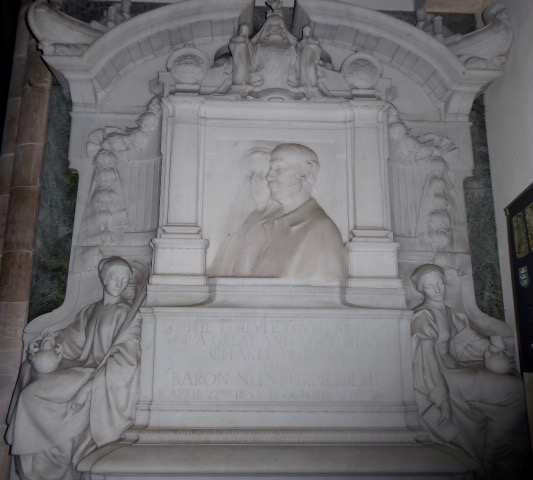
On 1st June 1891, the Royal Baccarat Scandal trial was the first time the heir to the throne was called as a witness in court. It began at a house party at Tranby Croft, Anlaby, (now Hull Collegiate School) home of Charles Wilson,  when Sir William Gordon-Cumming was accused of cheating at cards. Gordon-Cumming lost the slander case, and was dismissed from his army post the day after the trial ended. photo shows Charles Wilson’s memorial in Warter church.

Chas Wilson Nunburnholme

May 29th

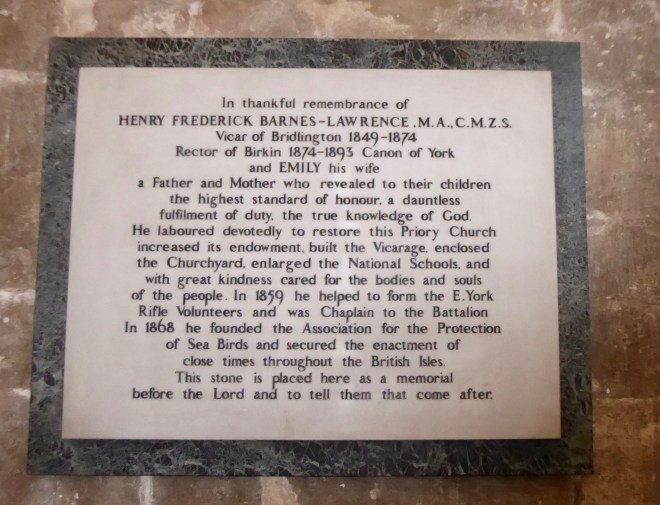
On 29th May 1896, Rev Henry Frederick Barnes-Lawrence died aged 81 at Bridlington Quay. He had been Rector of Bridlington Priory church for 25 years, overseeing its restoration by Sir George Gilbert Scott. He had been a keen birder, and set up the Association for the Protection of Sea-birds, forerunner of the RSPB. His memorial is in the Priory Church.

On 29th May 1941, an air raid demolished 5 office boxes and damaged 9 others in St Andrew’s Dock, Hull. Damage to ARP unit, wagons, fish sidings and an air raid shelter.

On 29th May 1999, Fernand Laville, Free French veteran, presented Nafferton parish council with a regimental plaque to commemorate the billeting of Free French soldiers in the village during WW2. 16 veterans returned to Nafferton for a reunion.

Barnes-Lawrence


May 19th

On 19th May 1401, Isabel Fauconberg, of Skelton (nee Bigod at Settrington) died, and had 13 paupers dressed in russet attend her funeral.

On 19th May 1942, John William Collins, warden and Charles Andrews, soldier, were recommended for gallantry awards for rescuing horses from the LNER stables. Holderness Road, Hull, during an air raid. The raid targeted Alexandra and Victoria docks. 4 people were killed.


May 18th

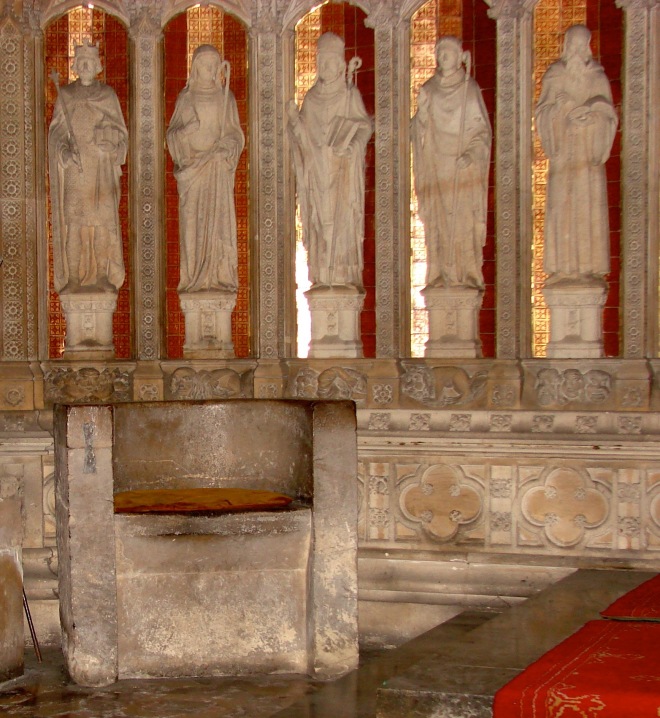
On 18th May 1516, Robert Bradlay of Halifax claimed the sanctuary of St John ‘s church Beverley for debt. Fugitives from justice often travelled long distances to get to a registered sanctuary, in order to be safe for a time from their pursuers. photo shows the Frith Stool in the Minster, the innermost sanctuary.

On 18th May 1957, Queen Elizabeth II visited Hull for the day and while here visited one of the new houses on Longhill Estate. She also visited Paragon Station, Paragon Square, St Andrews Dock, St Andrews Dock Surgery, Hull University, the Sailors’ Children’s Society, Hull Royal Infirmary, the Guildhall, King George dock, East Park, Wilton House, and Corporation Pier. She had 184 people presented to her, from the Archbishop of York to Mrs Annie Nock, fish house worker.


minster - frith stool.JPG