April 16th

On 16th April 1313, Petronilla de Scarfon conveyed ownership of land to the East of Vicar Lane, Hull, to William Brimswein of Ottringham.  On the same day, John de London conveyed land on East side of Vicar Lane to Ingram Sonnolf of Ottringham. The town was growing, and drawing in landowners from the local area.

On 16th April 1454, William Eland, enrolled in post as Hull Collector of Customs, joining existing staff Richard Bryd (Collector) and Ralph Babthorp (Controller).

On 16th April 1532, Christopher Hoggeson, labourer of Thorngumbald, claimed the sanctuary of the church of St John, Beverley, for debt.

On 16th April 1680, Sir Edward Barnard wrote to Hull Mayor about ‘Darningham Springs’, one of several letters around this time from landowners concerned about ‘the placing of stops in land drains’. The stream was again getting polluted, and a dam was proposed to stop runoff from the land getting into the drinking water.
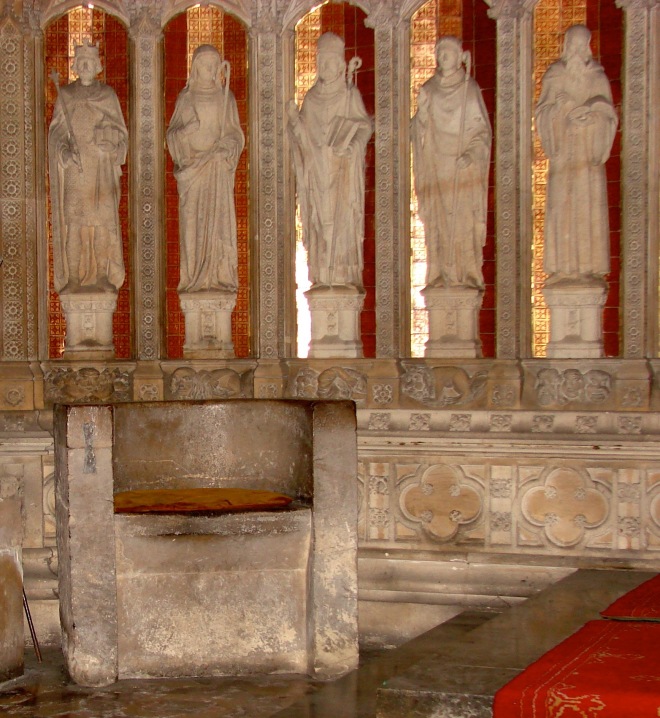
minster - frith stool.JPG

April 14th

On 14th April 1511, Walter Rugbe of Paull, a cooper, claimed sanctuary at the church of St John, Beverley, for the murder of mariner Anthony Dowre of Boulogne.

On 14th April 1524, Sir Robert Constable of Flamborough, with 100 men, attacked the Rokebys’ manor house in Bishop Burton and abducted Ann Cresacre in a complex dispute over land and marriage agreements. Ann was 12 yearsold and an orphan. The case was heard in the Star Chamber. Ann eventually married the son of Sir Thomas More.  A descendant was the City Architect of Hull, Joseph Hirst. photo shows Holbein’s study for his picture of the More family – Ann is standing, rear.

On 14th April 1571, William Strickland of Boynton, MP, a leading Puritan, presented a Bill  to Parliament to reform the prayer book, including abolishing confirmation and the wearing of priests’ vestments.

On 14th April 1702, Jeremiah Northend was buried, aged 78 in Rowley. Aged 14, he had emigrated to Massachusetts with his Uncle Robert and cousin Ezekiel, with the dissenting community led by Rev Ezekiel Rogers, but returned home after about 9 years. Lived in Little Weighton. (b 26.9.1624).

Study_More_familyHans_Holbein

April 11th

On 11th April 1493, William Vasour of Newton, Wilberfoss, died in a field in Sutton-on-Derwent after being attacked by Henry Taillour with a dagger.  On 17thApril, Taillour arrived at the church of St John, Beverley, and claimed sanctuary for the crime.

On 11th April 1519, Robert Tailor, a weaver from Stamford Bridge, claimed the sanctuary of St John’s church, Beverley, for debt.

On 11th April 1803, Burnett’s Daily Shipping List reported that 3 vessels arrived in Hull, from Leith, Colchester, and Salou; 4 ships left, for Newcastle, Shields, Memel and Riga.

On 11th April 1941, Mrs Edith Robson died in Sutton House, Sutton-on-Hull. She bought a house as a free maternity home for poor mothers, ran it successfully, and donated it to Hull Corporation. Robson Way is named for her and her husband, Edwin; they donated land for a playing field in Church Street, Sutton, in memory of their daughter Barbara, who died aged 13 of meningitis in 1925.

On 11th April 1963, Karen Briggs was born in Holderness Road, Hull. She is one of Britain’s greatest judokas; she won 4 World Championships and 5 European championships. She was awarded an MBE, and an honorary doctorate from University of Hull 2013. Now Mrs Karen Inman.

karenbriggs2


April 10th

On 10th April 1694, John Roxby  & Thomas Spicer (Ferriby) and Peter Acy and Samuel Newton (Swanland) were chosen as parish Overseers for the Highways, (Ferriby and Swanland being in the same parish, but choosing separate officers). On the same date, Overseers of the Poor chosen were Paull Wollas and Wm Jefferson (Ferriby) and Robt Parker and Christopher Boynton (Swanland).

On 10th April 1733, Thomas Pelling, the “Flying Man’, set up a tightrope between Pocklington church steeple and the Star Inn, and fell to his death; he is buried in the churchyard.

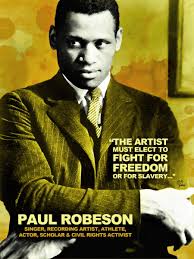
On 10th April 1956, Paul Robeson, singer, actor and political activist, performed at Hull City Hall to an audience of 2,000. Publicity described him as ‘the world’s greatest negro actor, singer and film star’.

Paul Robeson

April 9th

On 9th April 1484, John de la Pole, Earl of Lincoln, became Heir Presumptive to the English throne, when the Prince of Wales (son of Richard III, his maternal uncle) died. The Earl died 3 years later, aged 25 at the Battle of Stoke, in a rebellion against Henry Tudor.

On 9th April 1610, the household accounts show that the number of servants in residence in the various houses of Francis Clifford, Earl of Cumberland, (incl Londesborough House and Skipton Castle) rose from 49 to 83 after he inherited the Earldom. They included 4 musicians, and a huntsman.

On 9th April 1646, Matthew Topham, merchant of Hull, was fined £90 as a member of the Royalist army (delinquent) in order to recover his goods which had been sequestered by Parliament.

On 9th April 1814, Hull gunsmith Owen Probin, 38, was murdered by John Lever, a saddler, who had had a violent quarrel with Probin the previous day in Silver Street.

On 9th April 1858,  Sir Thomas Aston Clifford Constable and Rosina, Lady Constable, with a number of other ‘distinguished amateurs’ performed a programme of music at a charity concert  in The Music Hall, Jarratt Street, in aid of education for poor children in Hull.

On 9th April 1869, the Attorney General moved that a Royal Commission be set up to enquire into corrupt practices at the general election in Beverley the previous year. At least 800 people had been bribed, and corruption at Beverley was said to be ‘worse than at Norwich and Bridgewater put together’. The enquiry is said to have led directly to the 1872 Ballot Act.

On 9th April 1933, Canon Edward Arthur Berry, vicar of Drypool (grandfather of Mary Berry) was one of the speakers at a mass meeting in the Balmoral Room, Metropole Hall, West Street, Hull, called by the Jewish community to protest against Nazi actions against Jews in Germany.


April 6th

On 6th April 1486, John Heryson, husbandman of Middleton on the Wolds, claimed sanctuary at the church of St John, Beverley, for killing Thomas Metcalfe of Melmerby with a staff earlier that day.

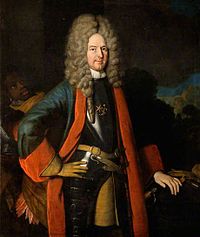
On 6th April 1713, Brigadier General Luke Lillingstone died aged 60 in North Ferriby. He had served in Ireland and Martinique. He is chiefly known for advertising Ferriby Grange for sale due to military debts.  His monument is in Ferriby church. see picture

On 6th April 1816, George Hudson, aged 15 or 16, was fined 12s6d for bastardy. It appears he then left his affluent home in Howsham under a cloud and moved to York. He eventually became known as the ‘Railway King’.

On 6th April 1911, Hull Corporation Transport introduced free passes for blind people.

Luke_Lillingston

April 2nd

Chas I trial

On 2nd April 1380, Alexander Neville, Archbishop of York, granted to the burgesses of Beverley the Westwood and all rights attached to the land.

On 2nd April 1607, John Alured was baptised in All Saints Church, Preston. He was elected MP for Hedon in 1640, and was a judge at the trial of Charles I. Died 1654. picture above shows the trial

On 2nd April 1652, Luke Hinderson, aged 45, of Stamford Bridge, was hanged outside Walmgate Bar, York, with 3 others, for robbing Peter Ellison, butcher of York, and leaving him for dead.

On 2nd April 1660, John Ramsden & Andrew Marvell were elected MPs for Hull; the votes cast were: John Ramsden 227, Andrew Marvell 141, Mr Barnard 113, Wm Lister 80, Matthew Allured 55 and Baron Thorp 35, in all 651.

On 2nd April 1774, George Belt of Howden was hanged at York Castle for breaking into and robbing the house of Mr Althorpe, near Howden.

On 2nd April 1785, William Riley, 23, was hanged for robbing John Borr of Hull near Newland.

On 2nd April 1916, a BE 2c aircraft of Beverley Royal Flying Corps Squadron 47, crashed at the Racecourse due to engine failure while defending the area from a Zeppelin attack.


March 30th

john-wilson-carmichael-the-shipyard-at-hessle-cliff-1820_a-l-10072237-8880731

On 30th March 1693, John Frame’s shipyard at Hessle Cliffs launched the man-of-war, the Humber, for the Navy, of 1205 tons, carrying 490 men and 80 guns. John Wilson Carmichael’s painting of the shipyard at Hessle Cliffs is in Ferens Art Gallery

On 30th March 1757, Mary Ellah of Broomfleet was hanged at York Castle, and her body burnt, for murdering her husband.

On 30th March 1782, scaffolding collapsed while builders were installing a roof beam in the new Congregational Chapel in Fish Street, Hull; 5 men fell to the ground, 3 of them seriously injured.

On 30th March 1851, the census figures recorded that more than half of the Hull population did not attend church on the given date, and that around 15% of the population described themselves as Church of England. (N.B. figures may have serious omissions, e.g. prisons, workhouses).

On 30th March 1860, the Turner’s Trust (Beverley) charity was registered as part of the will of printer Matthew Turner, to distribute sums of £10 10s each to well conducted, honest, deserving, sober and discreet domestic servants. At its first distribution in 1862, there were 240 applicants, of whom 68 were successful. The charity still operates. Turner is buried in Coronation Gardens.


March 29th

On 29th March 1241, William de Forz II, count of Aumale, Lord of Holderness, died of illness beside the Mediterranean, en route to Jerusalem, aged between 45 and 50. At times close to Kings John and Henry III, he changed sides and rebelled several times, was excommunicated twice, having to seek sanctuary in Fountains Abbey, but was pardoned.

On 29th March 1689, Sir John Hotham, 2ndbaronet, was buried, after dying aged 57 of a violent cold. He had just been greeted enthusiastically as the new governor of Hull, having come from Holland with William of Orange. He was the grandson of Sir John Hotham, the Hull governor who turned away Charles I.

On 29th March 1759, John Courtney recorded in his diary that the Beverley Assembly Rooms in North Bar Street/Lairgate hosted ‘a very splendid show of ladies and gentlemen and a very agreeable ball’; Beverley lacked industry, but was a desirable place for gentry to build large Georgian houses.

On 29th March 1776, Eliza Bordington and Thomas Akerman, 37, of Flambrough, were hanged at York Micklegate Bar for poisoning Mr Bordington (presumably Eliza’s husband), and Eliza’s body was also burnt.

On 29th March 1874, John William Duncan, aged 12, was a member of  Hull’s Spring Bank Orphanage’s new brass band. The band gave its first performance, marching from the Trinity House Almshouses, Beverley Road, to Victoria Pier and back. They only knew 4 tunes. They went on to play by request at cricket matches, school treats and concerts.

On 29th March 1972, Joseph Arthur Rank died aged 83. The son of Joseph Rank (see 28.3), he ran his flour milling company, and became interested in films began as a way of getting the Methodist message across. He set up The Rank Organisation in 1937, producing films, and owning 650 cinemas and 5 film studios. 1stBaron Rank. (B 22.12.1888 at Chestnut Villas, Holderness Rd, Hull).

joseph rank

March 26th

On 26th March 1646, Hull merchant James Watkinson was fined £400 as a member of the Royalist army (delinquent) in order to recover his goods which had been sequestered by Parliament.

On 26th March 1706, the congregation of Cottingham church gave 4s in a collection for the repair of Beverley Minster.

On 26th March 1740, John Burnham and Ralph Burnsall of Preston bought 2 fields from Benjamin Waive of Hull, half the income from which was used to give to the poor, and half to pay for a schoolmaster to educate poor children in the village.

On 26th March 1827, an evening’s entertainment at Theatre Hedon (presumably in the Town Hall) included a performance of Hamlet, a recitation, and a farce.

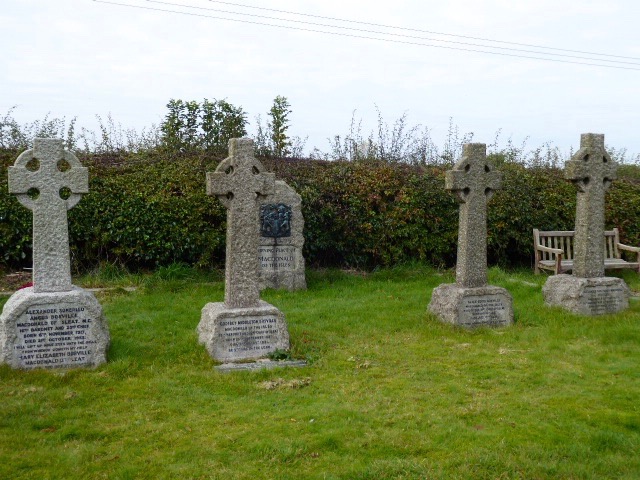
On 26th March 1933, Sir Alexander Wentworth Macdonald Bosville Macdonald of the Isles, 13thbaronet, died at Rudston aged 67  and is buried in the churchyard. (b26.9.1865)

MacDonalds of the Isles