December 13th

thwing meteorite

On 13th December 1760, John Courtney, gentleman, reported in his diary being awoken at midnight by the sound of bells ringing to announce that Hugh Bethell had declared himself a candidate for Parliament. The bells rang all day. A week later, Bethell changed his mind and withdrew his name.  He served as Beverley MP 1768-72.

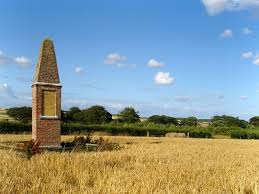
On 13th December 1795, at 3p.m., a meteorite weighing 56 pounds landed in a field near Wold Cottage, Thwing, home of Capt Edward Topham. It embedded itself 9 inches into the soil, weighing 56lbs, and 3 ft long. Capt Topham displayed the meteorite in London at a charge of 1shilling. He raised a brick obelisk on the landing site (see photo). The meteorite is now in the Natural History Museum, and is the origin of the name of Wold Top Brewery’s ‘Falling Stone bitter’.

On 13th December 1816, Frederick Brown, 60, was buried in Holy Trinity, Hull, after dying in the workhouse. Born in Guinea, he worked as a labourer in a number of jobs in Whitby and Hull. In 1794 he was acquitted of burglary by a Hull jury, apparently a case of being mistaken for another black man.

On 13th December 1830, Joseph Robinson Pease, JP, recorded in his diary an attempt to swear in special constables to deal with the ‘Swing Riots’ by agricultural labourers protesting about high rents, low wages, and the introduction of new machinery. However, they found it difficult to recruit in Cottingham.

On 13th December 1842, Moses Roper, student and escaped slave, gave a lecture at Beverley Guildhall on his personal experience of slavery in the USA, in which he exhibited instruments of torture used on slaves. He lectured extensively and published an autobiography.

On 13th December 1889, John Nicholson reported seeing the “Plough Lads’ (groups of men not hired on farms) going round Beverley, dancing and asking for money or drink. They dressed in ‘motley garb’, with one dressed as a woman with a broom, one (Blether Dick) with a bladder on a stick, one with a coat covered in strips of rag. “Often … at lonely houses they are rude and bold, demanding money or drink in such a way as to terrify the women who have been left at home”.  
December 11th

Meaux Abbey Farm


On 11th December 1538, Ellerton Gilbertine Priory was dissolved and the monks pensioned off. Sir John Aske of Aughton was granted the monastic lands, part of which became the parish church and graveyard. I have no record of the fate of the 13 poor elderly men whom the priory hospital was created to house.

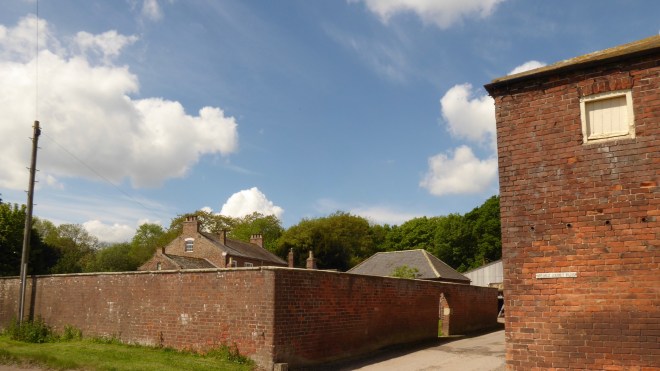
On 11th December 1539, the Abbot and monks of Meaux Abbey were pensioned off when the monastery was dissolved. The abbot retired to Skerne, and some of monks took up posts as curates in Welwick, Keyingham and Beeford. photo shows farm near the site

On 11th December 1647, priest John Saltmarsh, MA, died. Author, theologian, rector, deacon and Chaplain in the Parliamentary Army during the Civil War. Argued for religious toleration and liberty of conscience. Told Cromwell and Fairfax that God was angry with them for their treatment of the Levellers, and resigned his post with the Army. (b Saltmarsh date?)

On 11th December 1915, former Reckitt’s employee Private Edgar Winson was killed in action, serving with 10thBtn West Yorkshire Regiment. Born Spurn. No known grave.


December 10th

On 10th December 1621, Thurley Cammiskish, servant at Londesborough House, was given £10 p.a. for life when he left the employ of the Earl of Cumberland; this may have been more than he earned, but he would no longer receive board, lodgings, clothing and perks of the job.

On 10th December 1889, James Reckitt public library (which bears the name of its founder and donor), opened – Hull’s first free library.  Reckitt donated over 8,000 books, and gave the library to Hull Corporation in 1892. The building was designed by Sir Alfred Gelder.

On 10th December 1920, Gerald Thomas was born in Hull. Film director, mainly known for directing 31 Carry On films. (d 9.11.1993)

Carry On


December 9th

On 9th December 1644, Capt John Hotham had a second trial, this time for betraying the trust placed in him as a parliamentary commander. Found guilty and sentenced to beheading on 1stJanuary.

On 9th December 1754, pensioners in Trinity House almshouses were required to attend every Divine Service in the chapel, or lose one week’s pay for every default.

On 9th December 1917, the Spurn lifeboat rescued the crew of the steam ship Florence of Stockton when they ran aground in heavy seas. Coxswain Robert Cross jumped into the sea with a line, and with crewman G. Martin, stood on the sands until all of the crew were safely in the lifeboat. Cross received the RNLI Silver Medal, and Martin received a Monetary Award.

On 9th December 1959, half of the tower of St Martin’s Church, Wharram Percy, collapsed in a storm, 10 years after the last service held in this abandoned village, now probably the subject of more archaeological investigations than any other place in England.

Wharram Percy

December 8th

turkey lectern3.JPG


On 8th December 1536, armed men from Holderness who had seized Hull in the Pilgrimage of Grace restored the town to the Mayor and dispersed.

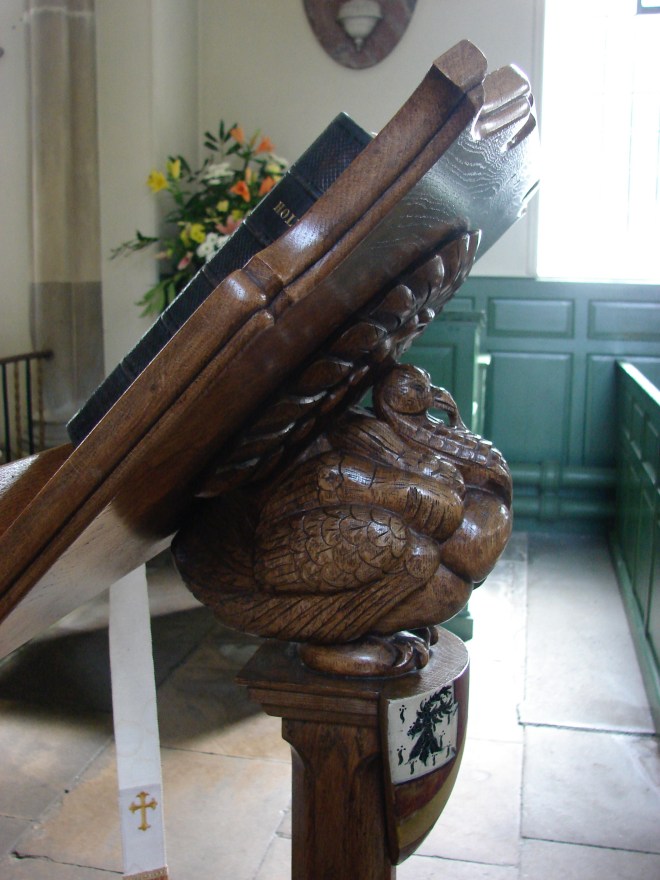
On 8th December 1598, William Strickland died in Boynton. When young, he had travelled to America on voyages of exploration with Sebastian Cabot, and is credited with introducing the turkey to England. Later became a prominent Puritan MP. photo shows the Turkey Lectern in Boynton church.

On 8th December 1629, George Acklam of Bewholme died aged 64, and left £5 to Hornsea church to distribute to the poor every year on Maundy Thursday ‘forever’.

On 8th December 1637, Hull Mayor John Ramsden was buried; he died of plague. Andrew Marvell gave the funeral oration. His son, also John Ramsden, became Hull MP. This outbreak of plague in Hull killed over 2,500 people, and many more left the town. 

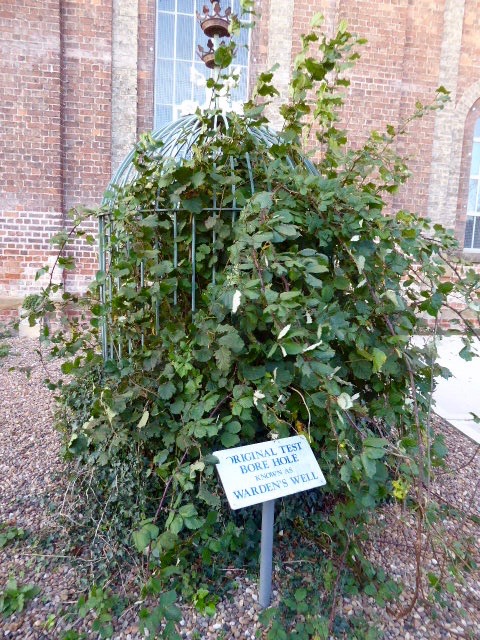
On 8th December 1879, William Walden, engineer and brewer, died aged 62. In a time when Hull was beset with cholera, he offered to supply Hull with clean water from Springhead at the rate of 5m gallons of water per day, at a fee of £500, or if he failed, be paid nothing. He succeeded. He is buried in Hull General Cemetery.

Springhead bore hole

December 7th

john-hotham-1-sized


On 7th December 1644, Sir John Hotham’s execution date, set for 16.12, was put back after Lady Hotham appealed for more time for him to settle his affairs.

On 7th December 1791, 22 months after being apprenticed at sea, John Sheriff, pupil of Hull Trinity House School, was allowed a land job in the House, ‘on account of his being twice shipwrecked had been discouraged from a further perseverance’.

On 7th December 1958, the crew of Flamborough lifeboat Friendly Forester saved 2 Bridlington fishing boats and landed their crews of 8 men.


December 6th

On 6th December, it was the tradition in many villages for a Boy Bishop to be elected, to serve to Christmas Eve.

On 6th December 1567, after being admitted to the Council in the North by the Archbishop of York, Sir John Constable of Halsham and Burton Constable was dismissed after opposition from protestant Sir Henry Gates.

On 6th December 1852, Henry ‘Box’ Brown, escaped US slave and actor, performed a panorama of African and American Slavery at The Music Hall, Hull.

Henry Box Brown


December 4th

On 4th December 1688, Capt Lionel Copley, vice-governor of Hull, in support of William of Orange, arrested Lord Langdale, governor of Hull, and Catholic officers supporting James II. Mobs attacked, ransacked and demolished Catholic houses and the ‘mass-house’, and the events of Town-Taking Day were celebrated into 20thC. It is believed that this is the event which was plotted in the parlour of the Olde White Harte.

On 4th December 1841, Joseph Davey, 28, became the new master of the Spurn lifeboat, and master of the tavern, replacing Robert Richardson, the first master, who had served in post for 31 years. Davey did not last so long – he was dismissed in February 1842 when the lifeboat failed to respond to a vessel run aground on the Stony Binks. Fortunately, the crew of the Elizabeth managed to refloat her, and there were no casualties.

On 4th December 1857, William Watson of Seaton Ross, maker of maps and sundials,  died. (b 17.5.1784) photo shows Dial Cottage, Seaton Ross.

On 4th December 1894, Robert Butterfield was elected first Chair of the Nafferton Parish Council; earlier in the year, parish councils had been introduced by the Local Government Act, replacing a number of parish and manor courts dealing with minor local issues. This process was happening across the country. One of the PC’s first acts in Nafferton was to clean the beck, and appoint a beck-watcher to look after the 2 swans donated by Mr Butterfield.

seaton ross.JPG copy

December 3rd

grammar school


On 3rd December 1611, William Gee died in Bishop Burton, aged 63.  MP for Hull and a generous benefactor, he left more than £1,000 in bequests to the poor. Gave most of the cost of the new Grammar School. (baptised 16.9.1565)

On 3rd December 1614, Sir John Sheffield, his brothers Edmund and Philip all drowned, with their servants, when the Whitgift ferry across the River Ouse was upset by an unruly horse.

On 3rd December 1805, Abraham Turner, former pupil of Hull Trinity House School, wrote to the House with a report of the Battle of Trafalgar, in which he had been wounded, on board HMS Africa.

December 2nd

On 2nd December 1614, a woman bone-setter from South Dalton set the leg of John the gardener at Londesborough House after he had broken it in a fall from a horse. The Earl of Cumberland paid the costs of his servants’ medical treatment.

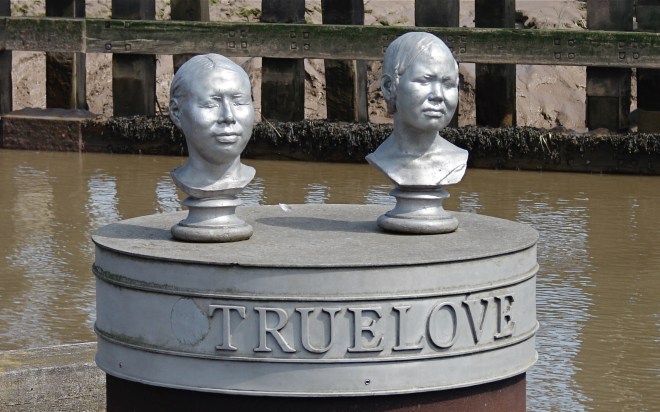
On 2nd December 1847, Memiadluk and Uckaluk, of Cumberland Sound, Greenland, gave the first of several exhibitions of their traditional clothing, kayak and hunting equipment on their British trip to raise money and awareness of the plight of their people. Greenlanders were being encouraged to use modern hunting equipment, but supplies were irregular with no permanent British settlement. Photo shows their statues at the side of the River Hull.

On 2nd December 1985, Philip Larkin, poet and librarian, died in hospital in Cottingham of oesophageal cancer at the age of 63. Librarian, University of Hull 1955-85. CBE, Companion of Honour., Queen’s Gold Medal for Poetry. (born 9.8.1922 Coventry)


truelove.JPG