April 26th


john-hotham-1-sized

On 26th April 1642, the Hull Mayor received a letter from King Charles (now in York) demanding admittance to the town, and confirming Sir John Hotham as a traitor, and not to be obeyed.

On 26th April 1796, Capt Metcalfe, of Hull Trinity House, assisted in quelling the second day of riots in Hull. The price of bread was high, and starvation a reality, poor people spending 60-80% of their income on food. A crowd sacked a mill outside town, seized flour and meal, and took goods being landed from Lincolnshire. They attacked market traders and insisted on paying a lower price for goods.  The Riot Act was read; 2 people were jailed.

On 26th April 1828, Matthew Harrison, 40, of Beverley, was hanged at York Castle for horse stealing, with 2 associates.

On 26th April 1867, the Hull whaler Diana returned to port after 353 days away, mostly spent trapped in ice in Frobisher Bay in the Arctic. 10 (or 13) men died of scurvy and dysentery.  Captain  John Gravill is buried in Hull General Cemetery.
 

April 25th

minstrels st mary's.JPG

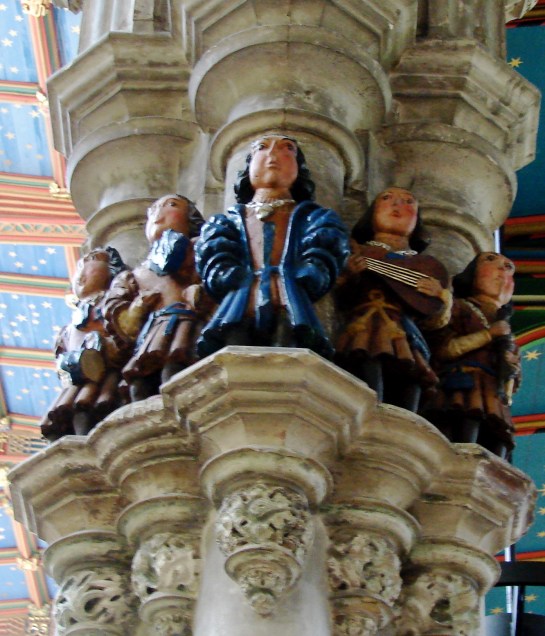
On 25th April 1524, The Guild of Minstrels met in St Mary’s Beverley, as they did on this date each year, and revealed the new pillar which the guild paid for, to repair the damage done to the church in 1520 when the tower fell. 5 minstrels are pictured on the pillar.

On 25th April 1524, Walter Shore, a cooper from Barmby Moor, claimed sanctuary at the church of St John, Beverley, for debt.

On 25th April 1534, Sir Ralph Ellerker stodd for election as a Beverley governor, even though he was not eligible; he kidnapped and intimidated members of his opposition, was re-elected. The Archbishop of York ruled in the Star Chamber that the election was null and void.

On 25th April 1795, William Jackson, 25 of Keyingham, was hanged at York Castle for stealing 10 sheep.

On 25th April 1832, James Acland, of 23 Queen Street, Hull, printer and owner of Hull Portfolio, was elected churchwarden at Holy Trinity Church, Hull.  He campaigned against corruption in local government and headed the Hull Political Union.

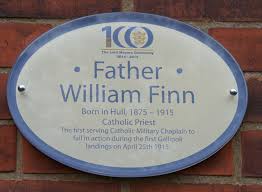
On 25th April 1915, Father William Joseph Finn, 40, was the first padre of WW1 to be killed. At Gallipoli, Turkey, he ignored an order not to go ashore with the troops, and spent a long time offering help or consolation to the wounded and dying, before being killed himself. He was buried on V Beach. The Church of the Sacred Heart, Southcoates Lane, Hull, was built in 1926 and paid for in his honour by his brother, Frank Finn, Lord Mayor  of Hull. (b 27.12.1875)

Father Wm Finn 2

April 23rd

CharlesBevGate

On 23rd April 1642, Sir John Hotham refused to allow King Charles I and his forces to enter the town through Beverley Gate. Charles declared Sir John a traitor, and all who obeyed him guilty of high treason, and withdrew to Beverley.

On 23rd April 1860, widow Elizabeth Ann Parker, 25, died at 1 Darley’s Court, New George St, Hull, of injuries inflicted by Thomas Kirkwood, 30, soldier, a deserter from the 29thRegiment. He was charged with murder and tried at York Assizes on 21stJuly 1860, but does not appear to have been executed there.

On 23rd April 1941, Private, Acting Corporal Ernest Collinson, 2ndBattalion, West Yorkshire Regiment, of Burstwick, led an action leading to the surrender of 50 Italian troops in the Battle of Keren, Eritrea. He was awarded the Military Medal for leadership, courage and devotion to duty. This was the most decisive battle of WW2 in East Africa. Many East Yorkshire men were in the West Yorkshire Regiment. Ernie was my great uncle.

April 22nd

On 22nd April 1566, Walter Cave was assaulted in his own home in Hull by Ralph Ellerker, his brother James and servants, and Cave brought an action in the Star Chamber. The argument involved Walter Cave accusing Robert Dalton, his brother-in-law and servant of the Ellerkers, of illegally harbouring Catholic priests, and Cave’s refusal to allow Dalton into the house to speak to Dalton’s mother. Ralph Ellerker claimed he acted in defence of his brother, who was unarmed. The outcome of the case is not recorded.

On 22nd April 1642, James Duke of York, the King’s son, aged 9, and the King’s nephew, Prince Rupert of the Rhine, 23, arrived in Hull unannounced, with the country people arriving for market day. They were well looked after, and invited to dinner with Sir John Hotham the following day. portrait on left shows James aged 12

On 22nd April 1893, arson suspected when fires broke out in timber stocks on Hull docks, during a dock strike which saw rioting, police charges and military involvement. The fire covered an area of 8 acres; the Citadel Hotel was destroyed, and total damage was estimated at up to £1million. Kier Hardy asked Parliament why the military had been sent to assist the shipowners. The strike continued into May.

April 21st

On 21st April 1499, Hull barber Richard Colyn sought sanctuary in the church of St John, Beverley, and confessed to committing homicide, and to being to an accessory, as he was present at the death of a man called Scotton, killed at Hull on 18thApril.

On 21st April 1803, Burnett’s Daily Shipping List reported 2 ships arriving from London, and 5 ships leaving port, heading for London, Hastings, Koningsberg, Amsterdam and Yarmouth.

On 21st April 1884, William Goodin, aged 34, with other mill workers, tried to put out a fire at Barker’s mill, Wawne Road, Sutton, with buckets, but was badly burned, and the mill was destroyed.

On 21st April 1982, the North Sea ferry Norland, captained by Don Ellerby, left Hull for Portsmouth, on the way to the Falklands as part of the Task Force, with 60 volunteers from the regular crew; she carried 800 men of 2 Para to San Carlos. Hull trawlers Farnella, Cordella, Junella, Northella and Pict were also requisitioned by the Navy and used as mine-sweepers. Capt Ellerby was later awarded the CBE. photo shows the Norland in the Falklands.

Norland in Falklands


April 20th

On 20th April 1602, Robert Watkinson of Hemingbrough, aged 23, was hanged, drawn and quartered at Tyburn, London, as a Catholic priest; he was arrested almost immediately on returning to England after ordination at Arras, France.

On 20th April 1803, a sloop was ‘burnt to the water’s edge’ in Hedon harbour.

On 20th April 1808, Thomas Wilbe, 31, of Hull, was hanged at York Castle for raping a girl under 10 years old.

On 20th April 1892, former pupil of Hull Trinity House School, and Chief Officer of the Elliot of Caernarvon, William Henry Ansell, 29, died of yellow fever at Santos.

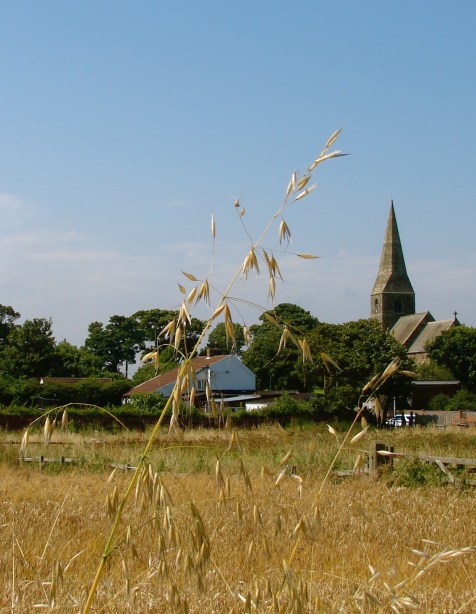
On 20th April 1976, Rev Wm Whitehead, on the 190thanniversary of the first recorded measurement of distance from Mappleton church to the sea, recorded the distance to the cliff edge.  At 898 ft 10”, it was almost exactly 1,000 feet less than in 1786, an average of 5ft 3” p.a.  Film clip: https://www.bbc.co.uk/education/clips/z8jfb9q

mappleton.JPG

April 14th

On 14th April 1511, Walter Rugbe of Paull, a cooper, claimed sanctuary at the church of St John, Beverley, for the murder of mariner Anthony Dowre of Boulogne.

On 14th April 1524, Sir Robert Constable of Flamborough, with 100 men, attacked the Rokebys’ manor house in Bishop Burton and abducted Ann Cresacre in a complex dispute over land and marriage agreements. Ann was 12 yearsold and an orphan. The case was heard in the Star Chamber. Ann eventually married the son of Sir Thomas More.  A descendant was the City Architect of Hull, Joseph Hirst. photo shows Holbein’s study for his picture of the More family – Ann is standing, rear.

On 14th April 1571, William Strickland of Boynton, MP, a leading Puritan, presented a Bill  to Parliament to reform the prayer book, including abolishing confirmation and the wearing of priests’ vestments.

On 14th April 1702, Jeremiah Northend was buried, aged 78 in Rowley. Aged 14, he had emigrated to Massachusetts with his Uncle Robert and cousin Ezekiel, with the dissenting community led by Rev Ezekiel Rogers, but returned home after about 9 years. Lived in Little Weighton. (b 26.9.1624).

Study_More_familyHans_Holbein

April 11th

On 11th April 1493, William Vasour of Newton, Wilberfoss, died in a field in Sutton-on-Derwent after being attacked by Henry Taillour with a dagger.  On 17thApril, Taillour arrived at the church of St John, Beverley, and claimed sanctuary for the crime.

On 11th April 1519, Robert Tailor, a weaver from Stamford Bridge, claimed the sanctuary of St John’s church, Beverley, for debt.

On 11th April 1803, Burnett’s Daily Shipping List reported that 3 vessels arrived in Hull, from Leith, Colchester, and Salou; 4 ships left, for Newcastle, Shields, Memel and Riga.

On 11th April 1941, Mrs Edith Robson died in Sutton House, Sutton-on-Hull. She bought a house as a free maternity home for poor mothers, ran it successfully, and donated it to Hull Corporation. Robson Way is named for her and her husband, Edwin; they donated land for a playing field in Church Street, Sutton, in memory of their daughter Barbara, who died aged 13 of meningitis in 1925.

On 11th April 1963, Karen Briggs was born in Holderness Road, Hull. She is one of Britain’s greatest judokas; she won 4 World Championships and 5 European championships. She was awarded an MBE, and an honorary doctorate from University of Hull 2013. Now Mrs Karen Inman.

karenbriggs2


April 10th

On 10th April 1694, John Roxby  & Thomas Spicer (Ferriby) and Peter Acy and Samuel Newton (Swanland) were chosen as parish Overseers for the Highways, (Ferriby and Swanland being in the same parish, but choosing separate officers). On the same date, Overseers of the Poor chosen were Paull Wollas and Wm Jefferson (Ferriby) and Robt Parker and Christopher Boynton (Swanland).

On 10th April 1733, Thomas Pelling, the “Flying Man’, set up a tightrope between Pocklington church steeple and the Star Inn, and fell to his death; he is buried in the churchyard.

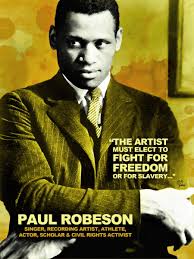
On 10th April 1956, Paul Robeson, singer, actor and political activist, performed at Hull City Hall to an audience of 2,000. Publicity described him as ‘the world’s greatest negro actor, singer and film star’.

Paul Robeson

April 9th

On 9th April 1484, John de la Pole, Earl of Lincoln, became Heir Presumptive to the English throne, when the Prince of Wales (son of Richard III, his maternal uncle) died. The Earl died 3 years later, aged 25 at the Battle of Stoke, in a rebellion against Henry Tudor.

On 9th April 1610, the household accounts show that the number of servants in residence in the various houses of Francis Clifford, Earl of Cumberland, (incl Londesborough House and Skipton Castle) rose from 49 to 83 after he inherited the Earldom. They included 4 musicians, and a huntsman.

On 9th April 1646, Matthew Topham, merchant of Hull, was fined £90 as a member of the Royalist army (delinquent) in order to recover his goods which had been sequestered by Parliament.

On 9th April 1814, Hull gunsmith Owen Probin, 38, was murdered by John Lever, a saddler, who had had a violent quarrel with Probin the previous day in Silver Street.

On 9th April 1858,  Sir Thomas Aston Clifford Constable and Rosina, Lady Constable, with a number of other ‘distinguished amateurs’ performed a programme of music at a charity concert  in The Music Hall, Jarratt Street, in aid of education for poor children in Hull.

On 9th April 1869, the Attorney General moved that a Royal Commission be set up to enquire into corrupt practices at the general election in Beverley the previous year. At least 800 people had been bribed, and corruption at Beverley was said to be ‘worse than at Norwich and Bridgewater put together’. The enquiry is said to have led directly to the 1872 Ballot Act.

On 9th April 1933, Canon Edward Arthur Berry, vicar of Drypool (grandfather of Mary Berry) was one of the speakers at a mass meeting in the Balmoral Room, Metropole Hall, West Street, Hull, called by the Jewish community to protest against Nazi actions against Jews in Germany.