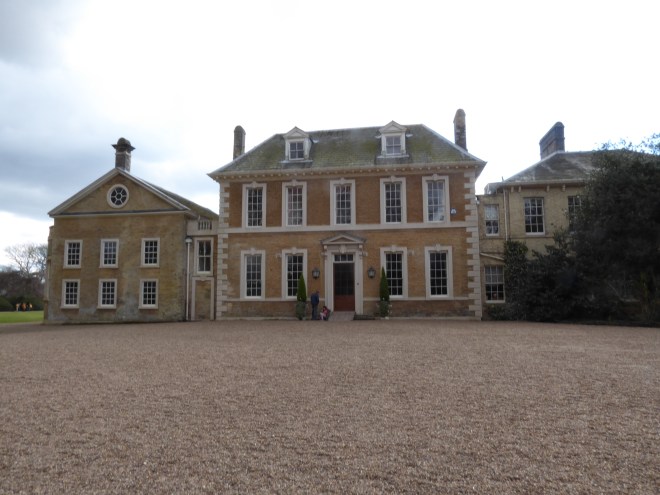
March 15th

On 15th March 1471, King Edward IV’s army regrouped at Kilnsea, but met resistance in Holderness, with 6,000 men led by Sir John Westerdale, vicar of Keyingham, and/or Martin de la See, Lord of Barmston; Westerdale was later imprisoned in the Marshalsea. Edward was allowed to pass to Hull, where Mayor John Tutbury shut the gates and refused to let him in. From there Edward proceeded to York via Beverley.

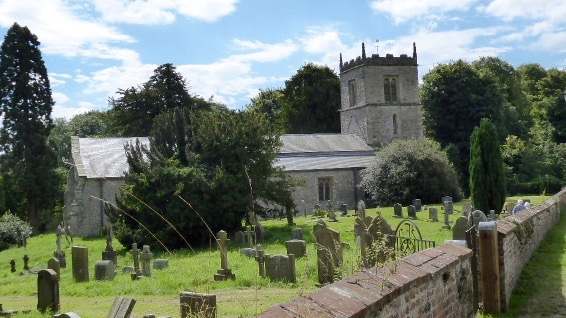
On 15th March 1618, the 1strecorded Kiplingcotes Derby was run; it is said to date back to 1519.  The winner receives £50, but the 2ndreceives the sum of the entry fees, which may be much more.  Even in wartime, severe weather or foot and mouth outbreaks, at least 1 horse has completed the course to ensure the continuity of the event.  In 2018, due to flooding, one rider walked the course. Race rules state that if the race is not run one year, it must never be run again. https://www.youtube.com/watch?v=SJu7HI3SXIc

On 15th March 1783, Thomas Perronet Thompson was born in Hull. He was an anti-slavery activist, MP, businessman, soldier, author and first governor of Sierra Leone (d 6.9.1869)

On 15th March 1979, Helen Grocock, 13 years, failed to win the Kiplingcotes Derby when her pony collapsed and died a few yards from the finishing post.

On 15th March 2001, Farmer Stephen Crawford was the only participant in the Kiplingcotes Derby, due to foot and mouth disease. Course clerk Sue Hillaby appealed to people to stay away.
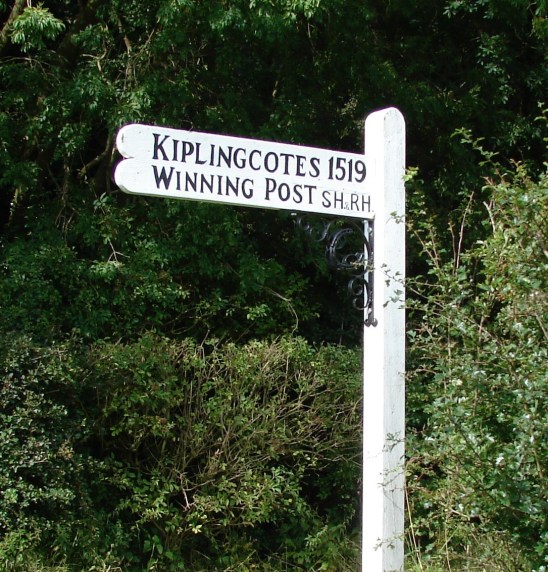
Kiplingcotes
East Yorkshire monuments – the country’s oldest horse race at Kiplingcotes. The winner’s prize is worth less than 2nd prize.

March 13th

On 13th March 1640, on instructions from the Duke of Northumberland, Sir Edward Osborne, for the Council in the North, arranged for 2,000 horse and men to be quartered in and around Hull, together with arms for them.

On 13th March 1801, Hull Trinity House sent a further 6 North Sea Pilots to Yarmouth to support the naval attack on Copenhagen.

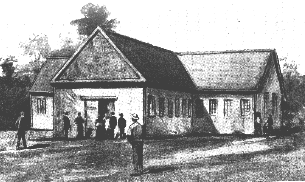
On 13th March 1827, Revd Richard Johnson died, aged about 71. Known as Australia’s First Preacher, he and his wife Mary joined the first Fleet, and he became chaplain to the prison colony of New South Wales in 1786. They created a school and both taught up to 200 children. He returned to Hull in 1800 and was curate to Rev Thomas Dykes at St John’s church for a time. (B Welton c1756) picture shows Australia’s first church, built by Richard Johnson in 1793

On 13th March 1942, Alexander Gallacher, 37, donkeyman, of Hull, died by enemy action, whilst a merchant seaman on board SS Destro, of Hull, off Tobruk.

first-church-Aus1793

March 12th

On 12th March 1511, Elizabeth Nelson, spinster of Pollington, claimed sanctuary at the church of St John, Beverley, for felony and murder of an infant (possibly her own child) at Hull.

On 12th March 1553, on the surrender to King Edward VI of the castle and fortifications at Hull, the King granted to Ralph Constable former monastery lands in Swine, Newton Grange, and all the extensive lands formerly belonging to the dissolved Hospital of St Sepulchre, Hedon. He was also the tenant of the site of Hull Charterhouse.

On 12th March 1622, Josias Lambert, schoolmaster, left the employment of Francis Clifford, Earl of Cumberland, after 9 months teaching ‘scholars’, which may have included some of the Londesborough House household staff and/or their children. The Earl also supported the village school at (Market) Weighton. photo shows Londesborough church

On 12th March 1647, Sir Matthew Boynton died at Bainton aged 56. Sheriff of Yorkshire twice, MP twice (once for Hedon and once for Scarborough), 1stBaronet, of Barmston. He helped capture Sir John Hotham when he intended to surrender Hull to the Royalists. His son Colonel Matthew Boynton was killed fighting for the Royalists in the Battle of Wigan Lane in 1651. (bapt 26.1.1591)

On 12th March 1697, the Brethren of Hull Trinity House charged almost £21 for the launch of the 60-gun Royal Navy ship HMS Kingston from Hessle. Work included laying buoys from the launching site to Hull.

Londesborough

March 11th

bearward

On 11th March 1214, Hawise, Countess of Aumale and heir of the Seigniory of Holderness, died single, having been widowed 3 times.  In 1212, she refused to marry for a 4thtime, for which she had to pay a fine to King John of 5,000 marks (about £1700) (some sources say she died before 8.3.1214)

On 11th March 1296, John Romanus (John le Romaine) Archbishop of York, died aged about 66 in the Archbishop’s Palace, Bishop Burton; he was buried in York Minster. He protected poor villagers in 1286 by ordering his parish priests in Holderness not to demand tithes from those earning 5shillings a year or less.

On 11th March 1522, Beverley bearward John Grene was tried for slander, by calling Percevall Robson, draper, a ‘Scottish bird’. Grene apologised for speaking in anger, and was rebuked and forgiven by Robson.

On 11th March 1616, Father Thomas Atkinson was hanged, drawn and quartered at York Castle at the age of 70. Born in the East Riding and trained in Douai as a Catholic priest, Atkinson spent 30 years as an itinerant priest in the Howden area, ministering to local Catholics, and hiding in their homes. He was captured in the Vavasour house in Willitoft. He was beatified 1987. A young man at the execution bought the priest’s stockings from the hangman, as a holy relic. Identified as a Catholic, he was imprisoned.

On 11th March 1858, Brother John of the Yorkshire Catholic Reformatory took some boys, for a treat, to slide on the ice-covered Market Weighton Canal; 5 boys fell through and, attempting to save them, he also fell through the ice. They all had to be rescued by passing bargemen.

On 11th March 1859 at 6a.m., ostler John Sissons was found hanged in one of the stables of the George & Dragon Inn, Aldbrough. He was described as an aged man of respectable family. The inquest verdict was of suicide due to temporary insanity.

March 7th

On 7th March 1759, the allowance Hull Trinity House paid to retired grocer William Robinson was stopped as William was given a place in the Charterhouse.

On 7th March 1803, Mr William Iveson, Steward of Francis Constable of Burton Constable, agreed to Hull Trinity House’s proposal to establish a lifeboat at Spurn. No further action was taken until 1810.

On 7th March 1866, Archbishop of York called a ‘day of humiliation’ when East Riding ministers were instructed to ‘exhort the people to accept this grievous murrain as a chastisement from the hand of our loving Father’, in response to the Great Cattle Plague. Rinderpest had been introduced from Russia through Hull cattle imports, leading to widespread slaughter, and restrictions on the movement of cattle. Many areas of the country were affected.

On 7th March 1888, Rev Henry Kemp, Master of Hull Charterhouse, died after 20 years in post, having pressed for change, including an end to evicting widows when their husband died.

On 7th March 1919, after the death of her husband, Central Hull MP Sir Mark Sykes, the Hull Conservative Party unanimously voted to invite Lady Edith Sykes to stand as candidate in the by-election.  Lady Edith cited her responsibility to her family as the reason for refusing their offer.

OLYMPUS DIGITAL CAMERA

March 5th

On 5th March 1514, John Taillour of Beverley claimed sanctuary at the church of St John, Beverley, for ‘the security of his body’, but the register does not state who was threatening him, or why.

On 5th March 1642, Queen Henrietta Maria stopped one night at the Manor House, Burton Fleming. She was still on her way to York to join her husband, Charles I, with arms from Holland. She is then said to have stayed 2 weeks at Boynton with the Stricklands. Luckily, Sir William, Parliamentary MP for Hedon, was away in London.

On 5th March 1646, Hull merchant Leonard Scott was fined £74 10s as a member of the Royalist army (a ‘delinquent’) in order to recover his goods which had been sequestered by Parliament.

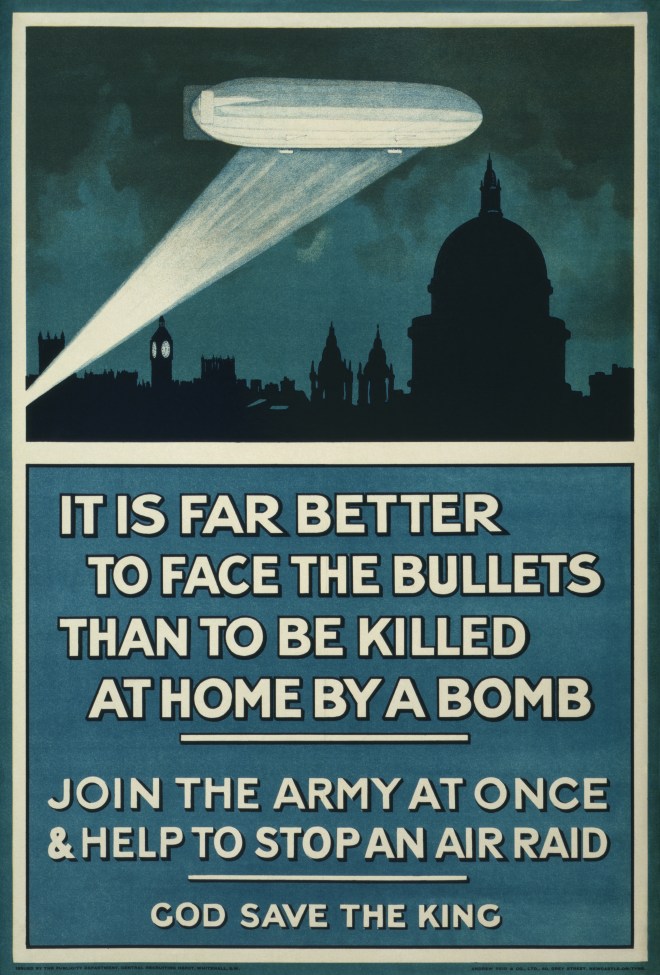
On 5th March 1916, Martha, Ethel and Mira Ingamells of Linnaeus St, Hull, were among the 18 people who died in the 2ndZeppelin raid on Hull; 60 people were injured. Queen Street was hit, as were Linnaeus St., Porter St., Church St and Selby St, and Earle’s shipyard. A mob afterwards smashed up a vehicle belonging to the Royal Flying Corps, presumably in anger at their failure to defend the town, resulting in hasty installation of 7 guns, and the general strengthening of defences around the Humber. Bombs were also dropped on Gembling and Woodmansey.

WWI Zeppelin

March 3rd

On 3rd March 742AD, Yolfrida, daughter of Earl Puch, Lord of the Manor of South Burton (now Bishop Burton), died and was buried at Beverley. She was a nun at Bishop Burton monastery.

On 3rd March 1195, Hugh de Puiset died, aged about 70, at the Bishop’s Palace, Howden.  He was Bishop of Durham for over 40 years. He had in 1190 been imprisoned in his palace at Howden for overstepping his authority. He supported the chronicler Roger of Howden.

On 3rd March 1642, James Watkinson, jnr, Hull Alderman, attended his last council meeting; considered a Royalist, he was ‘invited’ to leave town in April, his High St house was commandeered and he moved to York.

On 3rd March 1932, Albert Digby Willoughby committed suicide by gas inhalation in a hotel in Helensburgh. Chair of the Hull Housing and Town Planning Committee, he was due to be the chief witness in the Thorpe Enquiry into corruption on Hull Council, to give evidence into the purchase of land for housing estates in Hull. He also faced trial for demanding money with menaces. He had charged commission to owners of land which he knew the council wished to buy.

On March 1984, Harry Hudson Rodmell died in Hull aged 97. He studied at Hull School of Art, and was a marine artist and commercial artist. A series of his marine posters is available for sale by Hull Museums. (b 28.5.1896)

Harry Hudson Rodmell_

March 1st

On 1st March 1384, Michael de la Pole, Earl of Suffolk, left in his will instructions to found the Charterhouse Hospital which his father had begun, and endowed it with land, nominating Sir Richard de Killing as the first Master, and left money to support 13 poor men and 13 poor women, feeble and old.

On 1st March 1838, the steam packet ferry services from Hull to Selby, Goole and Gainsbrough were restored, after severe frosts disrupted them from the 2ndweek in January.

On 1st March 1916,  a new Royal Flying Corps Squadron, the No 47 Home Defence Squadron, was formed at Beverley, on the racecourse site.

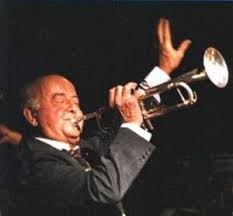
On 1st March 1921, Kenny Baker was born  in Withernsea. Musician and composer, considered the best British trumpeter, 3 times winner of best jazz trumpet player award, he played for Frank Sinatra, Sammy Davis, the Beatles, and on TV and film soundtracks, including James Bond scores, The Muppet show, and ‘The Beiderbecke Trilogy’. (died 7.12.1999) see photo

On 1st March 1990, Sister Agnes Walsh was recognised by Yad Vashem as one of 27 British people known as Righteous Among the Nations for her part in protecting Jews during the Holocaust. Trapped in France when the country was occupied by the Nazis, she gave refuge to a local Jewish family in spite of being in grave danger herself as a foreigner. She was born Clare Walsh in Hull in 1896 (died 1993).

Kenny Baker


February 28th

On 28th February 1803, Burnett’s Daily Shipping List reported that no ships arrived in Hull, and nothing sailed, for the 2ndday in a row. A heavy gale on Saturday and Sunday 26th& 27thresulted in a number of ships losing their anchors, running ashore and collisions. 8 ships were named as affected.

On 28th February 1823, the conditions of employment of the Matron of the workhouse at Nafferton recorded she was paid 5 guineas a year, plus 5 chaldrons of coals and half a load of whins; her tasks included mending clothes and laundry. There was also a Workhouse Master. (Nafferton was included in Driffield poor law union in 1836).

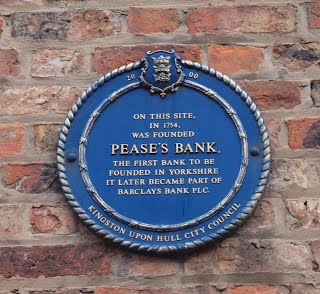
On 28th February 1826, Joseph Robinson Pease, Hull banker, reported in his diary that confidence in banks was being restored, that the credit of Liddell & Pease Bank stood high, and he believed that the Hull banks ‘never stood better’ after the recent national economic crisis.

pease

February 27th

On 27th February 1468, the will of Joan de Twyer directs that she be buried in the chapel of the Hospital of St Sepulchre ‘juxta Hedon’, a leper hospital endowed by the Twyer family.

On 27th February 1895, Lancelot George Prickett, FCH, engineer, died aged 38 in the service of the Indian Government; as an engineer working on Indian railways. Born 15.12.1856 in Bridlington.

On 27th February 1941, 2 bombs landed in Hotham village, throwing the owner, Colonel Clitherow, into the fireplace. No other injuries are recorded. North Cave church lost its East window in the blast. photo shows Hotham Hall today

On 27th February 1976, Fred Peart, Minister of Ag, Fisheries & Food, reopened Hull’s Albert Dock after refurbishment for the fishing industry. The Cod War which ended in 1976 effectively put an end to Hull’s fishing industry.

hotham hall