April 15th

On 15th April 1643, Captain John Hotham wrote to Queen Henrietta Maria that he had a plan involving both Hull and Lincoln, which would be a real service to the King.

On 15th April 1696, the Skipsea manor court appraised the value of timber which Stephen Grenestowe had found on the beach at 10d, which he had to pay to the Lord of the Manor, who owned all items washed up.

On 15th April 1801, James Glenmon and 2 shipmates, returning from being held prisoner in Holland,  received financial relief of 7s6d from Hull Trinity House.

On 15th April 1807, at the Humber Tavern, Paull, compensation was agreed by the Army to landowners and tenants (of at least 3 years) when land was taken to build Paull Battery to defend Hull against Napoleon.

On 15th April 1912, Joseph Groves Boxhall, 28, was 4thOfficer on the Titanic. In charge of lifeboat No.2, whose 25 passengers were the first survivors to reach the Carpathia. (b.23.3.1884 in Hull) right on photo below

On the same day, Algernon Henry Barkworth, 48, gentleman of Hessle, was a passenger on the Titanic. He survived by jumping from the ship and later climbing aboard a lifeboat. Few people in the water survived; he put his survival down to wearing a fur coat over his lifebelt and carrying a suitcase. far left on photo, taken at Tranby House, Hessle

On 15th April 1941, a heavy air raid sank a lighter in Hull’s Alexandra Dock, damaged rolling stock and warehouses, and demolished No 22 Warehouse.


April 9th

On 9th April 1484, John de la Pole, Earl of Lincoln, became Heir Presumptive to the English throne, when the Prince of Wales (son of Richard III, his maternal uncle) died. The Earl died 3 years later, aged 25 at the Battle of Stoke, in a rebellion against Henry Tudor.

On 9th April 1610, the household accounts show that the number of servants in residence in the various houses of Francis Clifford, Earl of Cumberland, (incl Londesborough House and Skipton Castle) rose from 49 to 83 after he inherited the Earldom. They included 4 musicians, and a huntsman.

On 9th April 1646, Matthew Topham, merchant of Hull, was fined £90 as a member of the Royalist army (delinquent) in order to recover his goods which had been sequestered by Parliament.

On 9th April 1814, Hull gunsmith Owen Probin, 38, was murdered by John Lever, a saddler, who had had a violent quarrel with Probin the previous day in Silver Street.

On 9th April 1858,  Sir Thomas Aston Clifford Constable and Rosina, Lady Constable, with a number of other ‘distinguished amateurs’ performed a programme of music at a charity concert  in The Music Hall, Jarratt Street, in aid of education for poor children in Hull.

On 9th April 1869, the Attorney General moved that a Royal Commission be set up to enquire into corrupt practices at the general election in Beverley the previous year. At least 800 people had been bribed, and corruption at Beverley was said to be ‘worse than at Norwich and Bridgewater put together’. The enquiry is said to have led directly to the 1872 Ballot Act.

On 9th April 1933, Canon Edward Arthur Berry, vicar of Drypool (grandfather of Mary Berry) was one of the speakers at a mass meeting in the Balmoral Room, Metropole Hall, West Street, Hull, called by the Jewish community to protest against Nazi actions against Jews in Germany.


April 7th

john-hotham-1-sized

On 7th April 1615, George Goodgion, senior servant to Francis Clifford, Earl of Cumberland, ordered tenants to cart coals to the big house, which was out of fuel, and to note the names of those who refused. Tenants were required in their leases to do this work, but had to fit it in with their own farming work.

On 7th April 1643, Sir John Hotham wrote several letters to people on the Parliament side; the post for London was captured, and his letters published by the Royalists at Oxford, revealing his double-dealing.

On 7th April 1787, John Morrit, 34, was hanged at York for murdering John Argyle, aka Roundell, of Howden.

On 7th April 1810, Mr William Iveson, Steward to Francis Constable of Burton Constable, proposesd to Hull Trinity House to erect a lifeboat house on Spurn Point, provide 12 crew from Kilnsea, and open a tavern to create an income for the boat’s master.

On 7th April 1828, Joseph Robinson Pease, JP, made his first committal as JP in Cottingham, of a man who disobeyed an Order of Bastardy, i.e. he was jailed for refusing to pay maintenance for an illegitimate child.

On 7th April 1893, a rioting Hull mob destroyed 37 bags of carrots being taken on rullies to the docks, and used them as missiles to attack the police.

On 7th April 1943, pupils at Paull Primary School escaped unhurt when a barrage balloon escaped its mooring in the Humber, and exploded, setting fire to the school building.


April 5th

On 5th April 1788, Catherine Savage, of Holme on Spalding Moor, was hanged at York for entering Stephen Ridsdale’s Welton house and stealing clothes. Ridsdale was a tailor and stay maker. Savage’s husband, Abraham, was sentenced to transportation.

On 5th April 1806, George Ormond, 30, of Hull, was hanged at York Castle for forging bank documents from Raper, Clough & Swann Bank, York.

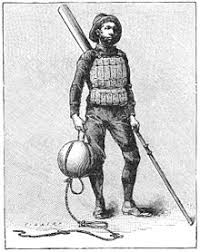
On 5th April 1837, Alexander Gordon Carte, ordnance storekeeper at Hull Citadel, had one of his inventions, Carte’s Sea Service Rocket Apparatus, recommended for adoption by the Liverpool Dock Committee. He also invented the self-adjusting cork lifebelt, and an alarm system. His safety equipment was on view at the Great Exhibition in 1851. photo shows a cork lifelt from the 1860s

On 5th April 1916, Jesse Matthews died of shock in Barnsley Street, Hull, the only casualty of a Zeppelin raid which damaged a house in Portobello Street. The Zeppelin was hit by gunfire.

cork lifebelt, 1860s

April 4th


Pat church

On 4th April 1654, Emmot Laykes, wife of John Laykes, was fined in Patrington manor court for striking Gregory Bilton with a rolling-pin.

On 4th April 1868, Frederick Parker of Hemingbrough was executed at York Castle and his body buried within the prison for murdering Daniel Driscoll, 27, at South Duffield on 29.2.1868.

On 4th April 1942, Laura Jaselli, Italian alien, of Barrow Lane, Hessle, was given a Travel Permit registered with the East Riding Police (cert 379095) as an Alien on moving from Ashton under Lyme; she was allowed 17 ½ hours to complete the move.

April 3rd

On 3rd April 1674, Amos Cropper, 25, of Hull, was hanged at York for the murder of Joseph Beck of Dewsbury on the king’s highway near Huddersfield.  His body given to surgeons to be dissected.

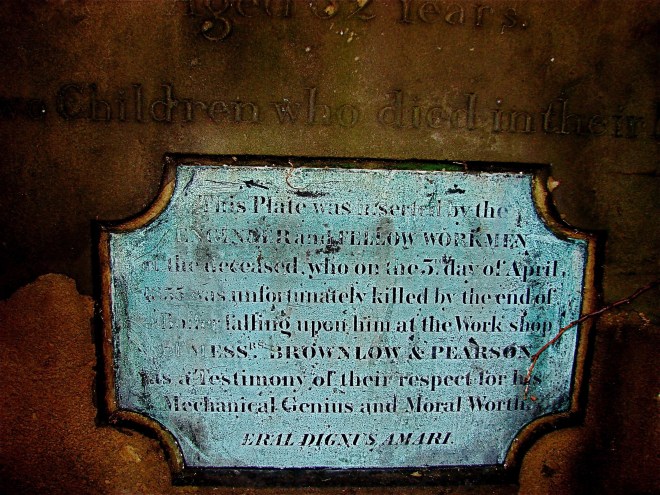
On 3rd April 1835, W. Wilkinson died at Hull. The end of a boiler fell on him at the workshop of his employers Messrs Brownlow and Pearson. A plate was inserted on his headstone in Castle Street Cemetery by the engineers and fellow workmen as a testimony of their respect for his mechanical genius and moral worth.

On 3rd April 1941, Mr Stanley Cockerill, voluntary warden, was recommended for gallantry award for action in dealing with a fire bomb at Hull.

W. Wilkinson mechanical genius.JPG

April 2nd

Chas I trial

On 2nd April 1380, Alexander Neville, Archbishop of York, granted to the burgesses of Beverley the Westwood and all rights attached to the land.

On 2nd April 1607, John Alured was baptised in All Saints Church, Preston. He was elected MP for Hedon in 1640, and was a judge at the trial of Charles I. Died 1654. picture above shows the trial

On 2nd April 1652, Luke Hinderson, aged 45, of Stamford Bridge, was hanged outside Walmgate Bar, York, with 3 others, for robbing Peter Ellison, butcher of York, and leaving him for dead.

On 2nd April 1660, John Ramsden & Andrew Marvell were elected MPs for Hull; the votes cast were: John Ramsden 227, Andrew Marvell 141, Mr Barnard 113, Wm Lister 80, Matthew Allured 55 and Baron Thorp 35, in all 651.

On 2nd April 1774, George Belt of Howden was hanged at York Castle for breaking into and robbing the house of Mr Althorpe, near Howden.

On 2nd April 1785, William Riley, 23, was hanged for robbing John Borr of Hull near Newland.

On 2nd April 1916, a BE 2c aircraft of Beverley Royal Flying Corps Squadron 47, crashed at the Racecourse due to engine failure while defending the area from a Zeppelin attack.


March 31st

Andrew Marvell

On 31st March 1621, Andrew Marvell was born in Winestead to local vicar Andrew Marvell, who later became Master of Hull Charterhouse. Marvell junior was a renowned poet, and MP for Hull several times. During the Civil War, he travelled in Europe, prompting some to suggest he was employed as an English spy. He acted as London agent for Hull Trinity House. Died in Hull 1678, and is buried in St Giles in the Fields, London

On 31st March 1801, Captain Mitchinson, of the Hull whaler Blenheim, was found not guilty of the murder of 2 members of the Press Gang, (John Burnick and John Sykes) his defence being that he was handcuffed and locked in his cabin at the time. Burnick and Sykes were buried in Drypool Cemetery.

On 31st March 1941, having just completed a successful campaign for blood donors, Dr David Diamond, Deputy Medical Officer for Hull, was killed instantly when a land mine made a direct hit on the Shell Mex Building, Ferensway, the ARP Headquarters. A heavy raid on the docks destroyed offices, a garage, works, houses, dog kennels and warehouses at Albert, Alexandra, Town and Victoria Docks. A total of 200 deaths was recorded in March.

hull-blitz-shell-mex

March 28th

On 28th March 1783, Alexander Cavalie Mercer was born in Hull. He was a British artillery officer who served at Waterloo and wrote a journal of his experiences. Also a painter of merit. (died 9.11.1868)

On 28th March 1854, Joseph Rank was born in Holderness Road, Hull. His father was Hull miller James Rank. Joseph built his own mill and came to automate the flour milling process. He set up the business which became Rank Hovis McDougall. He set up a number of charities. Father of J. Arthur Rank.(d 13.11.1943)

On 28th March 1864, the first train of the Hull & Hornsea Railway left Wilmington Railway Station, Hull, at noon. Financial problems caused the company to be taken over by the North Eastern Railway Company 2 years later.

On 28th March 1882, the head of Withernsea pier and the saloon were washed away in high seas, as the damage done in 1882 was cheaply repaired with timber, not iron. They were never replaced.

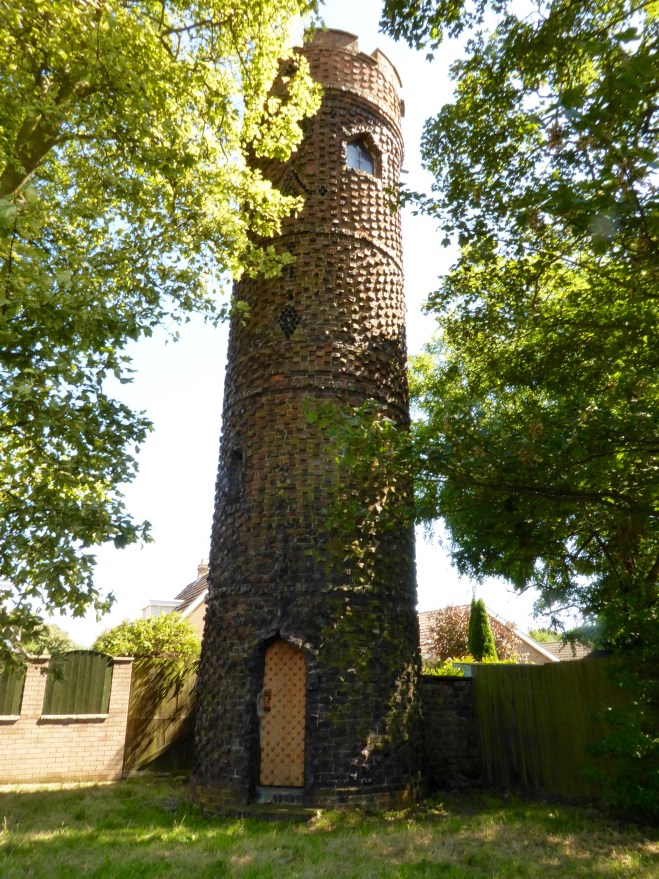
On 28th March 2011, Dave Foster and Mick Bateman bought Bettison’s Folly, Hornsea,  for £1 plus legal fees. The tower was built in the 1850s by brewer William Bettison, supposedly so that his servant could watch for his return home and have his meal ready as soon as he arrived. A siren was put on the tower during WW2, when it was also used as an air-raid lookout.

Bettison's Folly

March 26th

On 26th March 1646, Hull merchant James Watkinson was fined £400 as a member of the Royalist army (delinquent) in order to recover his goods which had been sequestered by Parliament.

On 26th March 1706, the congregation of Cottingham church gave 4s in a collection for the repair of Beverley Minster.

On 26th March 1740, John Burnham and Ralph Burnsall of Preston bought 2 fields from Benjamin Waive of Hull, half the income from which was used to give to the poor, and half to pay for a schoolmaster to educate poor children in the village.

On 26th March 1827, an evening’s entertainment at Theatre Hedon (presumably in the Town Hall) included a performance of Hamlet, a recitation, and a farce.

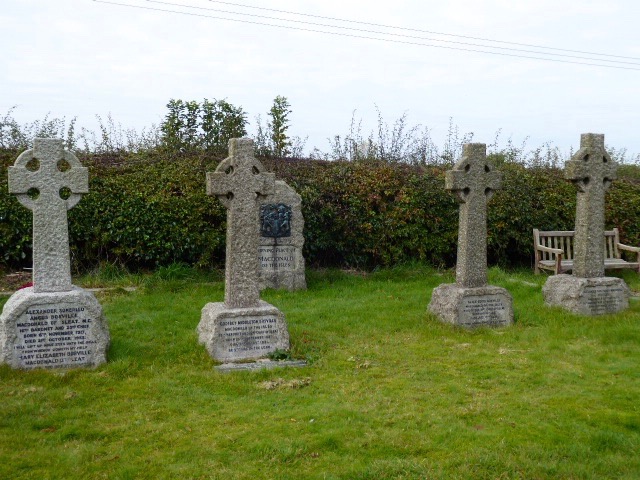
On 26th March 1933, Sir Alexander Wentworth Macdonald Bosville Macdonald of the Isles, 13thbaronet, died at Rudston aged 67  and is buried in the churchyard. (b26.9.1865)

MacDonalds of the Isles