May 4th

On 4th May 1667, Hull MP William Lister wrote to the Hull Mayor about the removal of Dutch prisoners from the Hull gaol. The Dutch had attempted to invade England from the sea.

On 4th May 1882, the steam ship collided in fog with SS White Sea in the River Humber near Victoria Dock and sank in less than 5 minutes; the crew and 3 passengers were rescued but 1 passenger was lost.

On 4th May 1971, 3rd hand Terence Ledger, 30, of Bransholme, died as result of an accident on board Hull trawler Kingston Amber off the Norwegian coast.

May 3rd

Robt Constable Lord Dunbar

On 3rd May 1671, Robert Constable, Lord Dunbar, of Burton Constable, pleaded guilty at the Old Bailey to an indictment charging him with the murder of one Peter Varnall, by wounding him in the head with a rapier. He had, however, previously obtained King Charles II’s pardon.

On 3rd May 1917, 2nd Lieutenant Jack Harrison single-handedly attacked an enemy machine-gun, and was listed as missing in action at the Battle of Oppy Wood. Posthumously awarded the Victoria Cross ‘for valour’.  Hull-born professional rugby player, who scored a record 52 tries in one season. Awarded the Military Cross on 25.3.1917. (b12.11.1890) More Hull lives were lost at Oppy Wood than any other WW1 battle.

On 3rd May 1917, Ronald ‘Ras’ Berry was born in Hull. Much decorated (CBE DSO DFC and Bar) Battle of Britain pilot, eventually becoming Director of National Air Traffic Control Services. Later lived in Hornsea. Died 2000.

On 3rd May 1965, the last train seen in Hedon was a goods train, the last goods service, following the closure of the line from Hull to Withernsea.

On 3rd May 1980, at Wembley, the Rugby League Challenge Cup final was between Hull KR and Hull FC. Result: 10-5 to Rovers. Attendance: 95,000.

May 2nd

On 2nd May 1632, Robert Nixon, 42, of Hull, was hanged at York Castle for coining and circulating bad money at Leeds, in January 1632.

On 2nd May 1832, 6 days after Hull whaler Shannon struck an iceberg in the Arctic, it was spotted by 2 Danish brigs, and the remaining crew rescued. 22 had died, the remainder left in a canvas shelter with no food or water, had survived by drinking the blood of a dead shipmate. The 19 survivors had frostbite.

On 2nd May 1836, Constable Patrick Coulehan was the first constable of the new Hull Police Force to be sworn in, by Chief Constable Andrew MacManus. Many of the early police officers were from the Irish community.

On 2nd May 1893, deckhand Frank Hornby, 25, was lost overboard from Hull trawler Swift in the North Sea.

On 2nd May 2016, rugby player and coach Roger Millward, MBE, died aged 68. Scored a record 207 tries for Hull Kingston Rovers, kicked 607 goals and served as club coach for 25 years. He played for Great Britain in 47 games. (b 16.91947 Castleford)

roger millward

May 1st

On 1st May 1603, surgeon Simon Crouch was admitted as a burgess of Hull free, on condition that he treat the poor at his own cost. There was an outbreak of plague that summer, and Simon Crouch was known to be still in Hull in 1610.

On 1st May 1676, Leonard Gaskill, 27, and Peter Rook, 25, of Beverley, were hanged for stealing 13 sheep from John Brown of Driffield.

On 1st May 1810, Hull gunsmith William Taylor was indicted for passing counterfeit money to Cecily Rickatson at Sculcoates and given 6 months in the House of Correction. He later set up in business in Beverley, where one of his apprentices in 1821 was Esau Akrill (the Akrill family ran a gunshop in Beverley for many years).

On 1st May 1826, Harriet Pease, wife of the banker Joseph Robinson Pease, of Hesslewood Hall, miscarried after horse riding. Medical help came from Hessle; Joseph’s  diary gave his opinion that she might have died if they had had to wait for a doctor to travel the 5 miles from Hull.

On 1st May 1877, William Pritchard, 21, apprentice of Porter St, Hull, drowned on board Hull trawler Iolanthe in the North Sea whilst boarding fish.

On 1st May 1911, the Royal National Lifeboat Institution took over responsibility for the lifeboat station at Spurn, after 3 years of acrimonious argument.

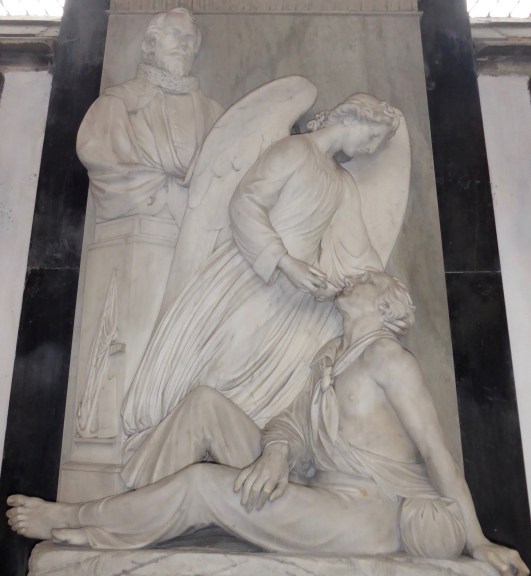
St Andrews Dock memorial
Zebedee’s Yard

This Week: 1st to 7th May 2018

A wide range of topics is covered in items this week.

Crime features regularly, showing how severe the past penalties could be for crimes that would definitely not be capital offences today – and how you could get away with murder if you knew the right people, such as the King.

Deaths at sea – another perennial risk, particularly for fishermen. I haven’t checked the stats on this, but you do seem to have been more likely to be ‘lost overboard’ if you were very young. Perhaps it was lack of experience, of course, but there are historical incidents of bullying, where the skipper was king at sea. The risks also included being iced in when in Arctic waters, scurvy and starvation, collisions, and war at sea.

Heroes – the lovely Amy puts in an appearance, as well as a war hero, a sports hero, and a doctor in time of plague, who is pretty heroic in my book. As is anyone who made their living at sea. Especially lifeboatmen.

Saints – John of Beverley was huge in the Middle Ages, and he appears many times in the History Calendar, not least because the church he built was such an important sanctuary.  Why were so many people prepared to travel huge distances to sanctuary, though? Perhaps you would hope for more sympathy from strangers than from your neighbours?

Other topics this week include the Irish in Hull, invasion threats, drainage, charity, pirates, strikes, transport and medicine. And by the way – Feoffee is pronounced Fifi.

Enjoy
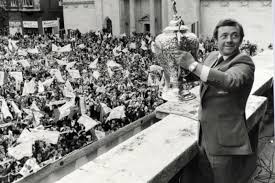
roger millward

April 30th

Edmund delaPole

On 30th April 1513, Edmund de la Pole, 3rdDuke of Suffolk, 6thEarl of Suffolk, and his brother John were executed by Henry VIII. Edmund was the leading Yorkist claimant to the throne; he had sought help from the Holy Roman Emperor, who handed him over to Henry.

On 30th April 1584, Walter Peck and others were fined 2s8d for buying 200 fish in the Humber before it was landed in Hull. Robert Jackson and others were fined on the same day for the same offence, a total of 53s 4d.

On 30th April 1649, Henry Cave, 39 and William Cropper, 40, both of Hull, were executed outside Walmgate Bar, York, with 12 other ‘rebels’ from the North and West Ridings.

On 30th April 1859, Joseph Hoare was elected MP for Hull, but the election was declared void due to bribery, and a by-election was held in August. Hoare’s agent employed poor voters as runners and messengers at 3s 6d a day.

On 30th April 1877, brick- and tile-makers in the Newport area complained about the state of the Market Weighton Canal, which had carried millions of bricks in the 1820s, and was now too low for their barges. It took 4 years for any real action to be taken, due to denial of responsibility by the canal trustees, the local authority, and the North Eastern Railway. Commercial navigation on the canal did not die out until 1958.


April 30th

On 30th April 1513, Edmund de la Pole, 3rdDuke of Suffolk, 6thEarl of Suffolk, and his brother John were executed by Henry VIII. Edmund was the leading Yorkist claimant to the throne; he had sought help from the Holy Roman Emperor, who handed him over to Henry.

On 30th April 1584, Walter Peck and others were fined 2s8d for buying 200 fish in the Humber before it was landed in Hull. Robert Jackson and others were fined on the same day for the same offence, a total of 53s 4d.

On 30th April 1649, Henry Cave, 39 and William Cropper, 40, both of Hull, were executed outside Walmgate Bar, York, with 12 other ‘rebels’ from the North and West Ridings.

On 30th April 1859, Joseph Hoare was elected MP for Hull, but the election was declared void due to bribery, and a by-election was held in August. Hoare’s agent employed poor voters as runners and messengers at 3s 6d a day.

On 30th April 1877, brick- and tile-makers in the Newport area complained about the state of the Market Weighton Canal, which had carried millions of bricks in the 1820s, and was now too low for their barges. It took 4 years for any real action to be taken, due to denial of responsibility by the canal trustees, the local authority, and the North Eastern Railway. Commercial navigation on the canal did not die out until 1958.


April 29th

St Mary's Beverley

On 29th April 1520, the tower of St Mary’s Beverley collapsed across the nave, killing many people in the church for the Sunday service. A piece of 16thC oak carved with an inscription to the event remains in the church. Sir Richard Rokeby and his wife Dame Joan gave £200 to rebuild the church.

On 29th April 1524, William Thowe of Hedon rented to the Mayor and town of Hull a patch of waste ground near St Mary’s church for a chaplain’s house; the annual rent was a red rose if demanded, i.e. the medieval equivalent of a peppercorn rent.

On 29th April 1757, the vicar of Hutton Cranswick recorded a very deep fall of snow.

On 29th April 1891, former Trinity House School pupil Herbert William Rea was shipwrecked on the Pacific coast of North America in 1880 on his first sea trip; he joined a schooner trading to the Pacific Islands, and was later appointed collector of taxes in Samoa.


April 28th

On 28th April 1489, Henry Percy, 4thEarl of Northumberland, was lynched at Cocklodge near Thirsk by a rioting mob protesting against high taxes, during the Yorkshire Rebellion. He was buried in a newly built chapel in Beverley Minster.

On 28th April 1825, a bull sperm whale washed up at Tunstall, and was dissected on the beach by Dr James Alderson, before being articulated by Edward Wallis, and put on display to the public at Burton Constable Hall. Herman Melville saw the whale and referred to it in his novel “Moby Dick’. The remains of the skeleton are still on show.

On 28th April 1876, Hull sculptor Thomas Earle died aged 66. A member of the Earle family of stonemasons and later shipbuilders, Thomas made a successful career in London. His works in Hull include the statue of Dr John Alderson (Hull Royal Infirmary), Oceanus (Trinity House), Queen Victoria (Pearson Park), Thomas Ferres (Hull Minster – see below) and Edward I (Guildhall). Awarded Royal Academy Gold Medal 1851.

Thos Ferres by Thos Earle

April 27th

On 27th April 1314, King Edward II stayed in Beverley on his way to fight the Scots at Bannockburn.

On 27th April 1681, John Baker, pewterer, known as ‘the Protestant tinker’ and a chamberlain of Hull, was working for the Ordnance Office to look into the misappropriation of lead, timber and other materials for use in Hull North Blockhouse. He alleged that materials had been delivered to the houses of the Governor (Bellasis) and the Lieutenant-Governor (Gilby). The Privy Council ordered Hull council to prosecute Baker for spreading false news.

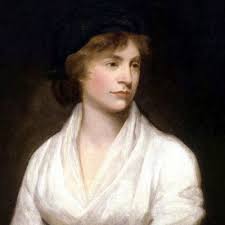
On 27th April 1759, Mary Wollstonecraft was born in Spitalfields, London. Feminist writer and mother of Mary Shelley, she lived in Beverley for 6 years, aged 9-15.

On 27th April 1821, the Spurn lifeboat crew were assaulted while loading gravel for the Lord of the Manor, Francis Sheldon Constable, by local men who wanted to share the income from this work.

On 27th April 1918, former Reckitt’s employee Private Richard Wilson, 42, died on active service with 942ndArea Employment Co Labour Corps. He is buried in Rouen, France.

Mary Wollstonecraft