May 6th

On 6th May 1331, King Edward III presented Hull with a charter replacing the post of town Keeper, appointed by the King, with the post of Mayor, elected by the town burgesses.

On 6th May 1636, William Corbett and 12 other Bridlington residents created the Lords Feoffees of the manor of Bridlington to manage the affairs of the town. They still manage numerous properties in the old town.

On 6th May 1748, Hull doctor Malcolm Fleming sold a patent medicine to farmers as a preventive against the rinderpest cattle plague that raged across the East Riding, and had killed 20 cows in Hull. He claimed success for his medicine, as only a further 9 or 10 cows died, although many herds were destroyed in the county.

On 6th May 1915,  Albert Vine, engineer, 42, and crew of Hull-owned trawler Merrie Islington, out of Scarborough, were taken on board a British minesweeper before a  German U-boat put a bomb on board and scuttled her.

1st May

On 1st May 1603, surgeon Simon Crouch was admitted as a burgess of Hull free, on condition that he treat the poor at his own cost. There was an outbreak of plague that summer, and Simon Crouch was known to be still in Hull in 1610.

On 1st May 1676, Leonard Gaskill, 27, and Peter Rook, 25, of Beverley, were hanged for stealing 13 sheep from John Brown of Driffield.

On 1st May 1810, Hull gunsmith William Taylor was indicted for passing counterfeit money to Cecily Rickatson at Sculcoates and given 6 months in the House of Correction. He later set up in business in Beverley, where one of his apprentices in 1821 was Esau Akrill (the Akrill family ran a gunshop in Beverley for many years).

On 1st May 1826, Harriet Pease, wife of the banker Joseph Robinson Pease, of Hesslewood Hall, miscarried after horse riding. Medical help came from Hessle; Joseph’s  diary gave his opinion that she might have died if they had had to wait for a doctor to travel the 5 miles from Hull.

On 1st May 1877, William Pritchard, 21, apprentice of Porter St, Hull, drowned on board Hull trawler Iolanthe in the North Sea whilst boarding fish.

On 1st May 1911, the Royal National Lifeboat Institution took over responsibility for the lifeboat station at Spurn, after 3 years of acrimonious argument.


This Week: 1st to 7th May 2018

Coming up this week

A wide range of topics is covered in items this week.

Crime features regularly, showing how severe the past penalties could be for crimes that would definitely not be capital offences today – and how you could get away with murder if you knew the right people, such as the King.

Deaths at sea – another perennial risk, particularly for fishermen. I haven’t checked the stats on this, but you do seem to have been more likely to be ‘lost overboard’ if you were very young. Perhaps it was lack of experience, of course, but there are historical incidents of bullying, where the skipper was king at sea. The risks also included being iced in when in Arctic waters, scurvy and starvation, collisions, and war at sea.

Heroes – the lovely Amy puts in an appearance, as well as a war hero, a sports hero, and a doctor in time of plague, who is pretty heroic in my book. As is anyone who made their living at sea. Especially lifeboatmen.

Saints – John of Beverley was huge in the Middle Ages, and he appears many times in the History Calendar, not least because the church he built was such an important sanctuary.  Why were so many people prepared to travel huge distances to sanctuary, though? Perhaps you would hope for more sympathy from strangers than from your neighbours?

Other topics this week include the Irish in Hull, invasion threats, drainage, charity, pirates, strikes, transport and medicine. And by the way – Feoffee is pronounced Fifi.

Enjoy

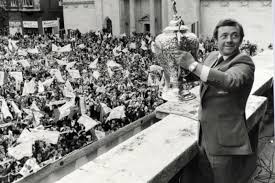
roger millward

MAY:

1st 2nd 3rd 4th 5th 6th
7th

11th May


On 11th May 1481, Stamford shoemaker John Woodcok claimed sanctuary at St John’s church, Beverley, for the death of William de Tee, mercer of Stamford, on 30th March.

On 11th May 1812, HMS Anson, a 74-gun naval ship of the line, was launched at Paull by Steemson of Hull. In 1844 she carried 499 male convicts to Hobart, Tasmania, the largest number of convicts carried by a single ship. Was refitted as a prison for female convicts and broken up in 1851.

On 11th May 1975, Hull-born artist and architect Allanson Hick died aged 76 in Hornsea. From a maritime family, his career as an architect allowed time for artwork; a member Society of Graphic Artists, founder member of Royal Society of Marine Artists, Fellow of Royal Inst British Architects, President of York & EYorks Architectural Society. Many of his architectural commissions no longer survive, but he designed Dundee Chambers, Princes Dock Side. Several of his works were purchased by the Ferens, and he exhibited at the Royal Academy. He has no Wikipedia entry. (born 19.6.1898 89 Walton St, Hull)

10th May

On 10th May 1346, John de Manby and Eobert de Seton, both of Beverley, were convicted before the king at Nottingham of the death of Adam Coppendale, merchant of Beverley, at Barton on Humber.

On 10th May 1377, King Edward III’s parliament issued a statute pardoning the Mayor and town of Hull. I have not found what the pardon was for, and Edward was very ill at the time, and died in June.

On 10th May 1527, Thomas Richerdson, husbandman of Lockington, claimed sanctuary at the church of St John, Beverley, for debt.

On 10th May 1595, the Howden churchwardens ‘paid to the lame soldiers by the Chief Constable warrant 21s8d’.

On 10th May 1707, Hull-born Dr Thomas Watson, Bishop of St David’s made proposals to contribute to the cost of rebuilding almshouses in North Church Side, Hull. Later correspondence indicated that he wished to influence the rules by which they were to be managed.

On 10th May 1854, William Marshall’s flax mill at Patrington was burnt down, throwing 100 people out of work.

On 10th May 1866, asked the town council to cover a foul ditch where sewage collected in pools; the ditch remained open. Hedon had suffered badly from cholera in 1849. The ditch was not covered until 1873.

On 10th May 1910, Robt R. Leonard & Son sold at auction the effects of the Hull Racecourse Company, including luxury furniture and fittings from the grandstand, and grounds equipment. The racecourse was at Twyers land, Preston South.

On 10th May 1946, Maureen Lipman was born in Hull.  TV and film actor, stage performer, and writer, CBE. Awarded an honorary doctorate from the University of Hull in 1994.


May 9th

On 9th May 1688, Francis Reame was accused in Patrington manor court of not declaring money and a ring he found during building work; it was declared that the items were treasure trove and belonged to the lord of the manor.

On 9th May 1708, the congregation of Cottingham church gave 2s and a penny-halfpenny in a collection for building a protestant church ‘in the Duchy of Berg, within the Empire of Germany’.

On 9th May 1774, 101 Yorkshire emigrants landed at Halifax, Nova Scotia, from Hull aboard The Two Friends. Many were tenants of Beilby Thompson of Escrick, some citing rising rents as their reason for emigrating. In the years 1772-5, 1,000 people emigrated to Nova Scotia from Yorkshire.

On 9th May 1793, Rev Arthur Robinson died in Hull aged 78. He had retired 4 years before as vicar of Holy Trinity (with a gift of civic silver worth £50), but was also vicar of St Giles, Marfleet, whose parishioners said they had seen him only once in 25 years.

On 9th May 1896, Holderness Polo Club held Hull’s first game of polo at Tranby Croft. The teams were Singles and Marrieds; the Singles won 6:5. Later matches were played at a ground in Westbourne Avenue, on land now covered by Westbourne Ave West to Perth St West.

On 9th May 1930, Thomas Robinson Ferens died at the age of 83. The former East Hull MP spoke often in support of women’s rights; was general manager and joint chairman of Reckitts. In his will he left land to the city for an art gallery, for a university college, and large charitable bequests. (b 4.5.1847)

8th May

On 8th May 1660, the day on which it was proclaimed in London that Charles II had been King since the execution of his father, Hull ordered the arms of the Commonwealth removed from Hull Town Hall,  to be replaced with the King’s arms, and that the town’s maces be engraved with the King’s arms.

On 8th May 1926, mounted police on Monument Bridge, Hull, baton charged crowds trying to prevent volunteers signing up in the City Hall, on the 5th day of the General Strike. 41 people needed hospital treatment.

On 8th May 1941, Hull suffered its worst air raid on of WW2 overnight; 420 people killed, 800 injured, more than 800 fires; the Prudential building collapsed on top of its basement air raid shelter; 3,000 houses were destroyed and a further 9,000 damaged. 35 churches were hit, 2 synagogues, 14 schools; 2 million sq ft of factory space damaged or destroyed; notable buildings such as House of Powolny restaurant; extensive damage to the docks, including the destruction of Riverside Quay. 40,000 people made homeless in the month. A large number of commendations for gallantry were made this night and the following night – too many to record here.

On the same night, a German landmine fell on Magdalen Lane, Hedon, killing 12 people and destroying 2 houses.

May 7th

On 7th May 721, retired Archbishop of York John of Beverley died at Beverley. He was canonized as St John of Beverley, and this is his feast day, celebrated at his birthplace, Harpham, with a procession.

On 7th May 1798, Hull Trinity House paid £3 1s to John Cook, the master of the ship John and Mary, and to 8 of the crew, after the ship was captured by a Dutch privateer, and then recovered by the British.

On 7th May 1915, William (Ely) Taylor, 36, stoker 1st class and former Reckitt’s fitter, died at Gallipoli while serving with the Royal Navy Hood Battalion; he is buried in Lancashire Landing Cemetery.

On 7th May 1926, strikers clashed with police at Hull on the 4th day of the General Strike.

6th May

On 6th May 1331, King Edward III presented Hull with a charter replacing the post of town Keeper, appointed by the King, with the post of Mayor, elected by the town burgesses.

On 6th May 1636, William Corbett and 12 other Bridlington residents created the Lords Feoffees of the manor of Bridlington to manage the affairs of the town. They still manage a number of properties in the old town.

On 6th May 1748, Hull’s Dr Malcolm Fleming sold a patent medicine to farmers as a preventive against the rinderpest cattle plague that raged across the East Riding, and had killed 20 cows in Hull. He claimed success for his medicine, as only a further 9 or 10 cows died, although many herds were destroyed in the county.

On 6th May 1915, Albert Vine, engineer, 42, and crew of Hull-owned trawler Merrie Islington, out of Scarborough, were taken on board a British minesweeper before a German U-boat put a bomb on board and scuttled her.
May 5th

On 5th May 1683, Nathaniel Pickett, 28, of Hull, cut the brig Ararinah lying in the Humber and was later convicted at York Castle, where he was hanged on 30th July 1684.

On 5th May 1802, Beverley Corporation decided to create a lock at the junction of Beverley Beck with the River Hull; from that point, the Beck ceased to be tidal.

On 5th May 1853, 2 Langtoft ploughmen narrowly escaped death when lightning struck and destroyed their ploughs and killed 3 plough horses.

On 5th May 1863, Mr F.O. Martin inspected the management of the Leonard Chamberlain charities and concluded that the late Edward Thompson, a bankrupt, owed the charity over £700, and that there were other irregularities. The charity had then been operating for 147 years, and is still in existence today.

On 5th May 1915, a Zeppelin dropped bombs on Driffield, which smashed windows, but caused no injuries.

On 5th May 1930, Hull-born Amy Johnson set off from Croydon on her solo 11,000 mile flight to Darwin. She was attempting to beat the record of 16 days, only a year after her own first solo flight.